Rising Edge Digital • Hardware & Embedded Systems for Software Developers
Off-Grid Refrigeration Using Fire and Salt · Nokia 3310 Upgraded with A Custom PCB · Your Arduino Nano Matter board now speaks Zigbee
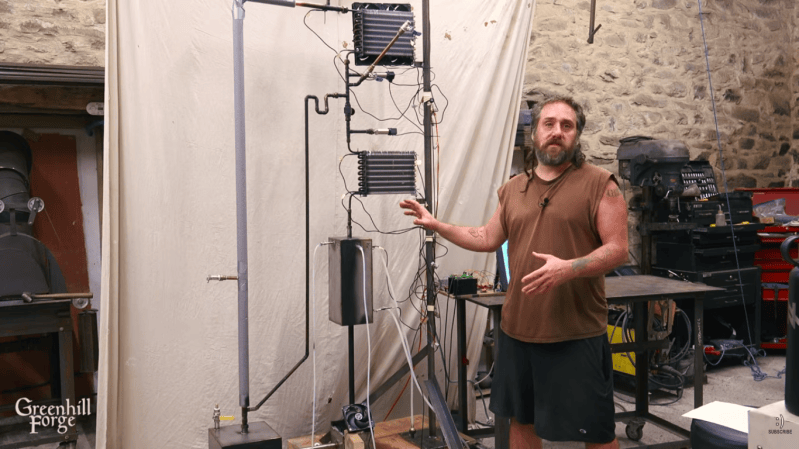
Off-Grid Refrigeration Using Fire and Salt
[Greenhill Forge] has developed an innovative off-grid refrigeration system that utilizes just fire and salt, minimizing reliance on electricity. This approach leverages a technology called absorption cooling, where water acts as the refrigerant. The system works by boiling this saltwater solution at low pressure, allowing it to absorb heat from the environment as it changes from liquid to vapor. The vapor is then condensed back into liquid in a separate section, releasing the absorbed heat.
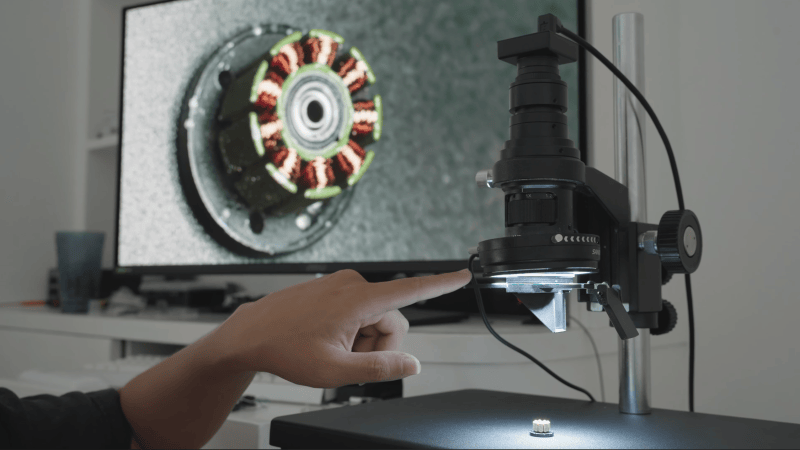
Building a Microscope with a 3D View
[Corebb] developed a custom microscope that offers a unique rotating side-angle view, addressing the limitations of traditional top-down models, particularly useful for inspecting solder joints on electronics. The setup utilizes a commercial C-mount microscope lens assembly combined with a USB camera, allowing for magnification up to 200x. It includes an LED ring light and two polarizing filters to combat glare from reflective surfaces.

Mini Monster Box
The Mini Monster Box is a fun Halloween project designed to entertain kids, especially those who may not appreciate traditional scary decorations. Created by Øyvind Nydal Dahl, this interactive box features a little monster that pops out when someone knocks on it. The setup includes a microphone to detect the knock, a one-transistor amplifier to boost the signal for an Arduino, and a servo to control the lid's movement.
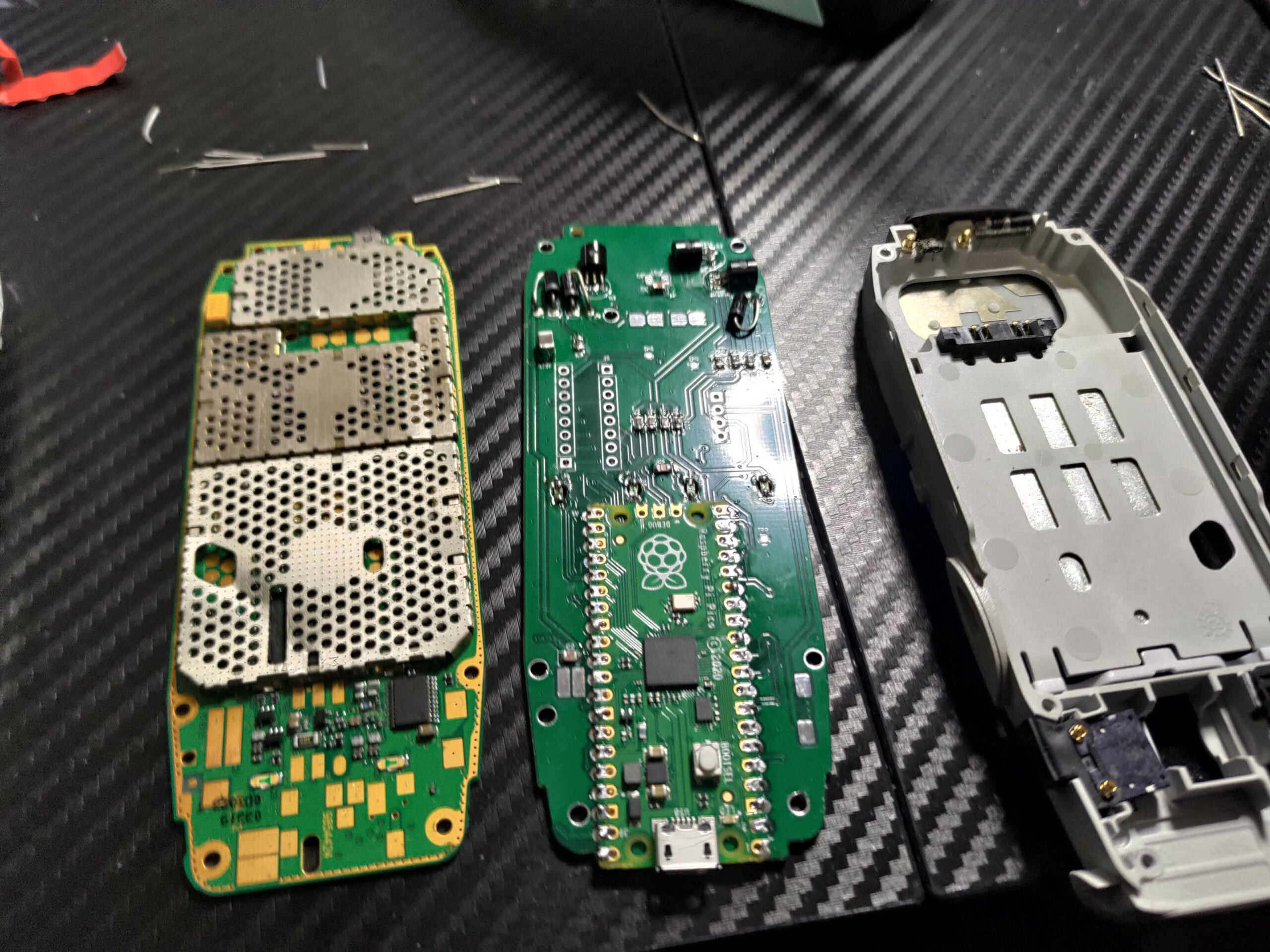
Nokia 3310 Upgraded with A Custom PCB
Hoani Bryson has upgraded a classic Nokia 3310 by creating a custom printed circuit board (PCB) to support his game, "Trick Shot II," which won first place in the Nokia 3310 Jam. The challenge was to develop a game that adhered to the constraints of the original Nokia 3310, including a monochrome display with a resolution of 84x48 pixels and audio limited to a single buzzer.

STM32F407 RT-Spark Music Player Using FreeRTOS
The article discusses a project where John Paul Maluya, Karl Vincent Remo, and Amer Patrick Lauma created an eight-song music player using the STM32F407 RT-Spark board, which features an STM32F407 microcontroller. This project, developed for an Embedded Systems Programming course, utilizes FreeRTOS, a real-time operating system, to manage multiple tasks like playing melodies, displaying song information, and responding to button inputs.
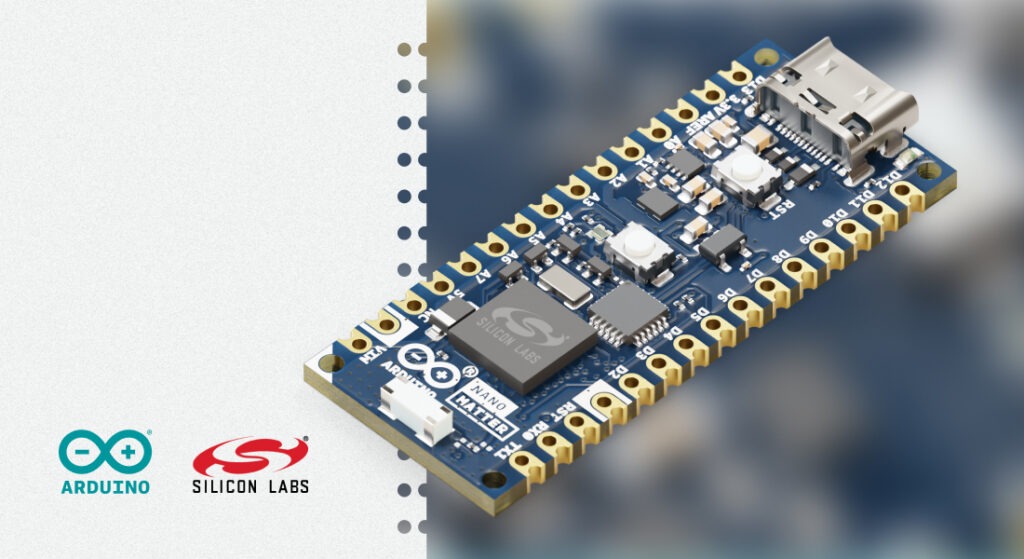
Your Arduino Nano Matter board now speaks Zigbee
The Arduino Nano Matter board has added support for Zigbee, a popular wireless communication protocol for smart home devices. With this update, users can now choose Zigbee from the Arduino IDE menu and compile their sketches with the Zigbee 3.0 stack. This makes it easy to integrate the Nano Matter board into existing smart home networks alongside other devices like bulbs and sensors.
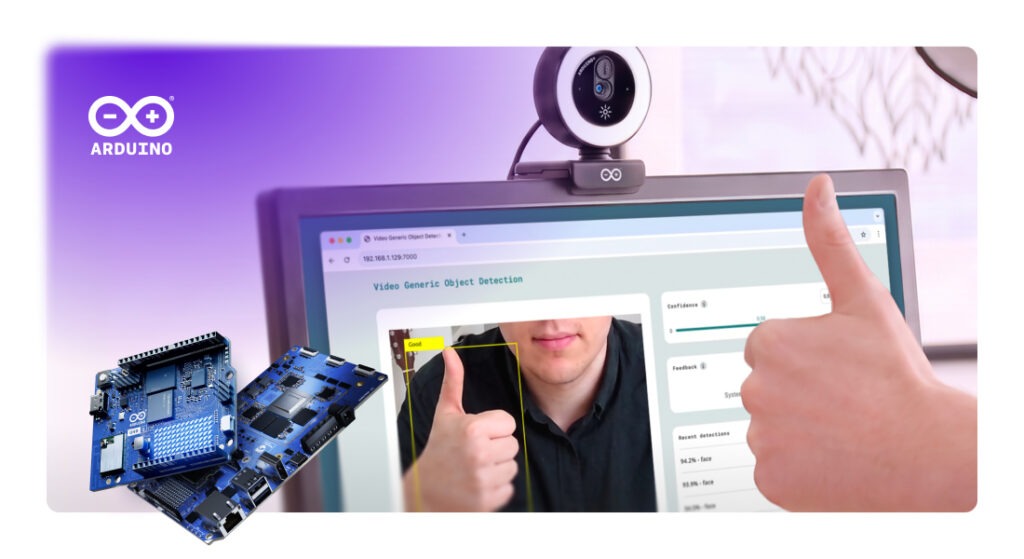
Bring USB-connected AI vision to your projects with the new Arduino® USB Camera
The Arduino ecosystem has introduced a new USB-connected accessory known as the Arduino USB Camera, designed to streamline edge AI and computer vision projects. This camera is not just any standard device; it integrates seamlessly with single-board computers like the Arduino UNO Q and VENTUNO Q, allowing users to harness real-time visual perception and audio processing without the hassle of complex setups or troubleshooting.
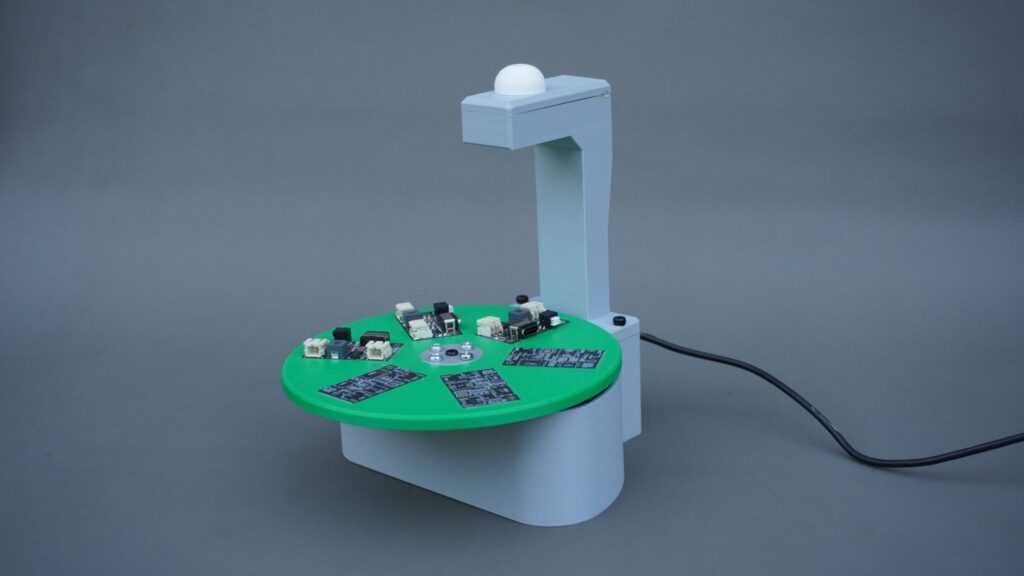
Building a super-affordable automated PCB inspection system
Mukesh Sankhla has developed an affordable automated PCB inspection system designed for small-scale production environments. This desktop-friendly setup features a turntable with six stations that rotates to allow a camera to inspect multiple PCBs in a single run. Using YOLO (You Only Look Once) vision models and Edge Impulse for processing, the system can identify components, detect missing parts, and spot defects.
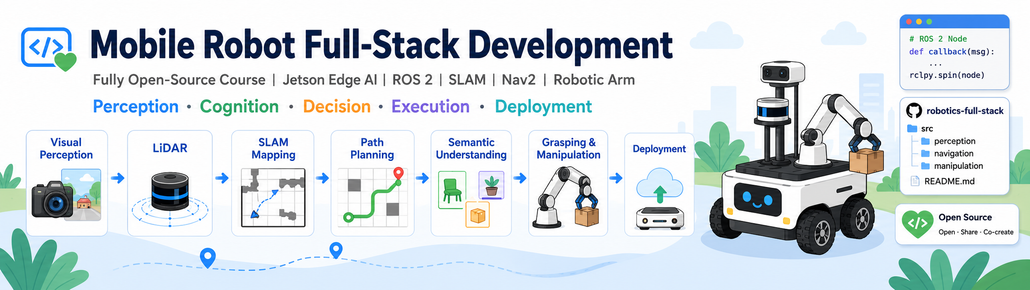
Mobile Robot Full-stack Development In Practice Ⅱ: Give the Robot Its Eyes — GMSL2 Multi-Camera, Calibration, and BEV Surround View
The article delves into the practical aspects of equipping a mobile robot with vision capabilities using a GMSL2 (Gigabit Multimedia Serial Link) multi-camera setup. It builds on the foundation laid in the previous installment of the "Mobile Robot Full-stack Development In Practice" series, where a Jetson-powered platform was established to facilitate robotics development. Now, the focus shifts to ensuring that the robot can accurately perceive its environment through effective sensor fusion and calibration techniques.
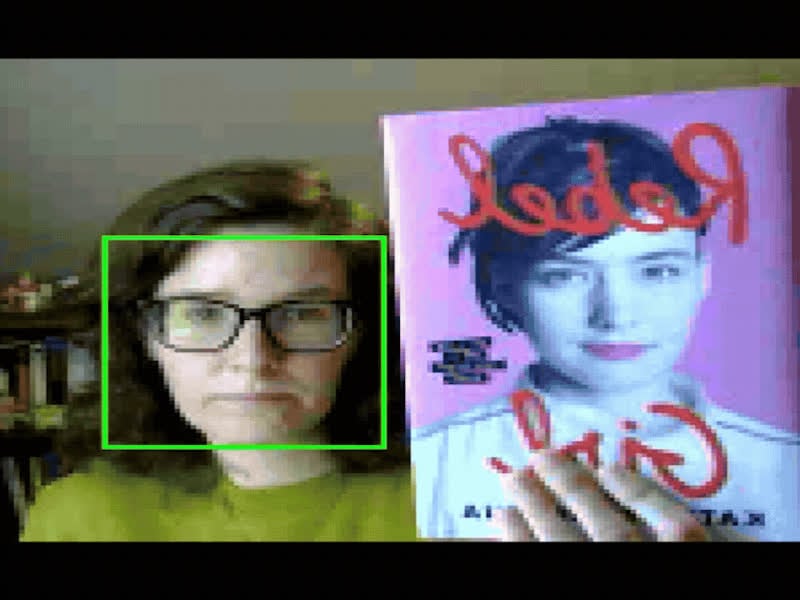
NEW GUIDE: Fruit Jam Face Detection
Adafruit has released a new guide for a project called Fruit Jam Face Detection, which leverages a USB webcam and CircuitPython to perform local face detection using OpenCV, a popular computer vision library. This setup allows users to run the face detection model entirely offline, meaning you don’t need to connect to the internet or rely on cloud services. When a face is detected, the system outlines it with a green box on the camera feed, which can be displayed over a DVI (Digital Visual Interface).

Adafruit_Stemma_Detect: detect selected Adafruit STEMMA QT sensors on a Raspberry Pi
Adafruit Industries has introduced STEMMA Detect, a Python tool designed for Raspberry Pi that scans the I²C (Inter-Integrated Circuit) bus to identify compatible STEMMA QT sensors and install their respective CircuitPython drivers. This tool is focused specifically on recognizing devices that include a bundled probe module, rather than serving as a general-purpose I²C device identifier.
Plenty of Fish in the AI Sea
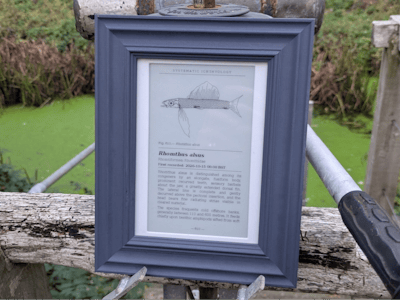
Jim Bruges has created an intriguing project called "This Fish Does Not Exist," which generates fictional fish species using an Arduino UNO Q. This device mimics the look of a 19th-century ichthyology textbook, producing detailed illustrations and scientific descriptions for fish that don't actually exist. Every few minutes, it reveals a new species on a 7.5-inch monochrome E Ink display, complete with a scientific name, classification, and a description of its habitat and characteristics.
HD Graphics for Microcontrollers
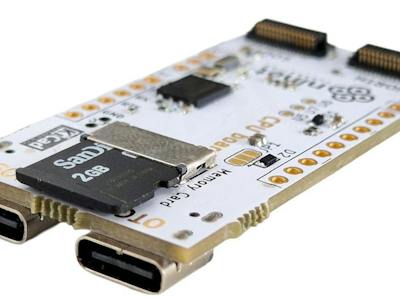
CuprumFlow Graphics is a new platform designed for driving high-resolution graphical interfaces in microcontroller projects without the overhead of a full operating system. It consists of two small boards—one based on a CPU and the other on an FPGA (Field-Programmable Gate Array)—both measuring 50×26 mm. The CPU version can support resolutions up to 1920×1080, while the FPGA model can handle 1366×768, both with 24-bit color and alpha transparency.
Relive the Dial-Up Era with This Raspberry Pi Modem
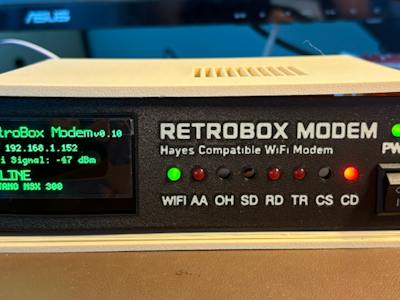
Xavi Paz has created the RetroBox Modem, a Raspberry Pi-powered device that recreates the nostalgic experience of using a dial-up modem. This modem allows both vintage and modern computers to connect to actual Bulletin Board Systems (BBSs), mimicking the sounds and behaviors of traditional dial-up connections. It operates using a Raspberry Pi Zero 2 W and supports Hayes-compatible commands, translating them into TCP/Telnet connections over Wi-Fi.
Setting the time on my breadboard clock: Breadboard clock part 5
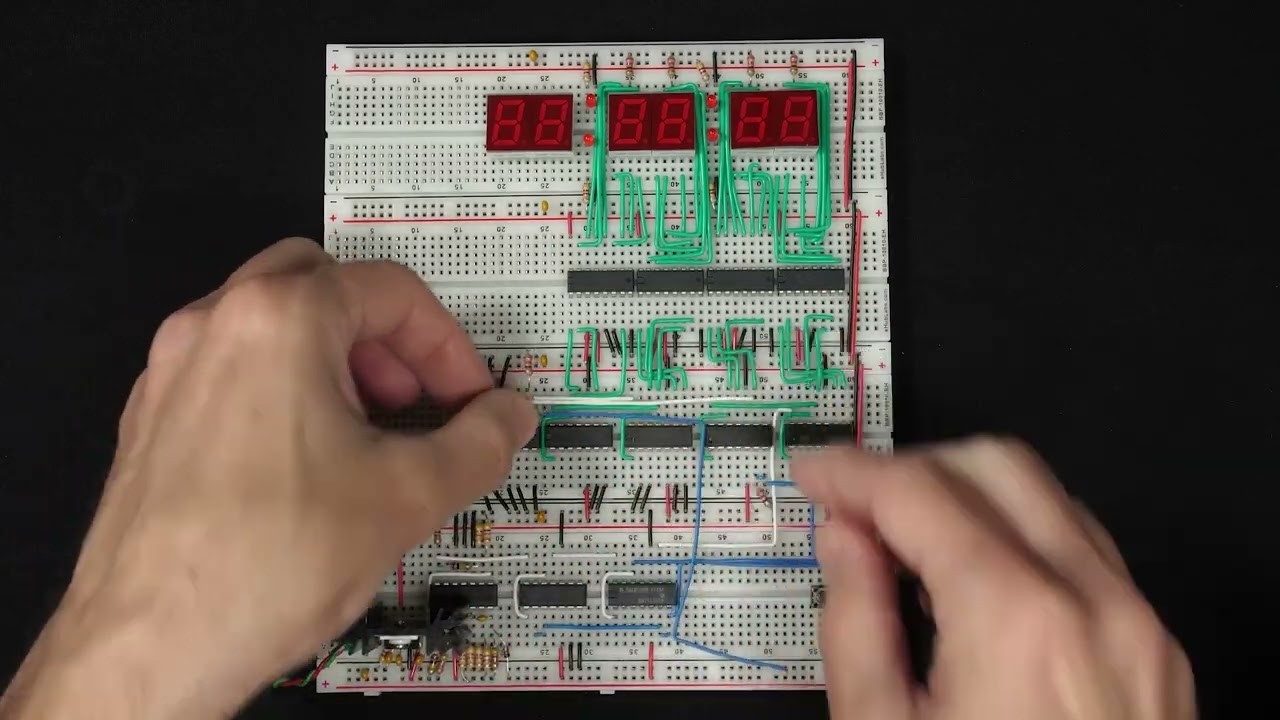
In this video, the creator shares the process of setting the time on a homemade breadboard clock. This is part five of a series where he walks through various aspects of building the clock, focusing specifically on the clock-setting method and the associated circuitry.