Rising Edge Digital • Hardware & Embedded Systems for Software Developers
John Park’s CircuitPython Parsec · What to Make with Adafruit Feather RP2040 Adalogger · SPOKE: An RP2040-powered touch controller
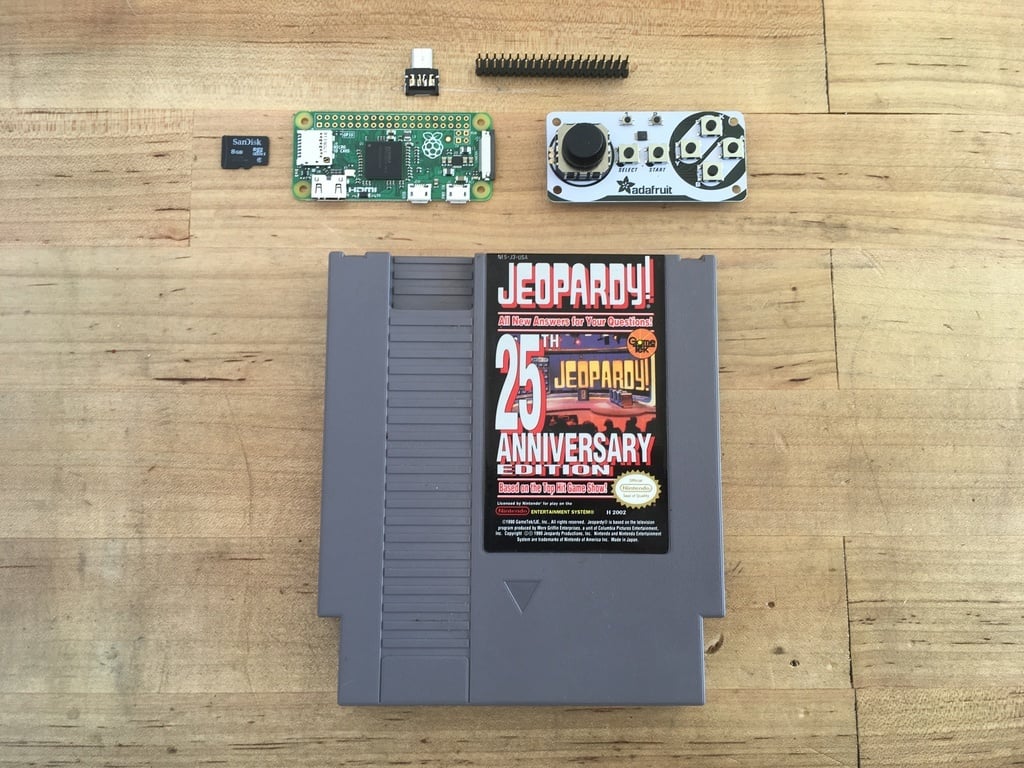
Is Now the Right Time to Build Your Own Raspberry Pi-Powered Retro Video Game Console #piday #raspberrypi
Building your own retro video game console using a Raspberry Pi is becoming increasingly appealing, especially as modern game prices rise and physical media disappears. A guide by Will Greenwald and Jason Cohen from PCMag suggests this is a great time to explore the extensive library of classic games. While they recommend using a Raspberry Pi 5 for optimal performance, older models will also work well and are more budget-friendly.

John Park’s CircuitPython Parsec: Fruit Jam Library – Buttons
John Park's article introduces the Fruit Jam Library, a handy tool for working with buttons in CircuitPython projects. This library simplifies the process of detecting button presses, making it easier to integrate user input into your designs. The article provides a link to the library on GitHub, allowing users to access the code and documentation directly.
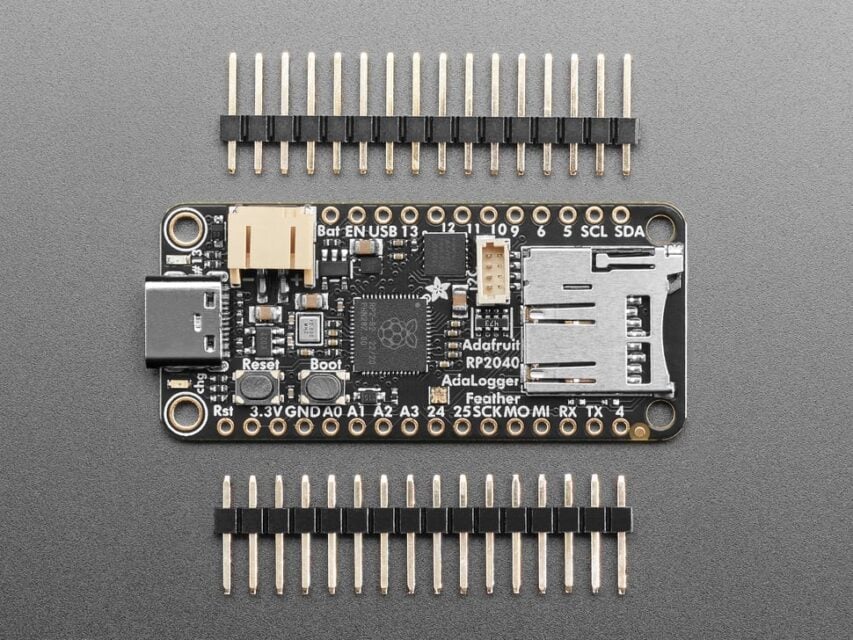
What to Make with Adafruit Feather RP2040 Adalogger
The Adafruit Feather RP2040 Adalogger is a compact and versatile data-logging platform based on the RP2040 microcontroller. It features built-in USB for easy connectivity, a microSD card holder for data storage, and a STEMMA QT / Qwiic connector for quick I2C sensor integration. The board comes pre-assembled and tested, although you'll need a soldering iron to attach the headers for stacking additional FeatherWings if desired.
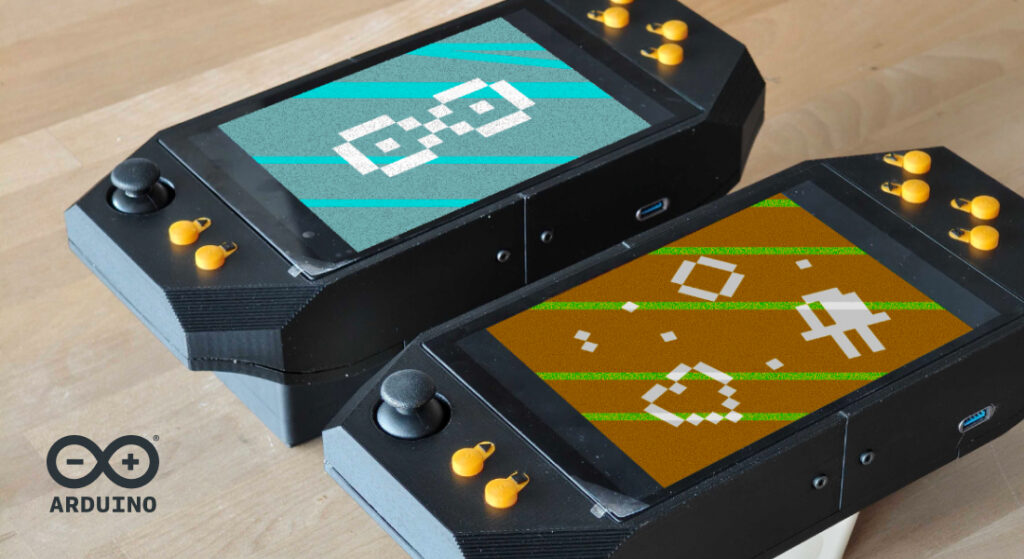
Build your own handheld retro console with the Arduino® UNO™ Q board
The article discusses a DIY project for creating a handheld retro gaming console using the Arduino UNO Q board. Unlike many previous projects that require specialized hardware, this build is accessible because all components can be purchased from standard online retailers, and it primarily uses pre-made cables, eliminating the need for any soldering. The main components include the UNO Q board, an Arduino UNO Media Carrier for connections, and various input modules like buttons and a joystick.
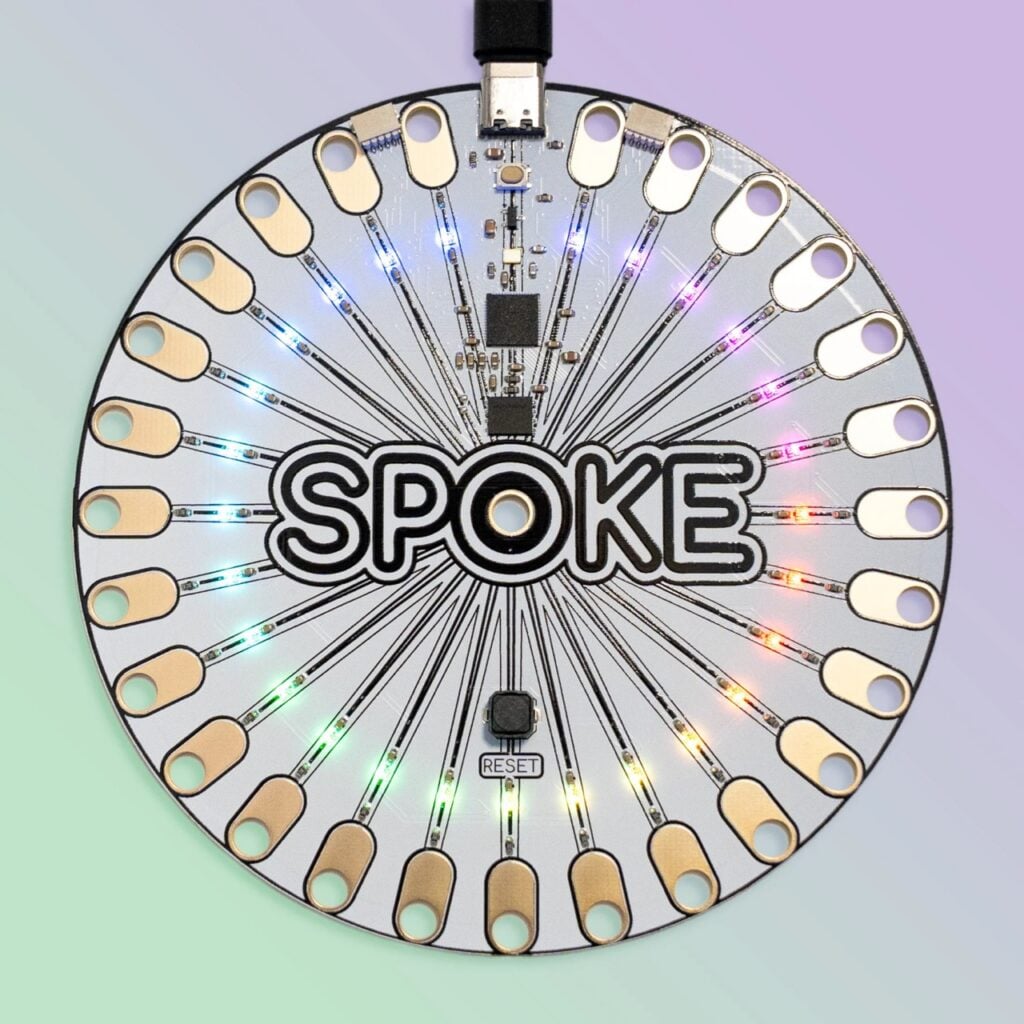
SPOKE: An RP2040-powered touch controller
The SPOKE is a capacitive touch controller powered by the RP2040 microcontroller, designed in a CD-sized disc format. It features 27 touch pads around its edge, each connected to a GPIO pin, making it a versatile input device. With a USB-C port and a reset button, it's designed for easy connectivity and use in various projects.
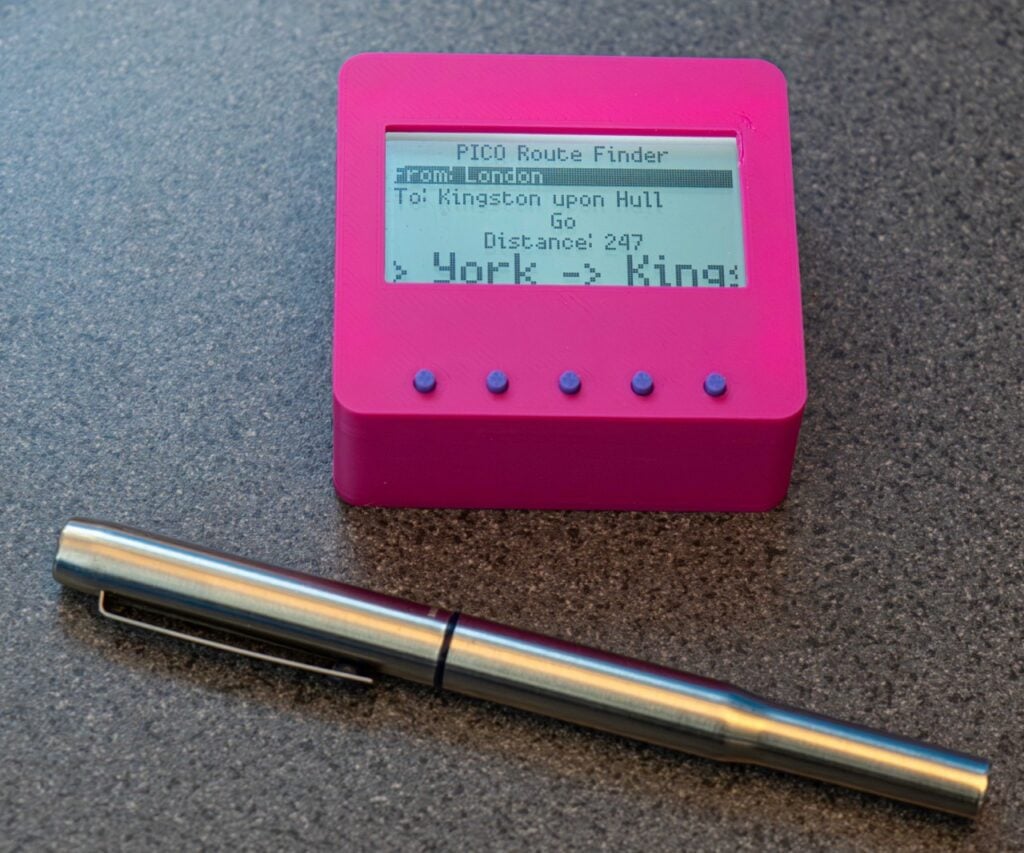
Build a Raspberry Pi Pico route finder using Dijkstra’s algorithm
The article covers the creation of a Raspberry Pi Pico route finder that implements Dijkstra's algorithm, a well-known method for finding the shortest path in a graph. Developed by Edsger Dijkstra in the 1950s, the algorithm is fundamental in navigation systems, data packet routing, and robotics. The project utilizes the Raspberry Pi Pico microcontroller running MicroPython to calculate and display the most efficient routes between locations, such as those in the UK.
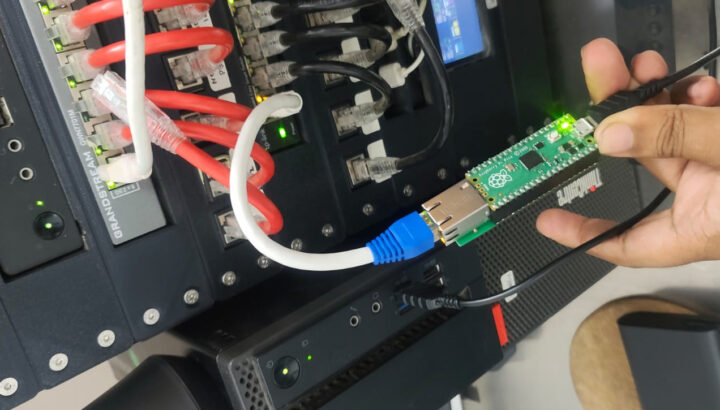
PICOTTY project enables multi-target serial remote management through Raspberry Pi Pico boards and Pi Zero 2 W SBC
The PICOTTY project is an open-source initiative that enables serial-based remote management using Raspberry Pi hardware. It employs a Raspberry Pi Zero 2 W as a central hub, running a web server for a dashboard, while multiple Raspberry Pi Pico boards are connected to control and monitor various targets over a serial interface. This setup functions similarly to a multi-target IP KVM (Keyboard, Video, Mouse), but it focuses solely on keyboard input, making it an efficient solution for managing headless systems.
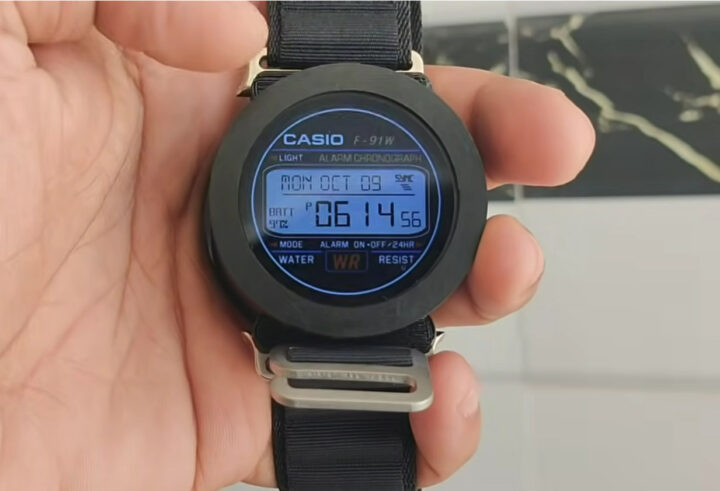
ChronoWatch X2040 – A DIY watch with off-the-shelf Raspberry Pi RP2040 round display, 3D printed case, and custom firmware
The ChronoWatch X2040 is a DIY watch project that utilizes a Raspberry Pi RP2040 microcontroller and a Waveshare RP2040-Touch-LCD-1.28 round display. Designed by Vishal Soni, the project simplifies watch building by using off-the-shelf components, including a 3D-printed case and a 3.7V lithium polymer (LiPo) battery. Instead of creating a custom circuit board, Soni opted for the Waveshare display board, which is cost-effective and allows him to focus on programming the watch's firmware using the Pico C/C++ SDK.

Polka Dot Electro-Swing Dress with NeoPixels #LED Pixels #AdafruitLearningSystem @Adafruit
The article showcases an innovative project where Erin St Blaine integrates NeoPixel LED lights into a classic polka dot swing dress, creating a dynamic and visually striking costume that reacts to movement. This intermediate-level guide details how to embed individually addressable NeoPixels behind each polka dot, allowing the lights to twinkle gently when still and to animate with vibrant flares during dance moves.
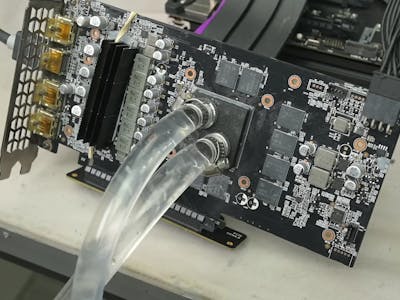
Water Cooling a GPU Without a Cold Plate
Matt from the TrashBench YouTube channel has developed a unique water cooling system for GPUs that eliminates the need for a traditional cold plate. In high-performance computing, managing heat is critical, and while water cooling is effective, the thermal interface can present challenges. Matt's solution involved flowing water directly over the GPU die, which is typically risky due to electrical components, but he cleverly insulated them using nail polish.
Stop Whining!
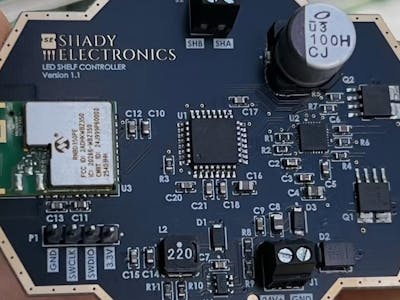
Aaron Shady tackled the annoying flickering and whine of low-quality LED light bulbs by designing a custom controller board. Many LED bulbs suffer from these issues due to poor electronic filtering, especially when dimmed, making them less appealing despite their energy efficiency. Shady's project started when he reverse-engineered the original controller of his shelf's built-in LED lighting, discovering that it operated at a low 2 kHz frequency, which produced harmonics in the audible range.
The Mini Fridge That Runs Away From You
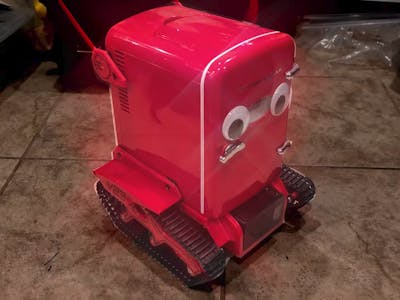
Dorian Todd has created a unique mini fridge that can move around, playfully evading its owner while also offering cold drinks when needed. This innovative project takes inspiration from the classic prank about chasing after a running fridge and turns it into a functional robot. The fridge is built on a tank-style drivetrain powered by Repeat Robotics Ultra Mk2 brushless gear motors, originally designed for combat robots, ensuring stability and mobility.
Let's build a digital clock!
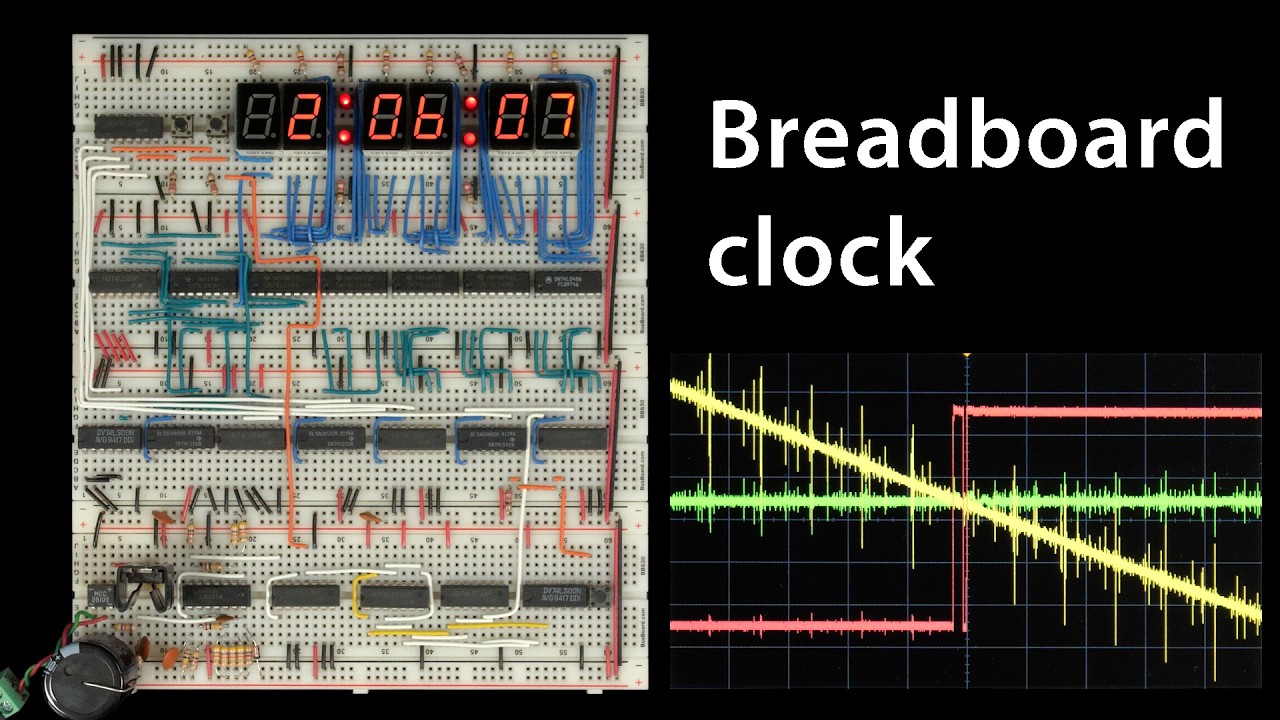
This article outlines a project where the creator builds a digital clock using basic electronic components and a microcontroller. The project is designed to be accessible, even for those who might be new to hardware and electronics, and the video tutorial provides step-by-step guidance on the assembly and programming of the clock.
Pocket Audio Deck: Web Radio and MP3 Player for M5StickS3
The Pocket Audio Deck is a compact web radio and MP3 player built using the M5StickC S3 microcontroller. The project leverages the ESP32 chip, which provides built-in Wi-Fi capabilities, allowing users to stream internet radio stations and play MP3 files stored on a microSD card. The device features a small display that shows the current track and station information, along with buttons for playback controls.
Curiously minty Raspberry Pi Zero cyberdeck
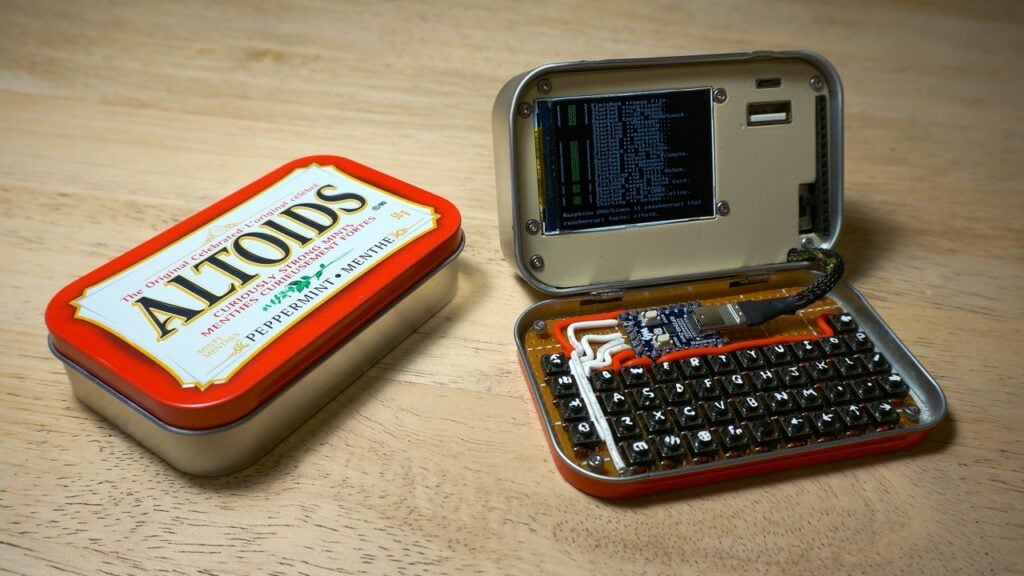
The article highlights a creative project by Mason from Exercising Ingenuity, who built a compact cyberdeck using a Raspberry Pi Zero, all cleverly housed in an Altoids tin. This project is part of the broader trend of miniaturizing electronics into small, portable devices. The build features a custom dot-matrix keyboard, a 2-inch LCD display, a UPS HAT for power management, and even a USB hub for external connectivity.