Rising Edge Digital • Hardware & Embedded Systems for Software Developers
Modded Server PSU Provides Plenty of Current · Use MicroPython to Add a Custom Sensor to a Robot Kit · Using the Arduino Uno Q to Build a DDS Sine Wave Generator

Modded Server PSU Provides Plenty of Current
Danilo Larizza has come up with a clever way to repurpose old server power supplies into powerful benchtop power supplies. Using an HP Common Slot (CS) server power supply, which can often be found for under $50, this setup can deliver over 50 amps at 12 volts. This is particularly useful for projects that require a lot of current without breaking the bank.
An open source Arduino library for the ESP32-P4 LP (Low Power) core
Xorlent has released an open source Arduino library specifically for the ESP32-P4 LP (Low Power) core under the MIT license. This library allows users to harness the capabilities of the dedicated Low Power core, which is a full RISC-V processor that can operate independently while the main dual-core CPU is in deep sleep. The LP core has access to various low-power peripherals and can wake the high-performance core when necessary.
Cyber Gotchi: From Tamagotchi to Modern Digital Life
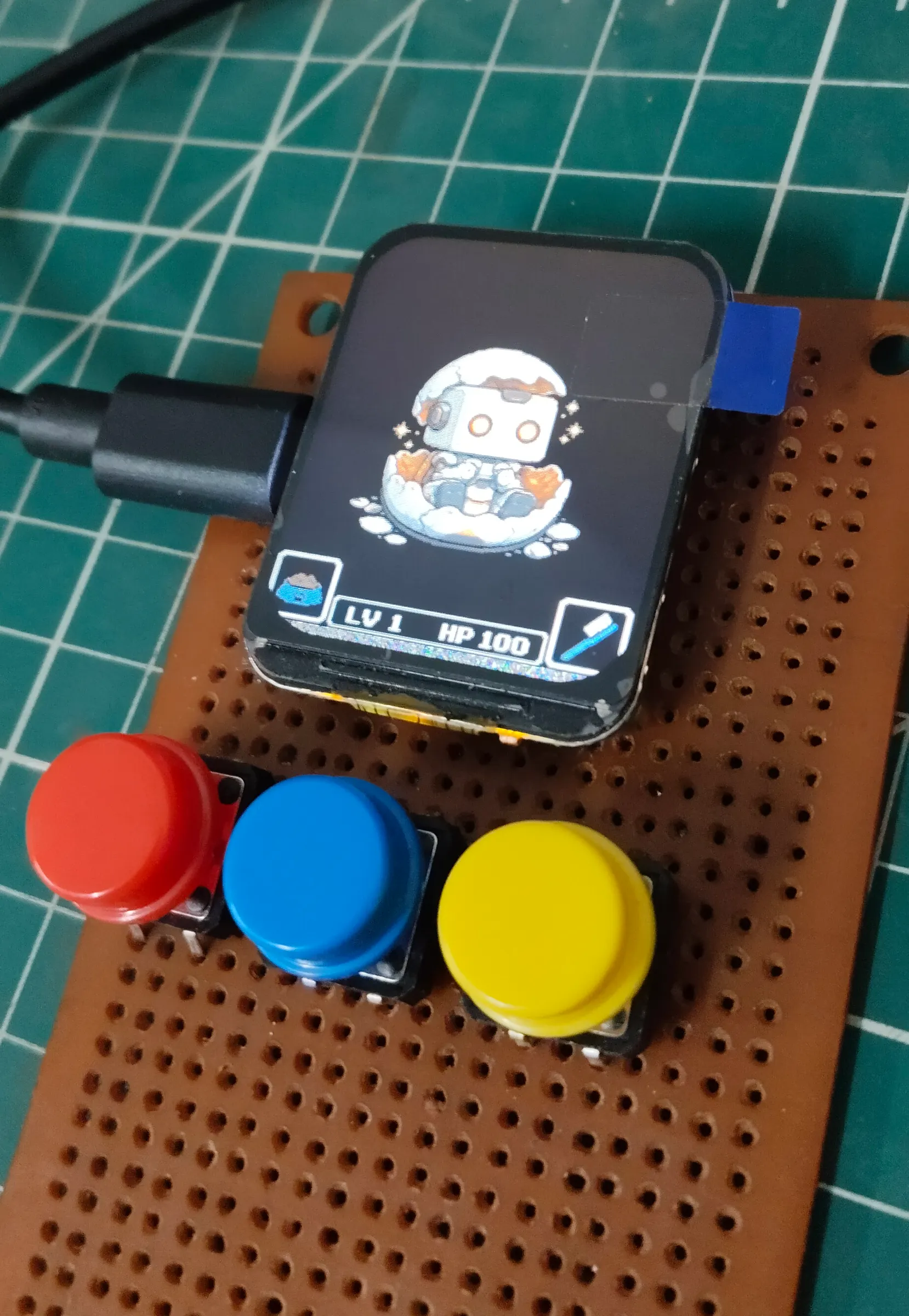
Cyber Gotchi is a project by Thai maker Yakroo that transforms the classic Tamagotchi concept into a more interactive and physical digital pet. This system mimics a living digital creature with real-time internal states like hunger, energy, and health, which influence its behavior and appearance through animations, sounds, and even physical outputs. Unlike traditional digital pets that are confined to a screen, Cyber Gotchi brings these simulated lives into the real world using actual hardware components.

Use MicroPython to Add a Custom Sensor to a Robot Kit
The article discusses a project that enhances the HP Robots Otto Kit by adding custom sound detection capabilities. Using two microphones, the modified robot can detect loud noises and turn towards the source, essentially giving it the ability to "hear." The project includes designing circuits and 3D-printed parts, along with programming the robot using MicroPython and the Thonny IDE.

Tech Talkies Made a Voice-Controlled Robot Dog
Tech Talkies developed a voice-controlled robot dog using the Seeed XIAO ESP32S3 microcontroller and the ESP-Skainet for on-device speech recognition. This project allows users to interact with the robot without needing a cloud connection or a smartphone; simply say a wake word followed by a command. The robot dog can perform actions like sitting, lying down, stretching, walking, dancing, and even wagging its tail when praised with "good boy."
Fashionably on Task: a Smart Bracelet for Forgetfulness
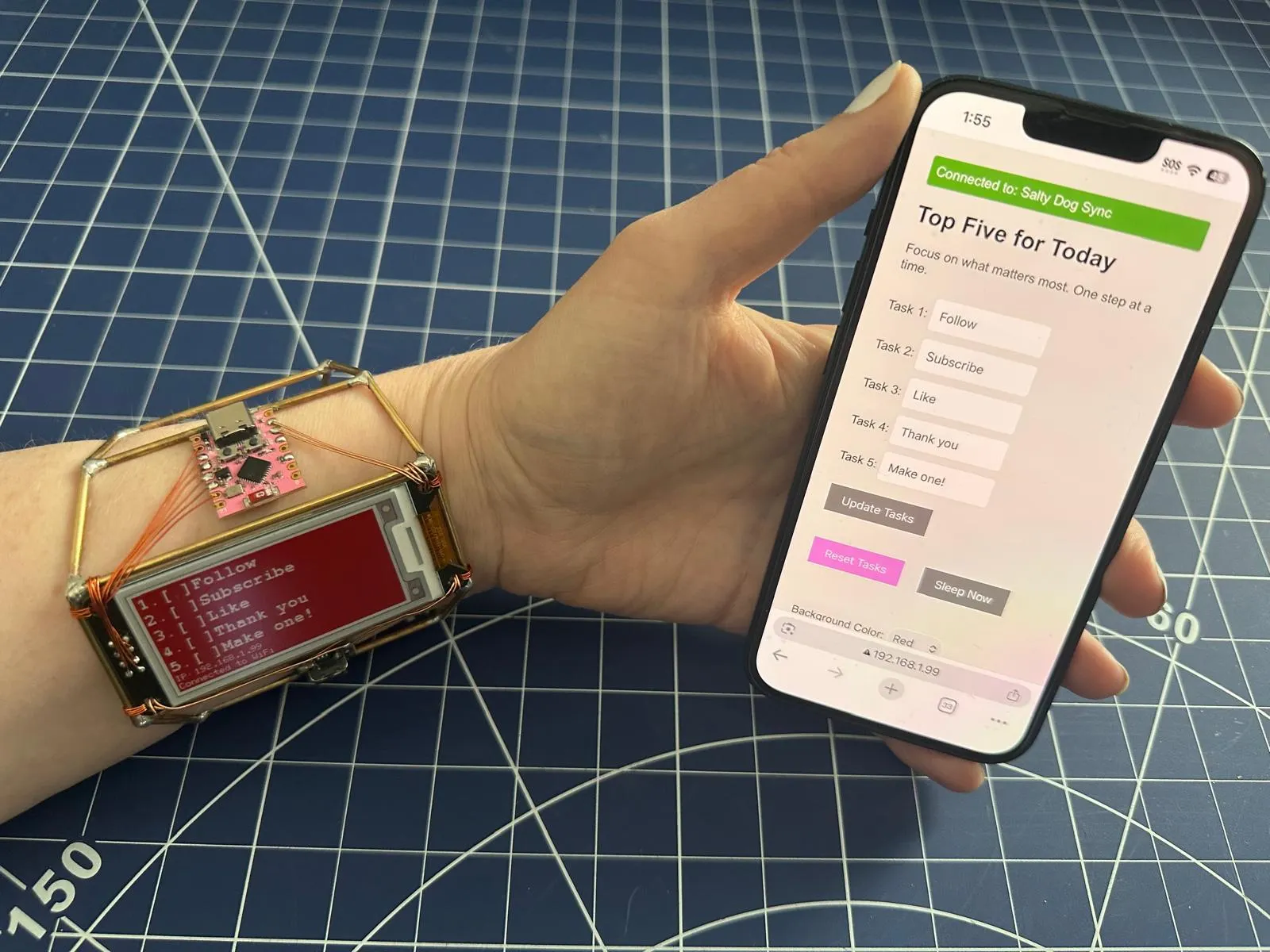
The article introduces a unique smart bracelet designed to help users manage their daily tasks. Built by CMoz for the Instructables Jewellery Competition, this wearable combines style and functionality, featuring exposed circuitry on a brass frame and a tri-color ePaper display. The bracelet is powered by an ESP32 microcontroller, enabling Wi-Fi connectivity and allowing users to keep track of up to five important to-dos.
Build a tiny network-wide ad blocker
RelfWolf created a network-wide ad blocker using a Raspberry Pi and a tool called Pi-hole. This setup effectively blocks ads and tracking across all devices connected to your network—like phones, tablets, and smart TVs—without needing browser extensions or ongoing subscriptions. The project aims to enhance privacy by reducing the number of tracking domains that devices connect to.
No-Code Seedling Frost Alert and New WipperSnapper Components. What’s new with Adafruit IO and the Adafruit Learning System.
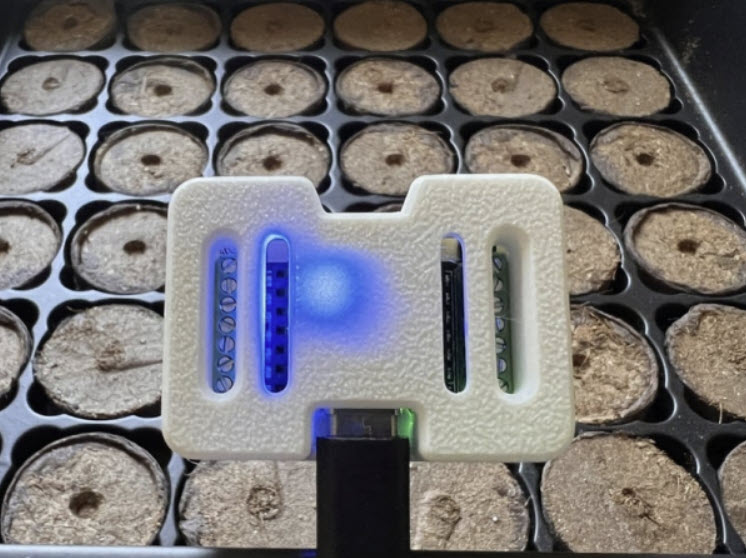
Adafruit recently introduced a no-code Seedling Frost Alert device using the QT Py ESP32-S3 and Adafruit IO. This project helps protect seedlings from unexpected frost by glowing blue when freezing temperatures are predicted. It also sends a text message to remind you to bring your plants indoors, making it a handy tool for gardeners.
Using the Arduino Uno Q to Build a DDS Sine Wave Generator
This article details a project that uses the Arduino Uno Q microcontroller to build a Direct Digital Synthesis (DDS) sine wave generator. The project demonstrates how to create a system that can generate precise analog signals digitally, which is useful in various applications such as signal processing and testing.
John Park’s CircuitPython Parsec: DAC Volume Control
John Park's latest project focuses on controlling audio volume using a Digital-to-Analog Converter (DAC) with an analog potentiometer and I2C communication. This setup allows you to smoothly adjust the audio output level in your CircuitPython projects. The project is straightforward, making it ideal for hobbyists looking to enhance their audio applications without diving too deep into complex circuitry.

NEW LEARN GUIDE: Adafruit MAX44009 Lux Light Sensor Products
The Adafruit MAX44009 is a versatile lux light sensor designed for a wide range of lighting conditions, from near darkness to bright sunlight. It features an impressive 22-bit dynamic range, which means it can automatically adjust its settings to provide accurate lux readings without requiring manual adjustments for integration time or gain.
Debugging Linux Apps with VS Code: A Step-by-Step Guide
This article provides a practical guide for debugging Linux applications using Visual Studio Code (VS Code) over SSH. It details the necessary setup, including the installation of VS Code's Remote Development extension, which allows you to work on code hosted on a remote machine as if it were local. The guide walks you through creating a simple "hello world" application on an embedded Linux system such as the NXP i.MX93 or Raspberry Pi.
Build a Giant 2,500-LED Wall on a Budget
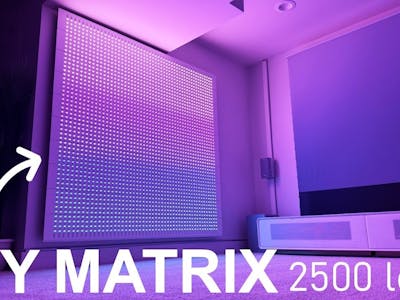
Chris Maher has designed an impressive wall-sized LED matrix, comprised of 2,500 individually addressable LEDs, that’s both affordable and simple to construct. This 50×50 grid is powered by a single 12V supply and controlled by a single unit, utilizing 18 rolls of SK6812 LED strips. Each strip is cut into segments to create a manageable power and data structure, striking a balance between visual quality and power requirements.

Seeed Studio Officially Launches the reBot Arm B601, Releases Design Files for DIY Robot Builders
Seeed Studio has launched the reBot Arm B601, an open-source robotic arm designed for experimentation and real-world applications. This arm features a standardized design and a transparent Bill of Materials (BOM), making it easier for developers to transition from assembly to data collection and algorithm development. The arm can handle payloads of about 1.5 kg and has a maximum reach of 767 mm, with impressive repeatability under 0.2 mm across six degrees of freedom.

A DIY Watch You Can Actually Wear
LILYGO has launched the T-Watch Ultra, a DIY smartwatch aimed at hardware enthusiasts looking for a durable wearable. Unlike many homebrew smartwatches that struggle with everyday conditions, this device features an IP65-rated case, making it resistant to water and dust. It’s powered by an ESP32-S3 microcontroller, which boasts a dual-core CPU running at 240 MHz, along with ample memory for complex applications, including edge AI tasks.
Przemek Wasinski Has Automated Plane-Spotting, via an ADS-B-Tracking Motorized Camera
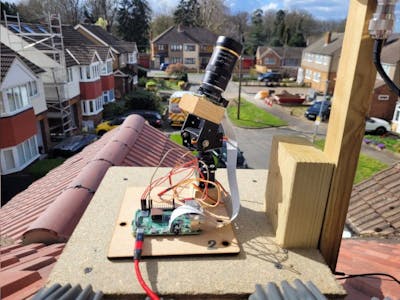
Przemek Wasinski has created an automated plane-spotting system that combines a software-defined radio with a motorized camera. This setup tracks aircraft using Automatic Dependent Surveillance-Broadcast (ADS-B) technology, which allows planes to continuously broadcast their location and other data. By using a 1090MHz radio antenna and decoding the signals with a tool called Dump1090, Wasinski's system can plot aircraft positions on a radar-like map.
The YARH.IO M4 Is a Raspberry Pi-Powered Handheld You Can — Finally — Build Yourself
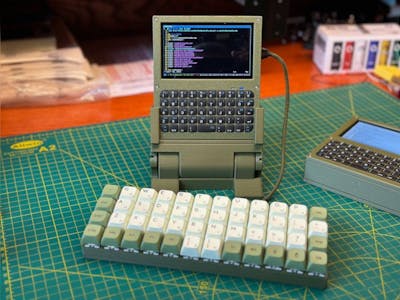
The YARH.IO M4 is a DIY handheld computer powered by a Raspberry Pi 4 Model B, now made accessible for builders with the release of 3D print files and comprehensive assembly instructions. Created by the maker known as "snc," this device features a compact design that includes a 4.3-inch touchscreen, an adjustable desk stand, and active cooling to keep the Raspberry Pi running smoothly. It supports both Raspberry Pi 4 and 3 models, making it a versatile option for repurposing older hardware.

Building the OG Xbox That Should Have Been
Macho Nacho Productions has recreated the original Xbox prototype, which was famously a large aluminum X shape, in a more accessible form. This new version is a 3D-printable DIY project that retains the dimensions of the original console but is made from plastic—a much more practical choice for hobbyists compared to the costly metal version.
Miauwceiver Syncs Stage Lighting and DIY Robotics
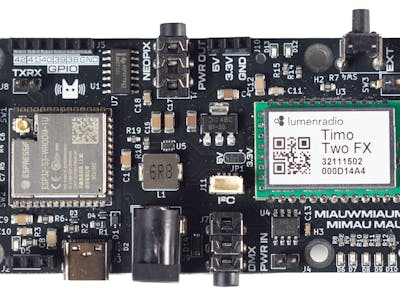
Miauwceiver is a versatile device designed to bridge the gap between professional stage lighting systems and DIY robotics. Built around an ESP32 microcontroller and a LumenRadio TimoTwo CRMX module, it can both transmit and receive CRMX wireless signals. This allows users to convert lighting control data into various protocols like Art-Net, sACN, OSC, and MIDI, all while interfacing with hardware through I2C, UART, SPI, and GPIO.
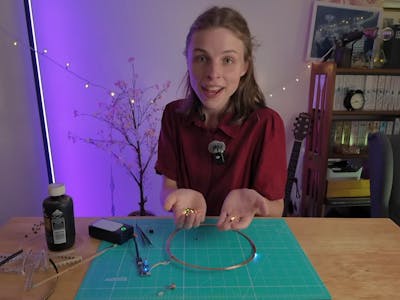
The Easy Way to Make Wireless LEDs for Fun and Profit
Wireless LEDs are compact light-emitting diodes that operate without visible power sources, utilizing inductive power transfer, similar to how some smartphones charge wirelessly. Myth Made has put together a straightforward guide for creating these wireless LEDs at a minimal cost. The design includes a small SMD (surface-mount device) coil, an SMD LED, and an SMD capacitor to ensure smooth power delivery.
AERIS-10 Brings Long-Distance Radar Scanning to the Maker Community
Nawfal Motii has created the AERIS-10, an open-source radar system that brings long-distance scanning capabilities to the maker community at a fraction of the cost of commercial alternatives. Traditional hobbyist radar modules typically have a limited range of only a few meters, but AERIS-10 extends that capability to over 20 kilometers while costing up to 95% less than commercial systems, which can run into the hundreds of thousands of dollars.
Matteo Fenu's Raspberrarium Turns Two LEDs Into a Convincing Day-Night and Lunar Cycle Simulator
Matteo Fenu has created an innovative project called Raspberrarium, which uses a Raspberry Pi and two WS2812 programmable LEDs to simulate realistic day-night and lunar cycles for terrariums. This system is particularly useful for small enclosed ecosystems that lack natural light, as it mimics the full spectrum of daylight and the phases of the moon.
Programming MEC16xx Embedded Controllers
The article discusses programming the MEC16xx series of embedded controllers, which are used in various applications to manage hardware and perform specific tasks. The author provides detailed insights into the programming methods, tools, and libraries that can facilitate working with these controllers, making it easier for engineers and hobbyists to integrate them into their projects.