Rising Edge Digital • Hardware & Embedded Systems for Software Developers
Your Next Weekend Project · Touch Pi: a Pi Art Generator (ESP32 Touchscreen) · A Turnkey Solution for Rugged Off-Grid IoT

Your Next Weekend Project: A Fully Offline, Voice-Activated Robot Dog
Tech Talkies has created a fun weekend project: a fully offline, voice-activated robot dog named Jolly. This project is designed for hobbyists looking to dive into robotics using accessible hardware. Jolly runs entirely on-device, responding to voice commands without the need for cloud services, which enhances both speed and privacy.
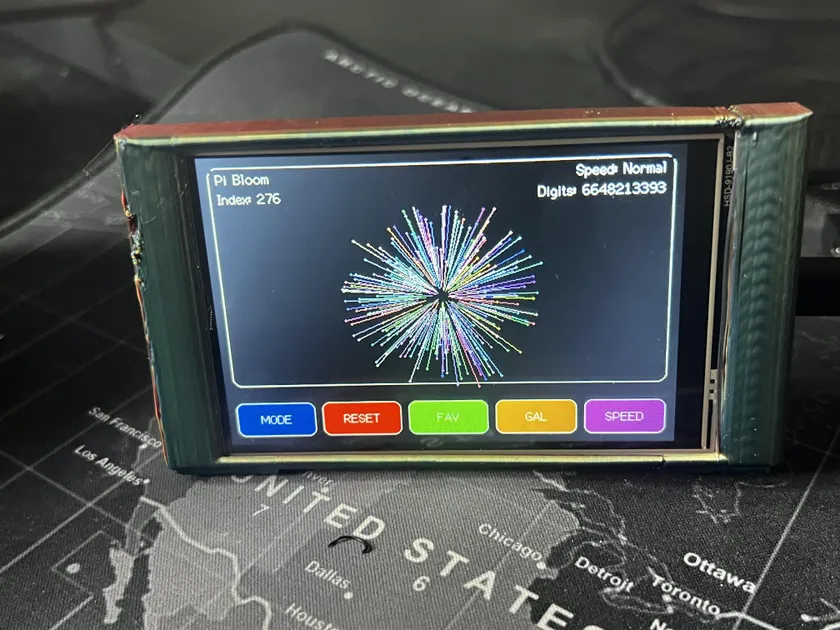
Touch Pi: a Pi Art Generator (ESP32 Touchscreen)
The Touch Pi project is an innovative device that turns the mathematical constant π (pi) into a dynamic visual experience. Created by The Debunker and showcased on Instructables, it utilizes an ESP32 microcontroller paired with a 4.0” touchscreen display to generate real-time art based on the digits of pi. Each digit influences various elements of the artwork, such as motion, color, and geometry, resulting in continuously evolving patterns that never repeat.
USB for Software Developers: an introduction to writing userspace USB drivers
The article introduces a guide on writing userspace USB drivers, simplifying what can often seem like an intimidating task. It emphasizes that developing a driver for a USB device isn't as complex as it might first appear, comparing it to writing applications that use sockets. This perspective makes it more approachable for those who may not have extensive hardware experience.
PlanePortal: Make a Live Flight Tracker with PyPortal
Kevin Loeffler created a project called PlanePortal using an Adafruit PyPortal, which turns it into a live flight tracker for your workspace. This device monitors a specified radius around any location you choose and fetches real-time aircraft positions from the OpenSky Network. It enhances this data with information about routes and airlines from ADSBDB, presenting it all on a compact aviation-style dashboard.
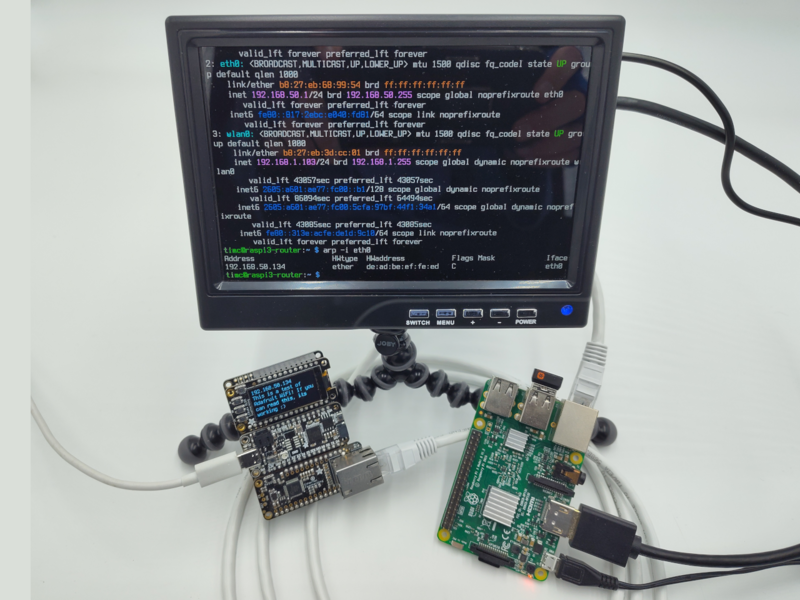
NEW LEARN GUIDE: Using a Raspberry Pi as a Router
A new guide from Adafruit shows how to use a Raspberry Pi as a makeshift router. This comes in light of recent FCC regulations banning the production of new consumer-grade routers outside the US, prompting many to explore alternative solutions. The guide details the setup process and highlights that even older models like the Raspberry Pi 3 B+ can effectively perform this function.
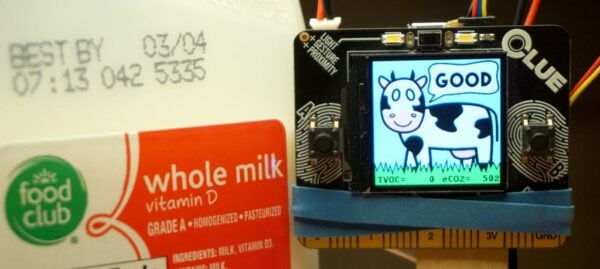
Digital Nose Milk Freshness Checker
The article discusses a project that creates a “freshness checker” for milk using gas sensors. Instead of relying on the traditional sniff test, which can be unreliable if your sense of smell is compromised, this device utilizes an SGP30 gas sensor to detect the presence of gases emitted by spoiled milk. The project is built around a CLUE board, which is a microcontroller designed to work with sensors and displays.

An Arduino gives this quirky old LED sign a new life as a smart display
Clem Mayer from element14 Presents revived a vintage LED matrix display using an Arduino UNO R4 WiFi. The sign, which still worked and displayed its last programmed message, posed a safety risk due to a poorly wired AC-to-DC adapter. Mayer first replaced the risky power supply with a correctly wired external one that outputs a safe 5V DC, ensuring it was safe to use.
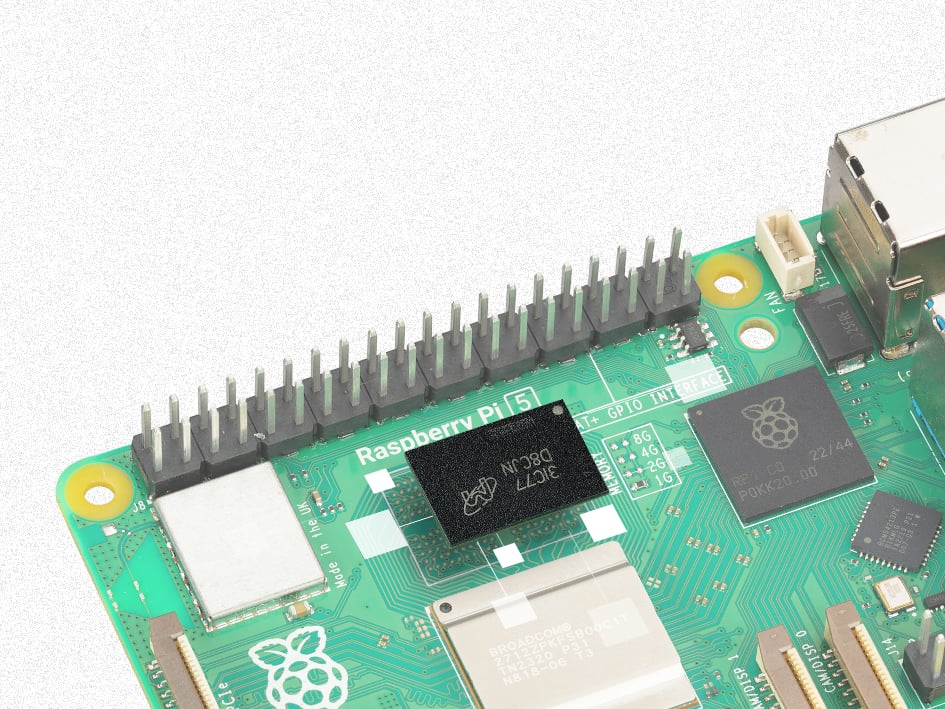
Mighty projects for your 1GB Raspberry Pi 5
The article highlights project ideas specifically for the 1GB variant of the Raspberry Pi 5, emphasizing how to make efficient use of its resources given the current high cost of DRAM. This model features the same powerful BCM2712 system-on-chip (SoC) as its higher RAM counterparts, making it a budget-friendly option for users needing decent processing power without the full RAM capacity.
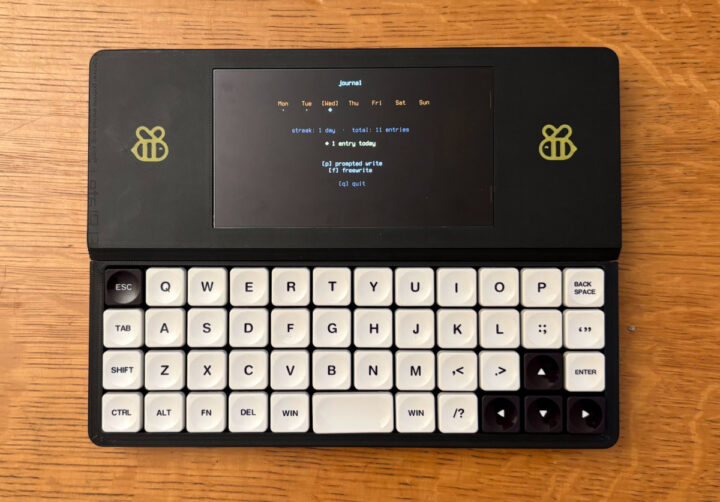
Bee Write Back – A Raspberry Pi Zero 2 W-based DIY writerdeck with 5.5-inch OLED and mechanical keyboard
The Bee Write Back is a DIY writing device built around the Raspberry Pi Zero 2 W. This project combines a 5.5-inch AMOLED display and mechanical keyboard to create a distraction-free writing environment. The creator, Simon, was looking for a way to journal without using a traditional notebook, so he designed this writerdeck using readily available components, making it accessible for others to replicate.
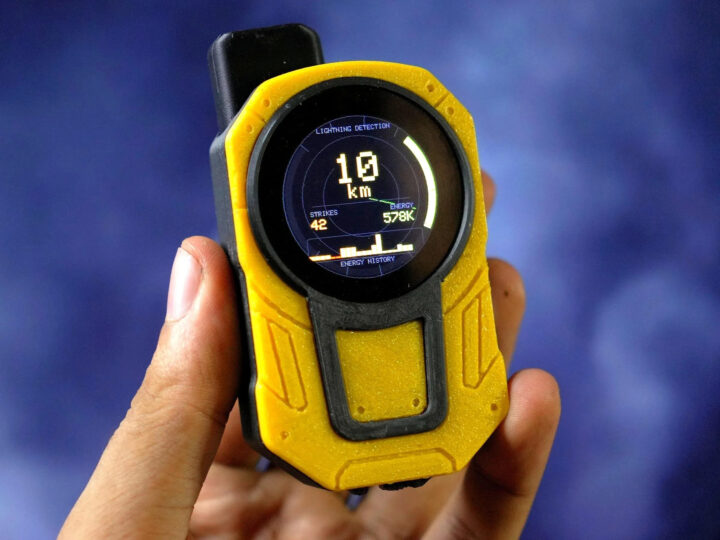
Flash Bee – An ESP32-C3-based DIY handheld lightning detector
Flash Bee is a DIY handheld lightning detector that you can build using widely available components, including the XIAO ESP32-C3 Wi-Fi and Bluetooth board, a 1.28-inch round touchscreen display, and an AMS AS3935 Franklin lightning sensor. The design is compact and user-friendly, featuring a 3D-printed enclosure that makes it easy to assemble. The AS3935 sensor is capable of detecting lightning strikes up to 40 kilometers away with an accuracy of about one kilometer.

NASA Artemis Watch 2.0 – An ESP32-S3-powered, NASA-inspired wearable kit for education
The NASA Artemis Watch 2.0 is a programmable smartwatch designed for educational purposes, built around the ESP32-S3 microcontroller. This device features a 1.14-inch monochrome display and includes various sensors such as a 6-axis accelerometer and gyroscope, a buzzer, and a real-time clock. It connects via WiFi and Bluetooth, making it versatile for different projects. The watch is powered by a 600 mAh lithium-polymer battery, providing about 2 to 3 hours of usage on a single charge.
John Park’s CircuitPython Parsec: UART Display Write
John Park's article focuses on using CircuitPython to send serial messages to a UART (Universal Asynchronous Receiver-Transmitter) display, specifically the TermDriver2. This process involves writing simple code that allows users to communicate with the display over a UART interface, making it easier to show text or data in various projects.
Debugging Linux Apps with VS Code: A Step-by-Step Guide
This article provides a practical guide for debugging Linux applications using Visual Studio Code (VS Code) via SSH. It details the necessary setup, focusing on the Remote Development extension in VS Code, which allows you to connect to and work with remote Linux systems. The author walks through creating a simple "hello world" application on embedded Linux platforms like the NXP i.MX93 or Raspberry Pi, offering a hands-on approach to get started with debugging.
Cydintosh Turns Your Cheap Yellow Display Into a Macintosh Plus — And Connects It to Home Assistant
Cydintosh is a project by a developer known as "likeablob" that turns the Cheap Yellow Display (CYD), based on the Espressif ESP32, into a functioning Macintosh Plus emulator. This emulator not only mimics the classic Mac experience from 1986 but also enables interaction with a Home Assistant setup, making it a neat tool for vintage computing fans and hobbyists.
An E Ink Makeover for the Classic Film Clapperboard
Gokux has created a modern take on the traditional film clapperboard by developing the E-Slate, a digital clapperboard featuring a large 7.5-inch E Ink display. This device addresses the common issues of legibility and smudging that come with conventional clapperboards, especially in bright outdoor settings. With the E-Slate, filmmakers can easily update key production details such as roll, scene, take, director, and date using a companion smartphone app, which connects to the device's built-in Wi-Fi.
A Turnkey Solution for Rugged Off-Grid IoT
The SN1 Solar Node is a ready-to-use solution designed for rugged off-grid IoT applications, featuring a robust microcontroller housed in a weatherproof enclosure. Developed by Granz Scientific LLC, it incorporates an ESP32-C3 module equipped with a 160 MHz RISC-V processor, along with integrated Wi-Fi and Bluetooth Low Energy, making it suitable for various projects like environmental monitoring and smart agriculture.
Niccolò Venerandi's M5Stack PaperS3-Powered Mirtillo Could Be "The Ultimate Productivity Device"
Niccolò Venerandi has developed a unique productivity device called Mirtillo, leveraging the M5Stack PaperS3 ePaper development board. This project stemmed from his frustrations with managing tasks and events using conventional apps, which often led to procrastination and rigidity in scheduling. Instead of building a mobile app or a Telegram bot, he opted for a more tactile solution that offers a physical interface for task management.
Uladzimir Kazakevich's Sleeper-Build Toshiba T1200 Upgrade Hides a Raspberry Pi Inside
Uladzimir Kazakevich has transformed a vintage Toshiba T1200 laptop into a modern sleeper build by integrating a Raspberry Pi 4 Model B while maintaining the original keyboard. This project showcases a clever blend of nostalgia and functionality, as the T1200, which originally launched in 1987 with an Intel 80C86 processor and minimal RAM, is now powered by significantly more advanced technology.
Desktop Power in a Tiny Homelab
Michael Klements built a compact homelab solution by fitting a Mini-ITX motherboard into a custom-designed 10-inch Lab Rax server rack. This approach allows for greater computing power and expandability compared to smaller single-board computers like Raspberry Pis, which are limited in performance and peripheral support.
Biquad Filters (DSP with STM32) - Phil's Lab #172
Phil's Lab dives into the theory and implementation of biquad filters within a digital signal processing (DSP) context, specifically using STM32 microcontrollers for audio processing. The video explains the fundamental concepts of biquad filters, which are second-order recursive filters essential for various audio applications due to their efficiency and flexibility. Phil breaks down the reasons for using biquad filters, emphasizes their advantages such as stability and easy coefficient management, and introduces the transposed direct form II structure, which optimizes performance.
USB for Software Developers
The article provides a comprehensive overview of USB (Universal Serial Bus) technology, specifically tailored for those looking to understand its implications in software development and hardware interaction. It breaks down the USB protocol, explaining how it facilitates communication between devices and hosts. The author highlights the importance of understanding USB’s various components, such as the physical connections, protocols, and data transfer modes, which are crucial for anyone working on projects that involve USB interfaces.
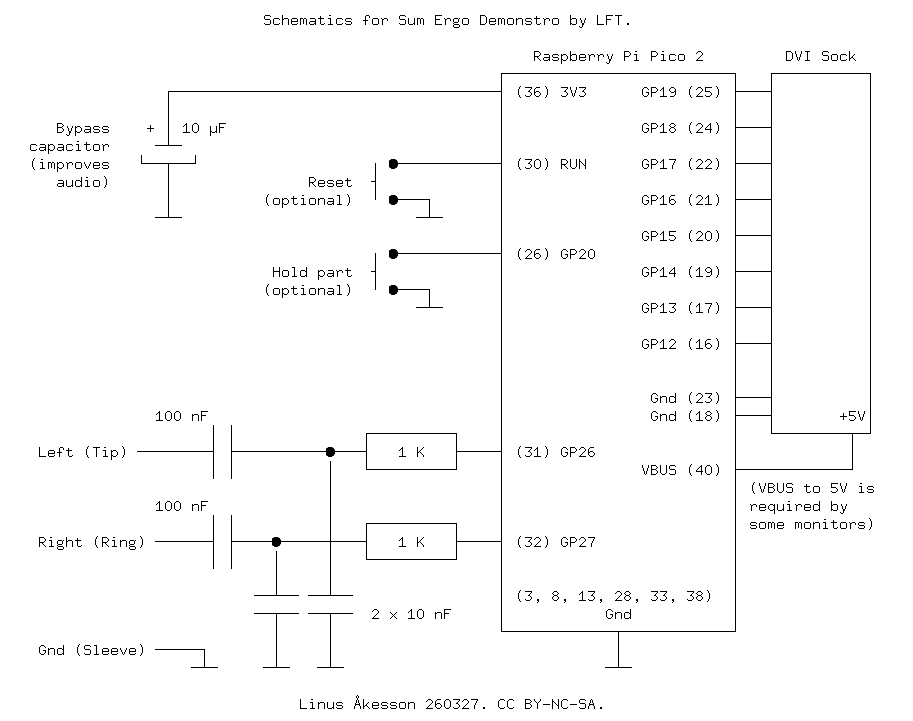
Using DVI and sound on the RISC-V side of the Raspberry Pi Pico 2
Linus has been working with the Raspberry Pi Pico 2, specifically utilizing the RISC-V side of the chip instead of the usual Arm core. He’s integrated a DVI (Digital Visual Interface) sock board along with custom audio circuitry to create impressive graphics paired with sound. This project showcases the capabilities of the RISC-V architecture in handling multimedia output.