Rising Edge Digital • Hardware & Embedded Systems for Software Developers
Play Text Adventures on an E-Paper Handheld · Building a Homemade Induction Soldering Iron · ESP32 Demoboard
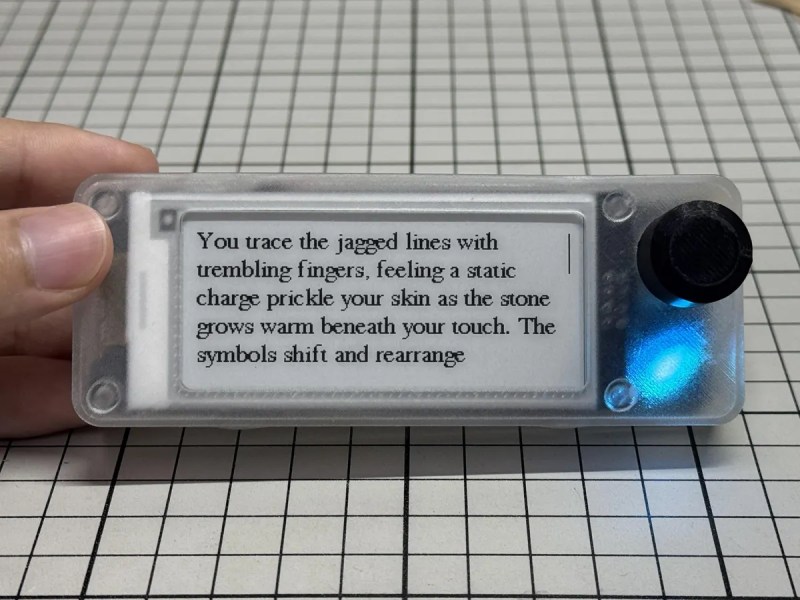
Play Text Adventures on an E-Paper Handheld
[Jeremy Ngai] created an e-paper handheld device called InkQuest that lets you play interactive text adventure games. It features a 2.9-inch e-paper display, a rotary encoder for navigation, and an RGB LED for mood lighting. The device is designed for extended play, providing around 20 hours of entertainment on a single charge, which is a significant improvement over older handhelds like the Game Gear.
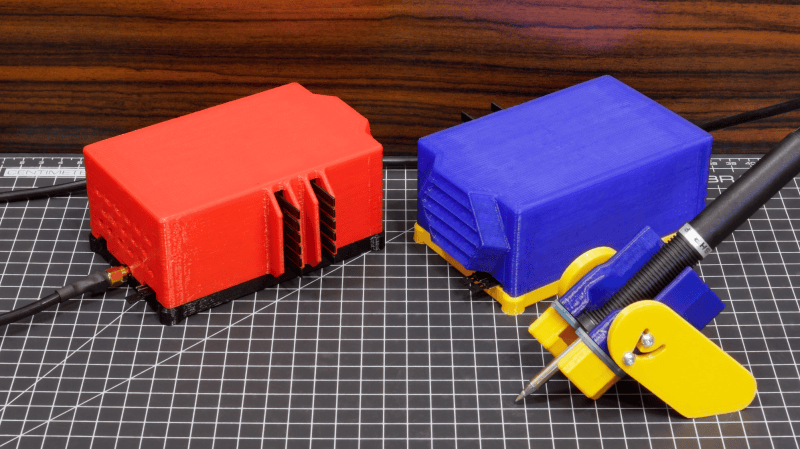
Building a Homemade Induction Soldering Iron
Frank Zhao has successfully designed and built two homemade induction soldering irons, which are known for their rapid responsiveness compared to conventional soldering irons. Instead of relying on heat conduction from a distant heater cartridge, these induction irons heat the tip directly using an induction coil, making them more efficient despite their complexity being primarily in the power supply that generates the RF signal.
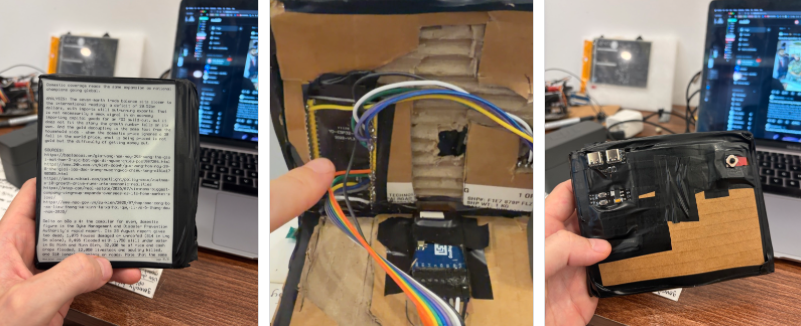
Build Your Own E-Reader for $40
Allan Binder from MUON SORTES has put together a straightforward guide for creating a budget-friendly e-reader for around $40. The project requires four main components: an ESP32-S3 development board, an e-paper display with an adapter, a five-way button module for navigation, and a power source. Depending on the display choice, the total cost can range from $35 to $60.
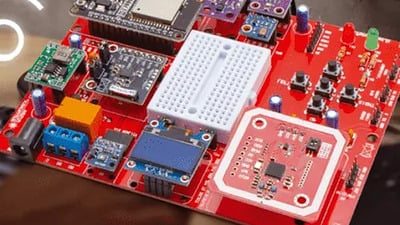
ESP32 Demoboard: New demo projects using on-board hardware
The article discusses new demo projects for the ESP32 demoboard, specifically focusing on five Arduino examples that utilize the board’s integrated OLED display and various plug-in breakout modules. These projects are part of a series by oeadmin on Open Electronics.
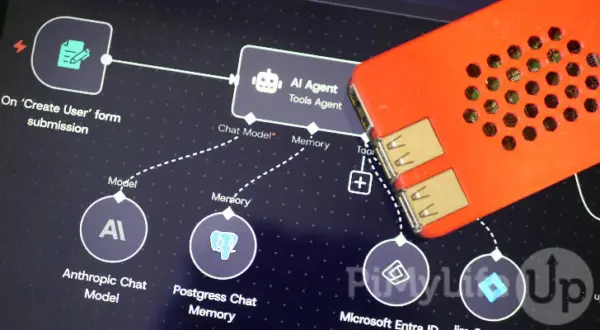
Set Up n8n on the Raspberry Pi
The article details how to set up n8n, a self-hosted workflow automation tool, on a Raspberry Pi. n8n allows users to create workflows by connecting various nodes on a canvas, where each node can perform tasks like fetching data, processing it, or sending it to another service. It's a handy alternative to cloud-based automation services like Zapier and Make, especially for those who prefer to manage their own data and workflows.
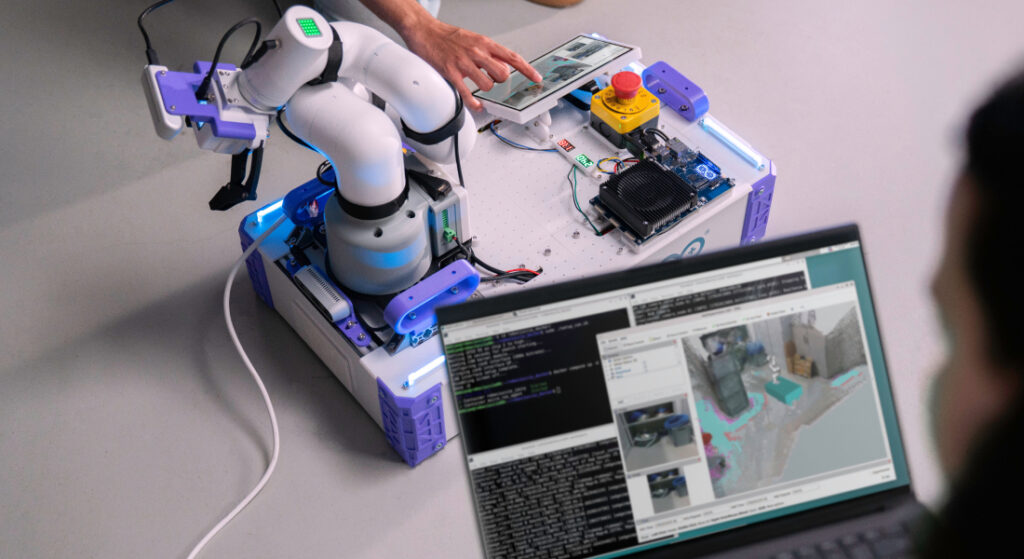
Unveiled at ROSCon: the easiest way to bring Arduino I/O into ROS 2
The article discusses the Arduino VENTUNO Q board, which integrates a Linux-capable Microprocessor Unit (MPU) and a real-time Microcontroller Unit (MCU) on a single board, designed to simplify communication between the two in robotic applications using ROS 2 (Robot Operating System). This dual-brain architecture eliminates the need for complex serial protocols or middleware when connecting the high-level functions of the Linux side with the deterministic tasks handled by the microcontroller.

EEVblog 1784 – Claude Code Reverse Engineer 121GW Firmware SUCCESS!
Claude Code successfully reverse-engineered the firmware for the 121GW multimeter, transforming it into C code in less than 24 hours. This achievement showcases the power of modern tools and techniques in software engineering, particularly in the realm of firmware analysis. The entire process is documented in the EEVblog episode, where Claude walks through the steps taken, including using the ST-LINK V2 programmer and installing GCC and Ghidra, a software reverse-engineering tool.
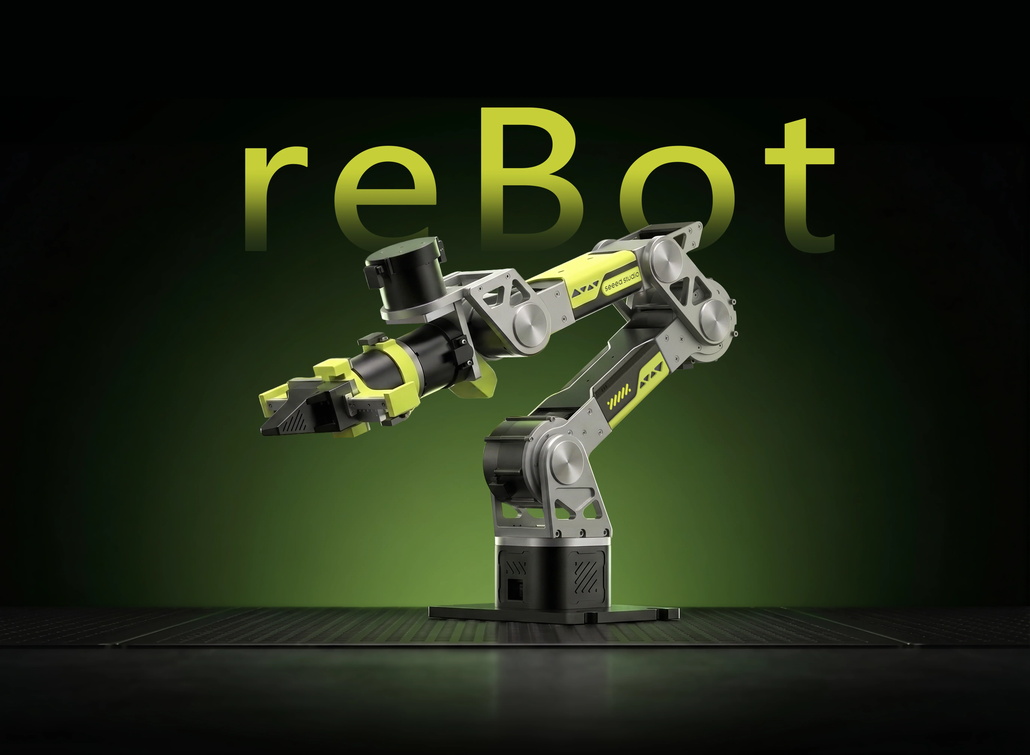
Which Robotic Arms Support ACT Imitation Learning with LeRobot?
The article discusses the integration of the Seeed reBot Arm B601-RS with LeRobot for Action Chunking with Transformers (ACT) imitation learning. This robotic arm is designed to facilitate a straightforward workflow for developers who want to teach tasks to the robot and run trained policies. The B601-RS features a robot adapter that connects state feedback and action commands, while cameras gather visual data for learning. Seeed provides a comprehensive integration guide and course chapters that cover data collection, ACT training, and real-robot evaluation.
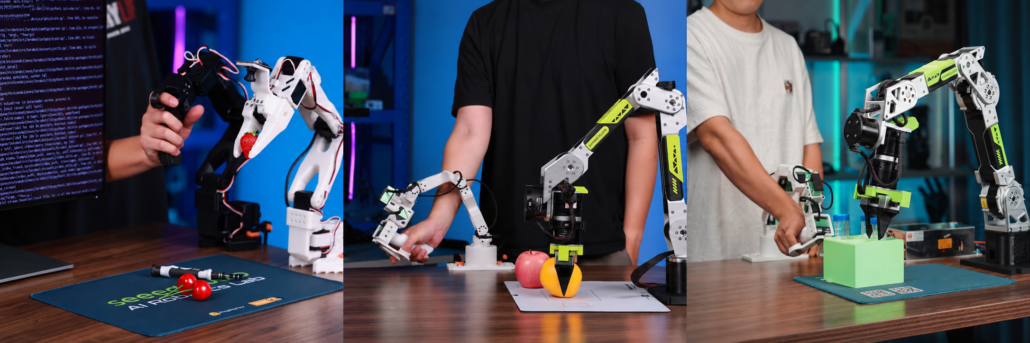
Open Source Robotic Arm Recommendation for Developers, Researchers, Educators, and Startups in 2026
The article discusses three highly recommended open-source robotic arms for developers, researchers, educators, and startups in 2026. These are the SO-ARM101 Pro Assembled Kit, reBot Arm B601-DM, and reBot Arm B601-RS. The focus is on choosing a robotic arm that offers a blend of high repeatability, adequate payload capacity, a practical working reach, and a user-friendly assembly and programming experience—all without breaking the bank.
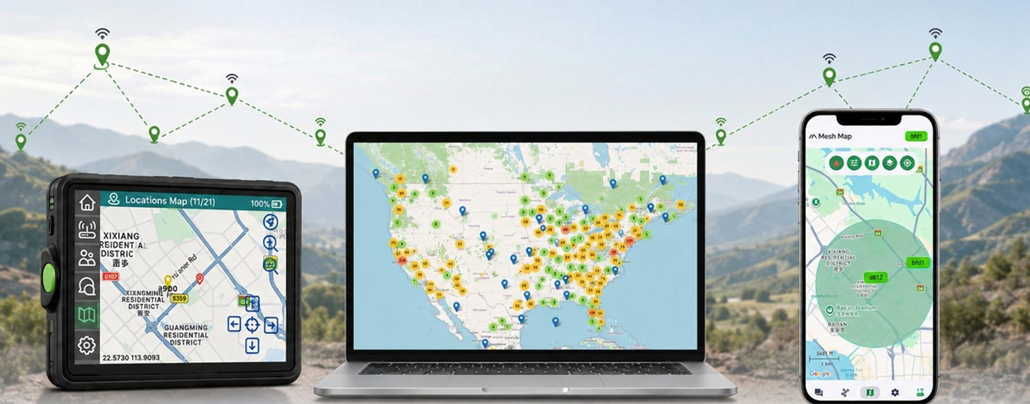
Meshtastic Map: How to View, Use, and Add Maps to Your Device
Meshtastic maps provide a visual representation of Meshtastic nodes and their locations on a geographic basemap, making it easier to understand the distribution of devices in a mesh network. This visualization is particularly useful for activities like hiking, team coordination, asset tracking, and network planning, as it helps users identify team members' locations and optimal relay positions.

NEW LEARN GUIDE: SDR Map Projects: ADS-B, APRS, and FT8
Adafruit has released a new guide focused on Software Defined Radio (SDR) projects using their CircuitPython support for USB SDR devices. This guide showcases the Adafruit_CircuitPython_MapTiles library, which allows users to plot data from three types of radio signals—Automatic Dependent Surveillance-Broadcast (ADS-B), Automatic Packet Reporting System (APRS), and FT8—on a live map.
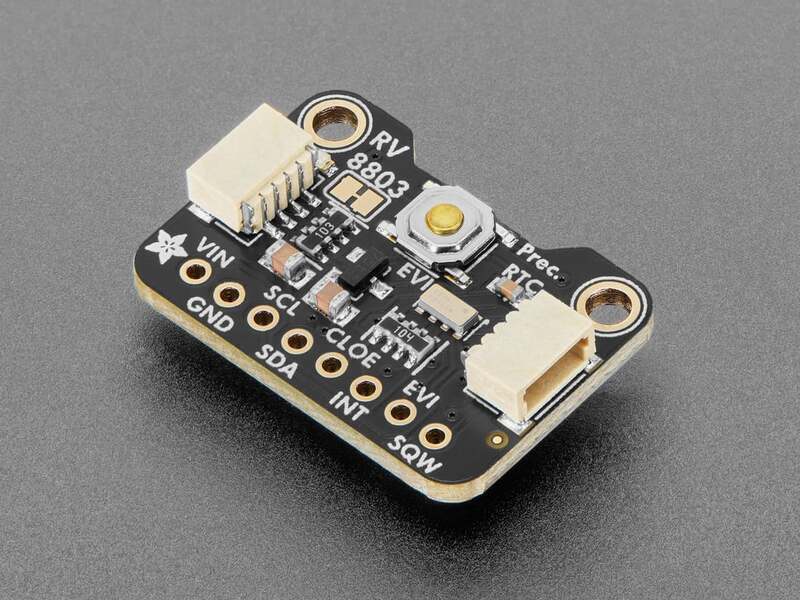
NEW GUIDE: Adafruit RV-8803 High Accuracy Real Time Clock
The Adafruit RV-8803 is a high-accuracy Real Time Clock (RTC) breakout board designed for applications where precise timekeeping is essential. It boasts an impressive accuracy of ±1.5 parts per million (ppm) at temperatures ranging from 0 to 50 degrees Celsius, which is achieved through a built-in crystal and temperature compensation management. This minimizes the common drift seen in traditional RTCs, eliminating the need for frequent time corrections via WiFi or GPS.

Your AirPods Are Now a Mouse
MousePods is an innovative project that repurposes Apple’s AirPods into a hands-free mouse for Linux computers. Developed by Matteo Gaudioso, this open-source application utilizes the built-in motion sensors of AirPods 3 and AirPods Pro to translate head movements into cursor actions. Instead of maneuvering a traditional mouse, users can simply tilt or turn their heads to control the pointer on their screen.
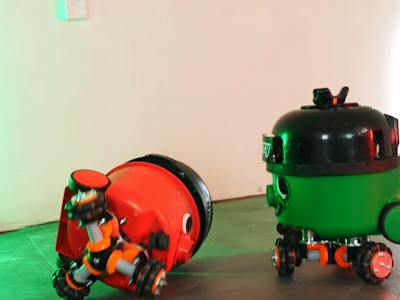
Making Henry Hoovers Battle for AI Education
James Bruton has created an entertaining project that involves making two Henry Hoovers—those cute, face-equipped shop vacs—battle each other autonomously using artificial intelligence (AI). Instead of delving into large language models, Bruton employed deep learning, training the AI in a digital simulation built with RViz, which included 3D digital twins of the Henry Hoovers. The AI learned through a simplified 2D battle environment using PyGame, with reinforcement learning techniques to encourage aggressive behaviors.
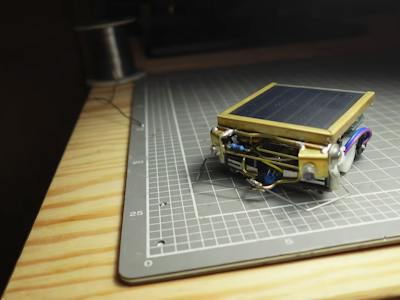
Building a Robot Pet Without a Microcontroller
YouTuber ALTco has created an intriguing robot pet that operates entirely without a microcontroller, relying instead on analog electronics and solar power. This tiny robot, inspired by BEAM (Biology, Electronics, Aesthetics, Mechanics) robotics, uses light to guide its movements, exhibiting lifelike behavior without any programming. The project emerged from ALTco's experiences caring for frogs, leading to the design of a solar-powered robotic creature that can roam around without the need for a battery.