Rising Edge Digital • Hardware & Embedded Systems for Software Developers
Mobile Robot Full-Stack Development in Practice · Turn Arduino UNO Q into your local 3D printing watchdog · An Arduino-Compatible Relay Controller for RS-485 Networks

Mobile Robot Full-Stack Development in Practice: An Open-Source Course from Jetson to Autonomous Robotics
Mobile Robot Full-Stack Development in Practice is an open-source course created by Seeed Studio aimed at helping developers understand mobile robotics as a cohesive system. It focuses on integrating various components like hardware setup, visual perception, multi-sensor fusion, simultaneous localization and mapping (SLAM), autonomous navigation, and robotic manipulation. This course is particularly centered around the reComputer Robotics J501 powered by NVIDIA Jetson AGX Orin, which provides a powerful platform for building robotics applications.

Haunted Portrait #piday #raspberrypi
The article discusses a creative project called the Haunted Portrait, which uses a Raspberry Pi to animate a framed flat panel TV, giving the illusion of a living painting. The setup is designed to look like a traditional portrait at a glance, but the eyes of the subject subtly shift, creating an eerie effect that can surprise and entertain viewers.

John Park’s CircuitPython Parsec: Seesaw Gamepad QT
John Park's latest project leverages the Seesaw chip to create a gamepad using CircuitPython. This design enables users to read button states as a bitmask and obtain analog thumbstick values over I2C (Inter-Integrated Circuit), making it a practical tool for hobbyists interested in game controller applications.
ReBoots Animated LED Boot Laces
ReBoots Animated LED Boot Laces are a fun and interactive project that combines glowing NeoPixels with light pipe laces to create an eye-catching accessory for your shoes. Each heel is equipped with a sensor that monitors your movement, allowing the lights to animate and respond to your steps, giving your footwear a vibrant flair as you walk or dance.
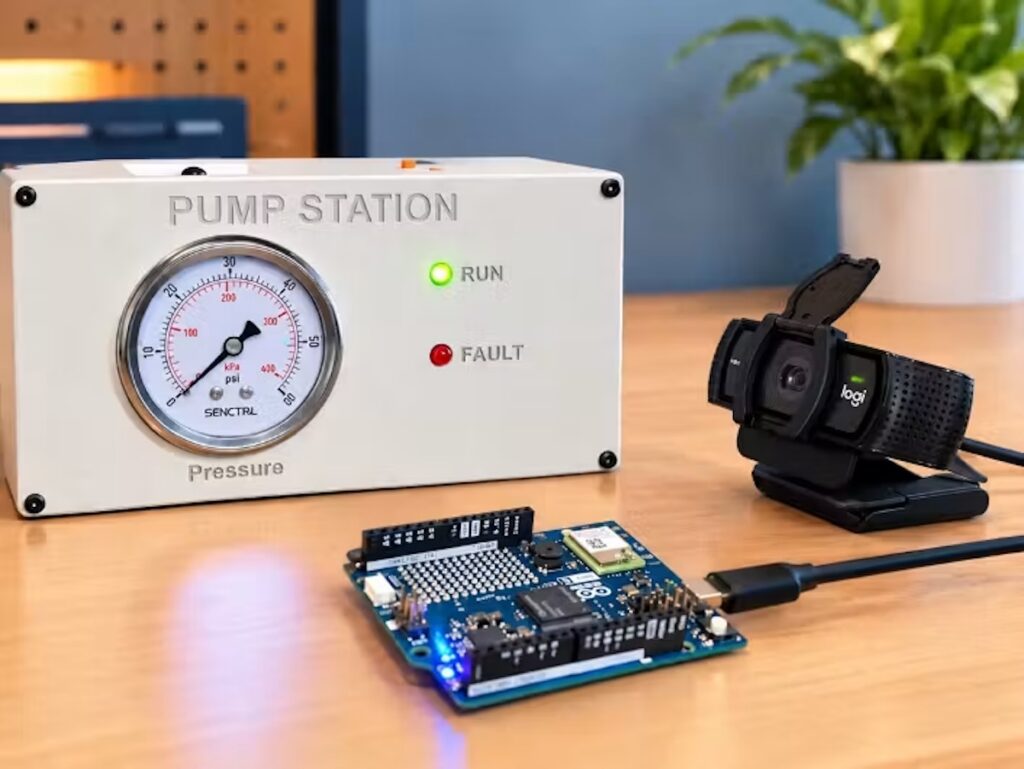
Digitize analog gauge readings with edge AI
Michael Bryan Ross has developed an innovative way to digitize analog gauge readings using edge AI, without modifying existing equipment. His approach addresses the common challenge of integrating digital monitoring into machinery that relies on analog gauges. Instead of replacing the gauge or using complex modifications that could disrupt serviceability, Ross uses a simple setup involving a camera and an Arduino® UNO Q.

Build your own smart doorbell and protect your privacy – in one hour, with Massimo Banzi
Massimo Banzi and Andrea Richetta are hosting a live session where you can learn to build your own smart doorbell using the Arduino® UNO Q board. This DIY project allows you to take control of your home security while ensuring your privacy by managing your data locally, rather than relying on cloud-based services that come with commercial smart doorbells.
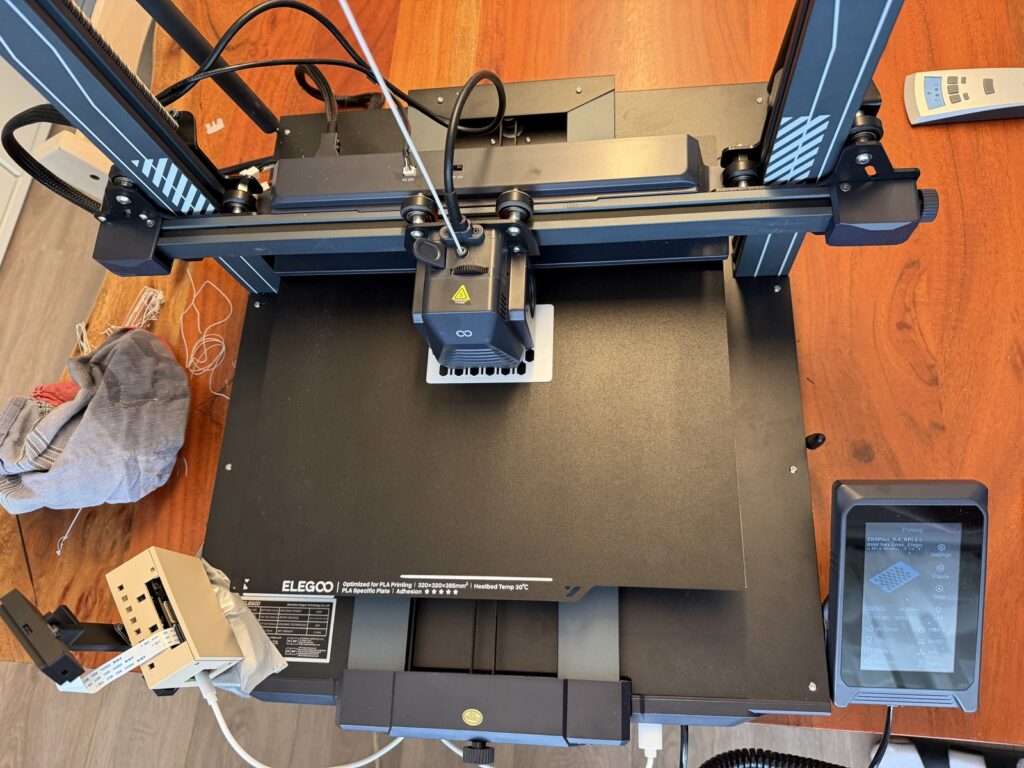
Turn Arduino® UNO™ Q into your local 3D printing watchdog
The article discusses how to turn an Arduino UNO Q into a local watchdog for 3D printing, providing an affordable solution for monitoring print jobs without the need for advanced printers. By using the UNO Q along with a camera, the setup detects anomalies in the printing process instead of specific failures, which allows it to flag issues that may not have been anticipated during training.
An Arduino-Compatible Relay Controller for RS-485 Networks
This article presents a project for building an Arduino-compatible relay controller designed for RS-485 networks, which allows you to switch a 10 A load remotely. The project emphasizes the accessibility of using Arduino for controlling heavy electrical loads, leveraging the robust RS-485 communication standard, known for its ability to handle long distances and multiple devices on a single bus.

Inspired by Microduck? Explore Open-Source Physical AI Robots
MicroDuck is a small, open-source robot that's gaining traction in the robotics community for its ability to learn and adapt, marking a notable shift from traditional robots that follow fixed programs. This shift encompasses various technologies such as reinforcement learning, computer vision, and edge AI, which are increasingly being integrated to create more intelligent robotic systems.
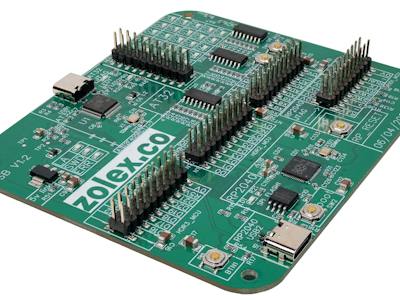
Superboard 2040 Puts a Logic Analyzer on Your Dev Board
The Superboard 2040 is a new development board designed around the Raspberry Pi RP2040 microcontroller, featuring a dedicated microcontroller for debugging and monitoring tasks. This setup incorporates a 16-channel logic analyzer that connects directly to the RP2040's GPIO pins, eliminating the need for separate connections and simplifying the debugging process. The analyzer can sample at 10 MHz, and you can view the captured signals using Zolex's Workbench application, which offers tools for waveform analysis and supports additional protocols through a built-in UART decoder.
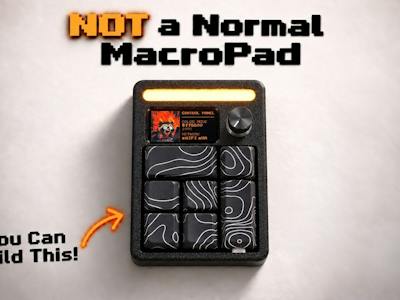
This Unique Macropad Controls Everything Without a PC
The Raccoon Lab has developed a unique macropad that operates independently of a PC, allowing users to control various smart devices directly. This innovative design utilizes a microcontroller, specifically the ESP32, which enables Wi-Fi connectivity. This feature allows the macropad to communicate with a Home Assistant server, giving it the capability to control anything connected to the server, such as smart thermostats or lights.
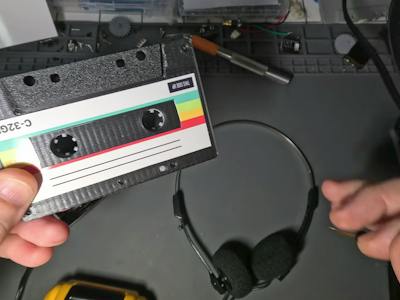
A Digital Audio Player Hidden Inside a Cassette Tape
Jonathan Rowny has created a unique digital audio player housed within a cassette tape, allowing it to play music directly through a tape deck without needing an external device. This innovative design uses a stereo tape head salvaged from a cassette adapter, which is repurposed to generate a magnetic field that mimics the signal from actual magnetic tape. When inserted into a tape deck, the playback head picks up this field, enabling the playback of MP3 files stored on a microSD card.
Converting a $20 4G wireless hotspot into a texting device
A developer has successfully transformed a $20 4G wireless hotspot into a texting device using a combination of software and hardware modifications. The process involves accessing the hotspot's internal modem and reprogramming it to send and receive SMS messages, making it a low-cost alternative to traditional texting devices.

EEVblog 1771 – A Tricky OpAmp Exam Question
Dave from EEVblog tackles a tricky exam question about operational amplifiers (OpAmps) that challenges common assumptions. He walks through the nuances of the question, highlighting key principles like the two most important rules of OpAmp circuits and the role of capacitive reactance in AC analysis. This isn't just a typical problem; the question plays with the idea of needing to consider frequency while also ignoring it, making it a clever puzzle for students.
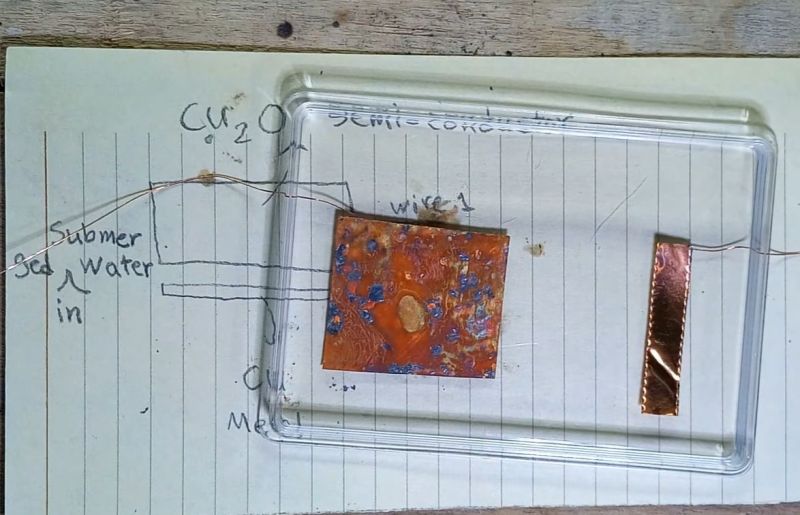
Making a Copper-Oxide Photodetector from Scratch
A recent article on Hackaday discusses the creation of a copper-oxide photodetector, specifically Cu₂O, which can be made at home using basic materials like copper and a heat source. The process involves heating one of the copper elements in a saltwater cell until a semiconductor layer of copper oxide forms. Even with a simple setup, like a gas stove, you can generate enough current to use in basic light detection circuits.