Rising Edge Digital • Hardware & Embedded Systems for Software Developers
A smart solar panel system you can 3D print, build, and… · Build a retro home arcade with an Arduino UNO Q board! · AI Projects with Raspberry Pi
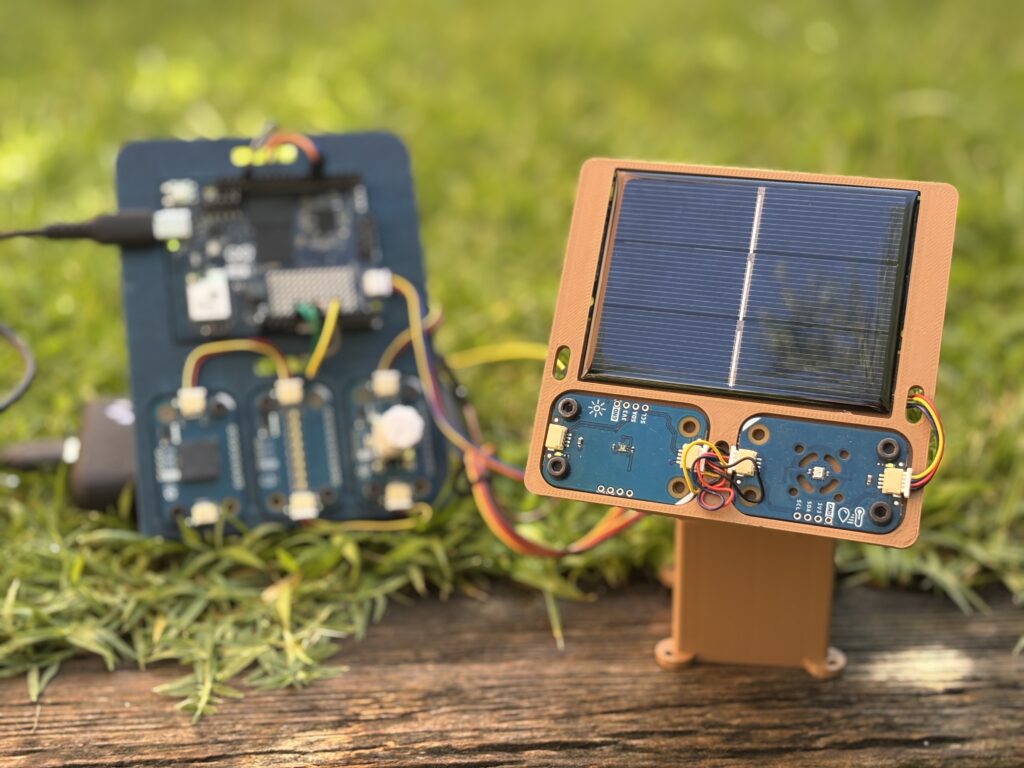
A smart solar panel system you can 3D print, build, and learn from – with the Arduino® UNO™ Q board
Julián Caro Linares created an open-source smart solar panel system that you can 3D print and build yourself, using the Arduino® UNO™ Q board. This project not only teaches you about solar energy but also provides a hands-on learning experience. The system includes two servo motors to adjust the solar panel's orientation for optimal sun exposure, and it features a live dashboard that displays real-time energy readings, weather data, and other metrics.

20 FPS on E-Paper Display Without Help
The article discusses a project by Tony Weston that achieves 20 frames per second (FPS) on an electronic paper display using an ESP32 microcontroller, without the need for additional processing power. This is noteworthy because e-paper displays typically struggle with refresh rates, often limited to single-digit FPS in older models and around 10-20 FPS in mid-range devices, which usually require more advanced hardware.
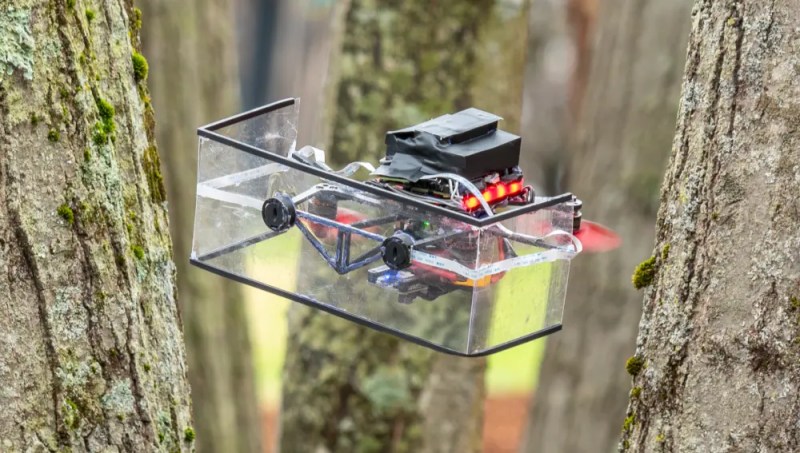
Echolocation for Drones
A team at Worcester Polytechnic Institute (WPI) has developed a system using low-power ultrasonic sensors to help drones navigate in challenging environments, similar to how bats use echolocation. Traditional navigation methods like radar, lidar, and GPS can struggle in low-light or obstructed conditions, and they often consume too much power for battery-operated drones. By implementing a dual sonar array, the researchers created a more efficient sensing solution that performs well where visual systems fail.
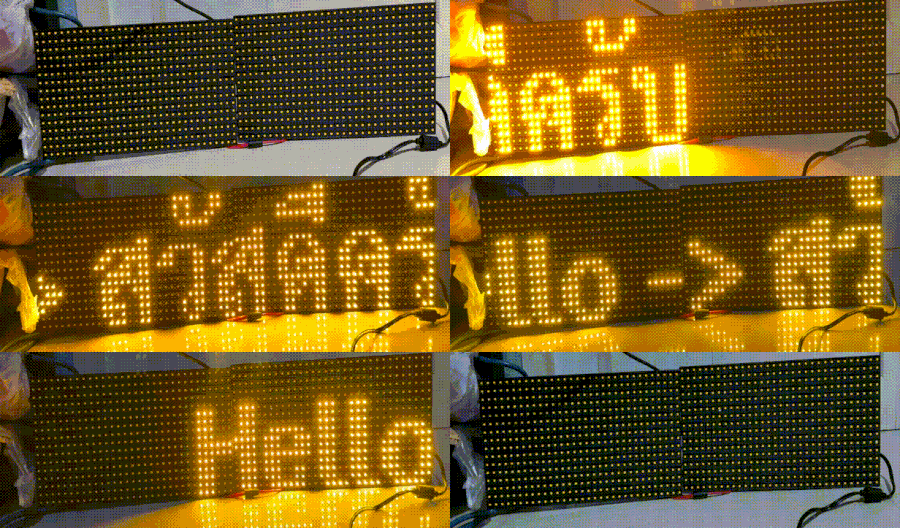
The SmartFont Library for LED matrix displays
The SmartFont Library is a C++ font library created by Chaiwat Leanyos, specifically designed for embedded systems like Arduino and ESP32. Its main function is to efficiently render UTF-8 strings on pixel-based displays, and it includes special features for supporting the Thai language, ensuring that vowels and tone marks are correctly displayed without overlapping.

Replacing a $120k bowling center system with $1,600 in ESP32s
HN user section33 took on the challenge of replacing an outdated and costly scoring system at an abandoned 8-lane bowling center. The original system was priced between $80,000 and $120,000, with parts costing around $4,000 per lane pair. Instead of spending that much, he developed a more affordable solution called OpenLaneLink, which utilizes ESP32 microcontrollers to manage the scoring system for just $200 to $400 per lane pair.
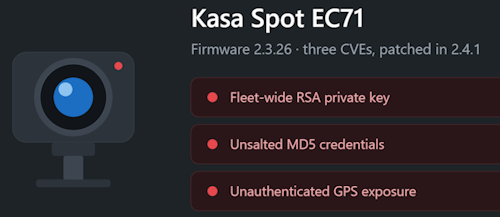
Serious flaws found in a popular WiFi camera
Independent researcher Christopher Childress, known as BadChemical, recently published a detailed advisory on the TP-Link Kasa Spot EC71 WiFi camera, revealing significant security flaws. His investigation involved extracting the firmware directly from the camera using a CH341A programmer and conducting a thorough analysis, which led to the discovery of three critical vulnerabilities now documented as CVEs (Common Vulnerabilities and Exposures).
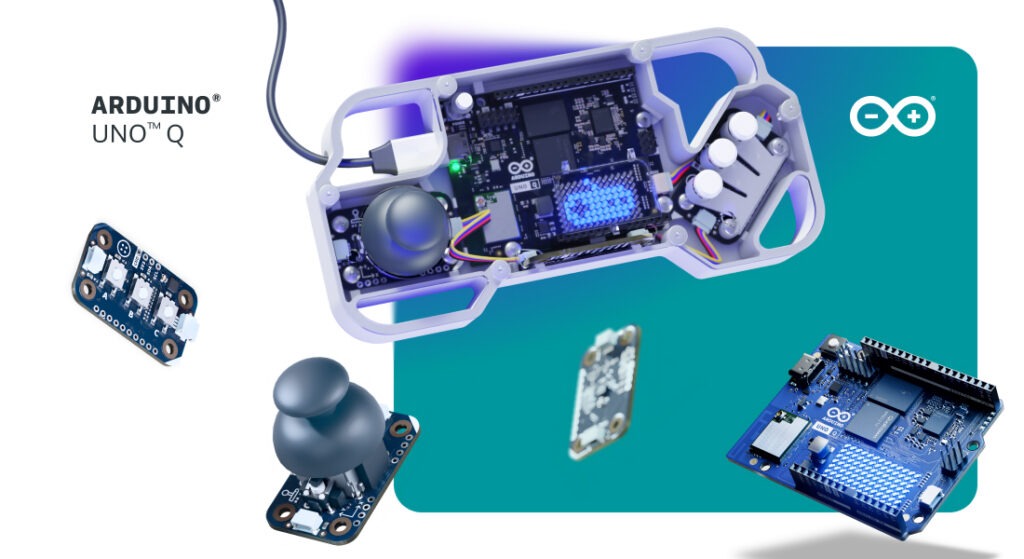
Build a retro home arcade with an Arduino® UNO™ Q board!
The article introduces the UNO Q Arcade bundle, a new project from Arduino that allows users to build their own retro home arcade using the Arduino UNO Q board. This bundle includes everything you need to create an arcade cabinet, complete with step-by-step instructions to help you get it up and running quickly—ideal for a weekend project.
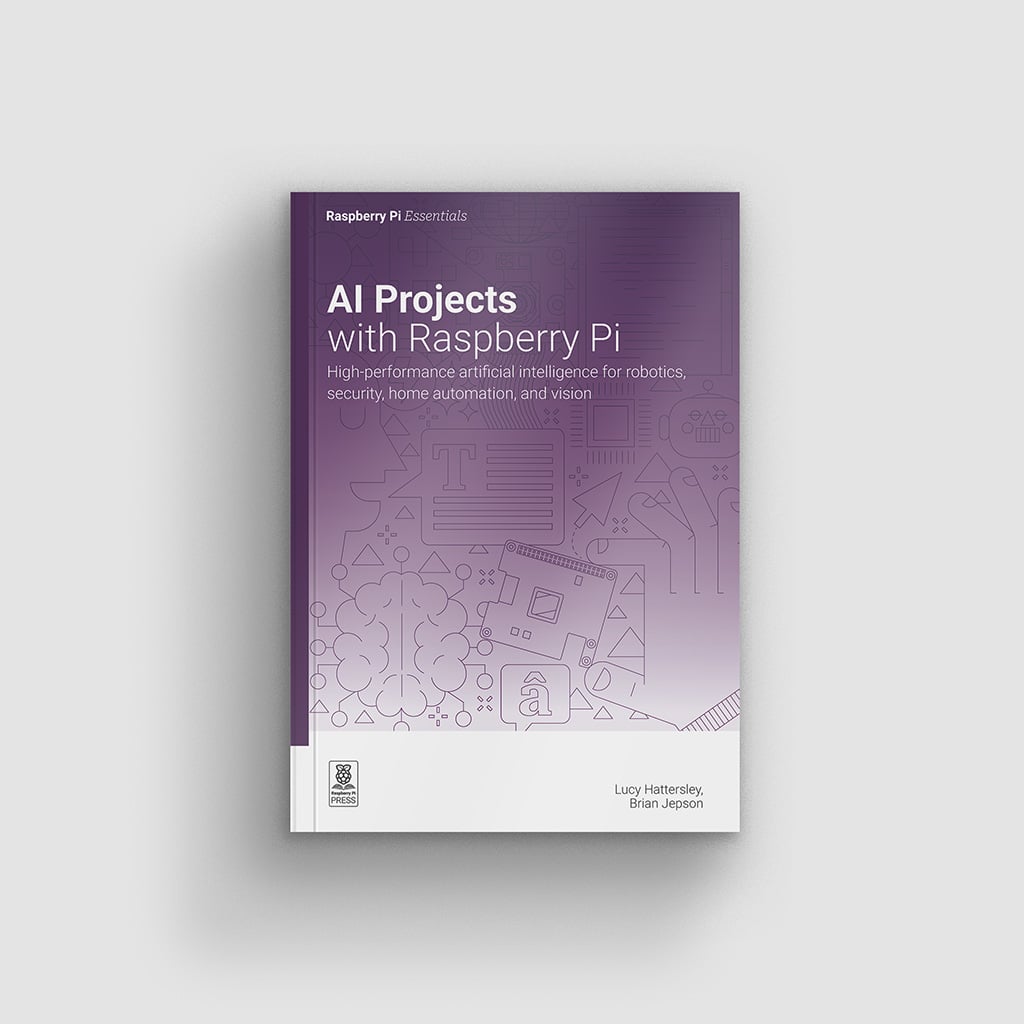
AI Projects with Raspberry Pi — out now!
The new book, *AI Projects with Raspberry Pi*, explores practical applications of artificial intelligence (AI) using Raspberry Pi hardware. It focuses on hands-on projects that are designed to be both functional and achievable, allowing readers to create and run their own AI applications at home. This isn't just theory; the projects range from computer vision to language processing, enabling users to interact with their devices in innovative ways.
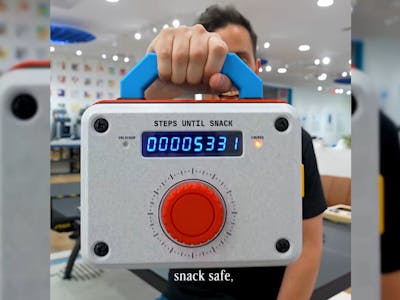
Earn Your Junk Food with This Step-Counting Lock Box
Matty Benedetto from Unnecessary Inventions created a unique lock box that requires you to walk a certain number of steps to unlock your snacks. The idea is simple: you put your treat inside, set the step count to match the calories in the snack, and only after completing the steps will the box open. This approach aims to make indulging in junk food feel more rewarding by incorporating a bit of exercise first.

Telling Time Through Literature
LitClock is an innovative clock that tells time using literary quotes instead of numbers. Created by GitHub user kapoorankush, this open-source project utilizes a Raspberry Pi Zero 2 W and a 7.5-inch Waveshare e-paper display to show passages that correspond to each minute of the day, alongside the current date and local weather. With over 4,800 curated quotes, the e-ink display offers a paper-like appearance, making it a visually appealing alternative to traditional digital clocks.
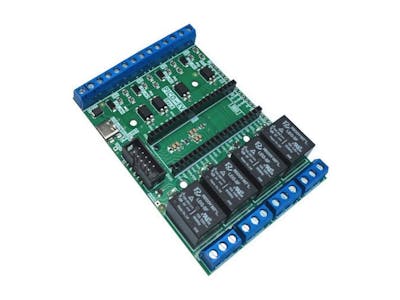
Olimex's PICO-EVB Turns a Raspberry Pi Pico Into an Arduino, MicroPython Mini-PLC
Olimex has introduced the PICO-EVB, a carrier board that transforms a Raspberry Pi Pico into a mini programmable logic controller (PLC) for industrial applications. This board allows you to easily control relays and monitor high-voltage inputs, making it suitable for various automation tasks. You can plug in a Pico, Pico 2, Pico W, or similar microcontroller, although most models will require soldering male headers onto the Pico first.
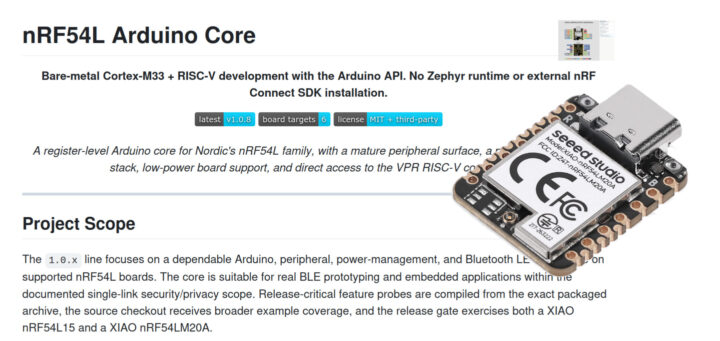
nRF54L Arduino Core project brings Arduino support to Nordic Semi nRF54L wireless SoCs
The nRF54L Arduino Core is an open-source project aimed at providing Arduino support for Nordic Semiconductor's nRF54L wireless System on Chips (SoCs). This initiative kicks off with boards like the Seeed Studio XIAO nRF54L15 (Sense) and XIAO nRF54LM20A (Sense), as well as compatible Holyiot modules. While the nRF52 series has been supported in the Arduino IDE since the debut of the nRF52840-based Arduino Nano 33 BLE in 2019, the newer nRF54L Cortex-M33 microcontrollers lacked similar support until now.
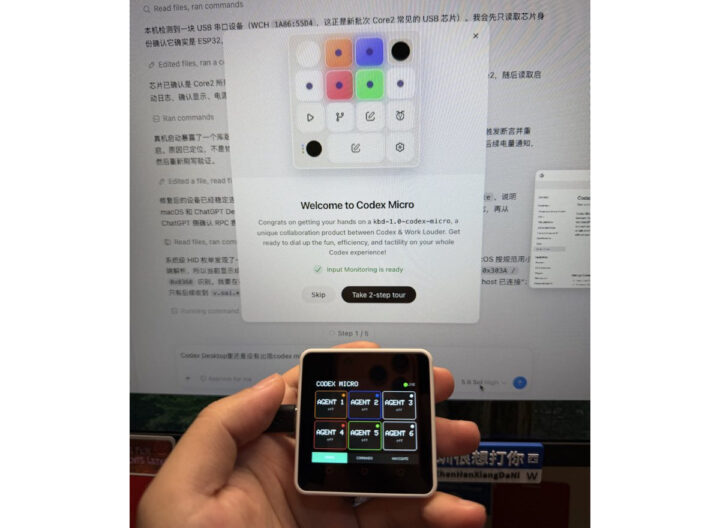
M5Stack Core2 gets open-source firmware to reproduce OpenAI’s Codex Micro features
The M5Stack Core2 IoT controller has been outfitted with open-source firmware that mimics the functionality of OpenAI's Codex Micro macro pad. This project was developed by IAMLIUBO, allowing users to monitor and control AI coding agents more efficiently. The original Codex Micro is a well-designed device with a CNC-milled enclosure, rotary encoder, and joystick, but its $230 price tag and limited availability make it less accessible for many.
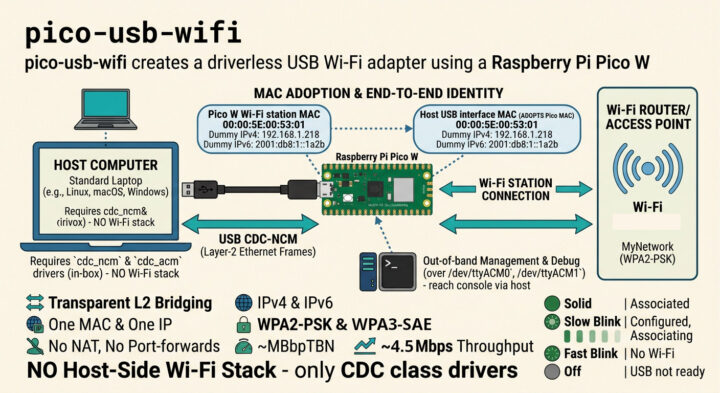
pico-usb-wifi firmware converts the Raspberry Pi Pico W into a driverless USB WiFi adapter
Pico-usb-wifi is an open-source firmware that transforms the Raspberry Pi Pico W into a driverless USB WiFi adapter. This setup is compatible with multiple operating systems, including Windows, Linux, and macOS, as long as they support USB CDC-NCM (Communications Device Class - Network Control Model). The firmware acts as a Layer-2 bridge, linking the Pico W’s wireless module to its USB interface, allowing it to function as an Ethernet-to-WiFi gateway.

Arduino Launches Plug-and-Play Modules for Long-Range Sensor Projects
Arduino has launched three new plug-and-play modules designed to simplify the integration of long-range sensor projects with motor drive systems. These boards allow developers to create complex I2C (Inter-Integrated Circuit) sensor networks without the hassle of complicated wiring, making it easier to connect multiple sensors and actuators.