Rising Edge Digital
Hardware & Embedded Systems for Software Developers

How Can a Nintendo Switch Make a 3D Printer Faster?
Marcel has found a way to boost the speed of his Prusa i3 MK3S 3D printer by using a Nintendo Switch as a computing device to run Klipper firmware. The Prusa MK3S originally shipped with Marlin firmware, which is capable but lacks several advanced features that optimize 3D printing performance. By switching to Klipper, Marcel can harness features like input shaping and pressure advance, which help reduce printing artifacts and improve overall print quality.
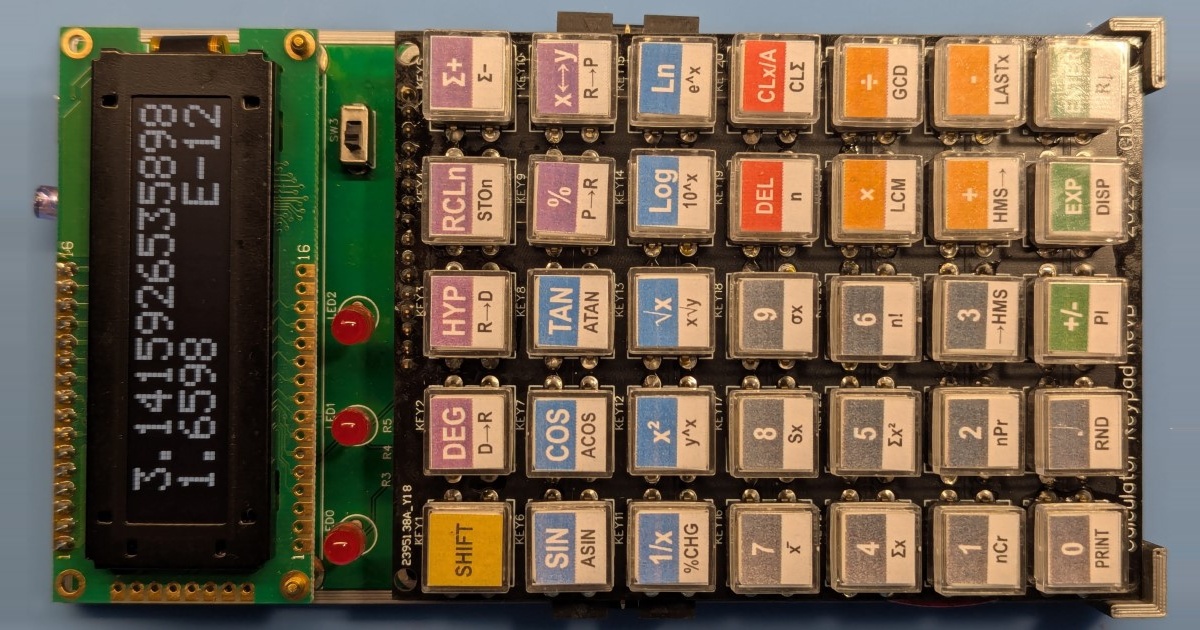
Designing a Scientific Calculator from scratch in FPGA
The article details the process of designing a scientific calculator using a Field Programmable Gate Array (FPGA). The author takes readers through the steps of creating a functional calculator from scratch, including the design of the hardware components and the implementation of the necessary algorithms.
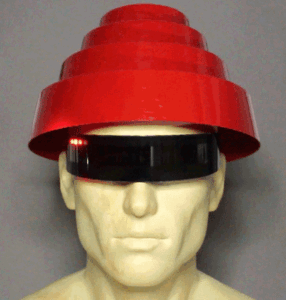
From the Adafruit Learning System Archives: Larson Scanner Shades (Trinket-Powered NeoPixel LED Strip Glasses)
The article discusses the Larson Scanner Shades, a DIY project that combines style with technology by integrating NeoPixel LED strips into a pair of glasses. Named after Glen Larson, the creator of iconic shows like Knight Rider, the Larson scanner effect mimics the sweeping light pattern seen in those series, but with the added flexibility of color customization thanks to NeoPixels.
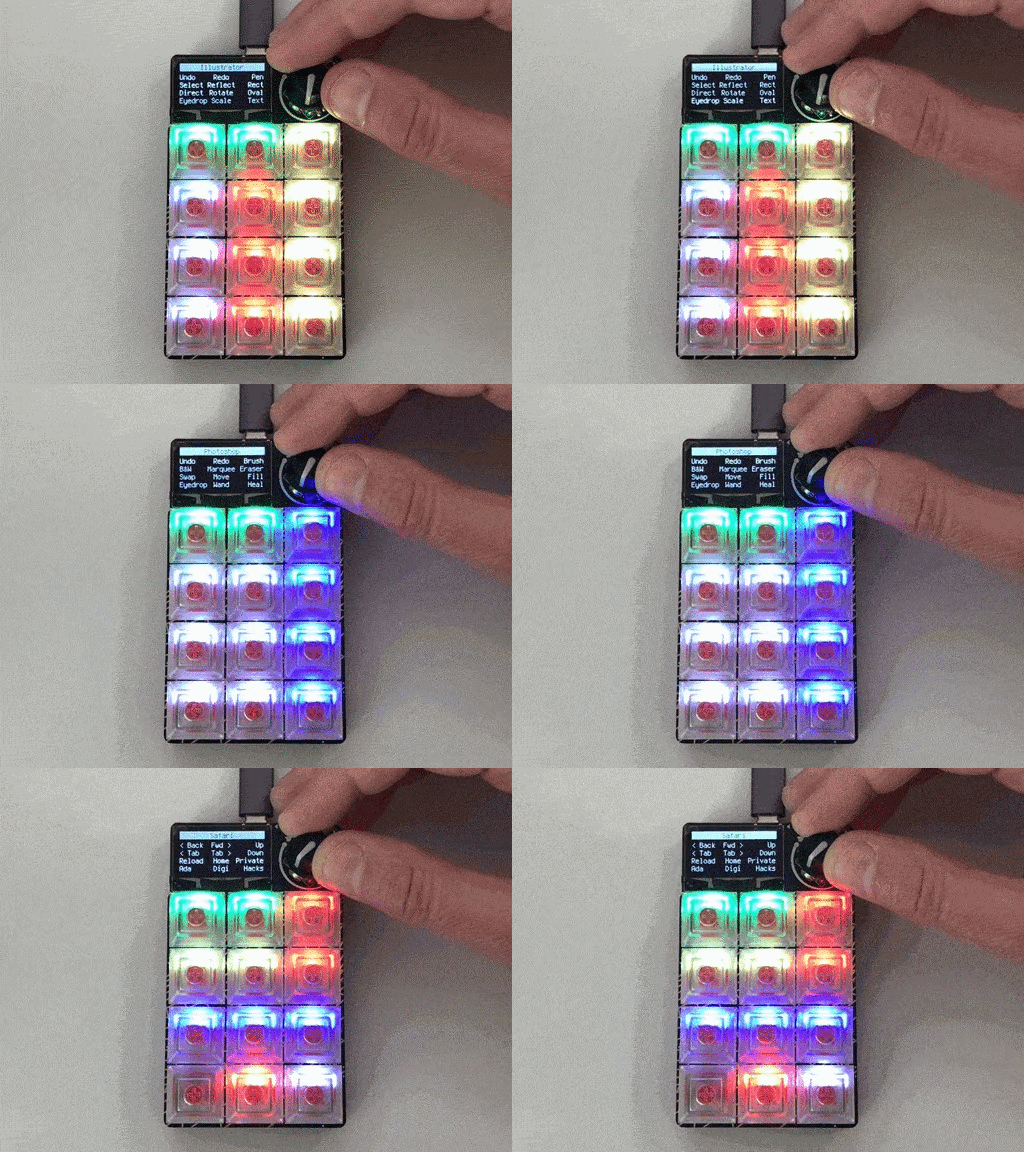
From the Archives: MACROPAD Hotkeys
The article discusses the MACROPAD, a customizable keypad designed for enhancing productivity with programmable hotkeys. It features 12 keys that can be configured to send shortcuts, function keys, or sequences of keystrokes to your computer. The keypad includes an OLED display that shows a layout map and has LEDs underneath each key that can be color-coded for different themes or functions. You can also use a dial to switch between various application sets.
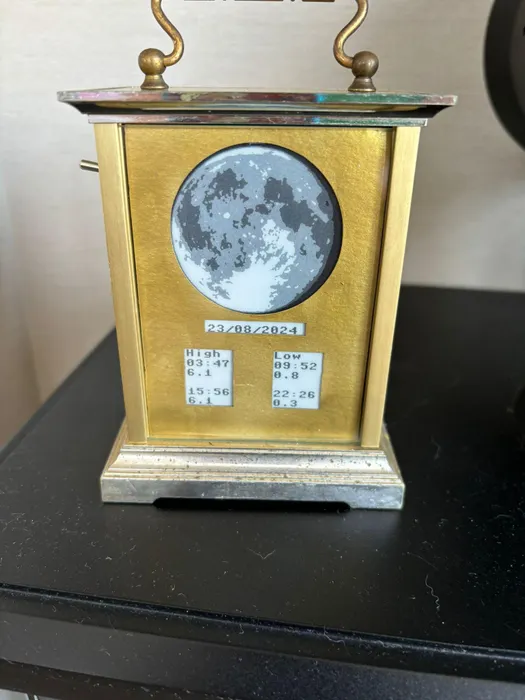
Moon and Tide Clock with E Paper and Raspberry Pi
This project showcases a Moon and Tide Clock created by pjdines1994, which combines the aesthetics of steam-punk design with modern technology. It uses a Raspberry Pi Pico W and a 3.7-inch E-Paper display to provide real-time information about the moon's phase, the current date, and tide times for Whitstable harbor in the UK, including both high and low tide heights.

John Park’s CircuitPython Parsec: LCD Character Display Buffer Width
John Park's latest CircuitPython Parsec article focuses on manipulating the character display buffer width for LCDs using CircuitPython, which is a version of Python tailored for microcontrollers. The piece provides a straightforward explanation of how to shift the display buffer, allowing users to customize how characters are presented on their screens.
Building a clock from salvaged Vacuum Fluorescent Displays
Maurycy Z. built a unique clock using salvaged Vacuum Fluorescent Displays (VFDs), which were typically found in old electronics like car dashboards and appliances. The project showcases a clever reuse of these displays to create a retro-styled timepiece, combining both aesthetics and functionality. The clock is powered by an Arduino, a popular microcontroller platform, which handles the logic and timing.
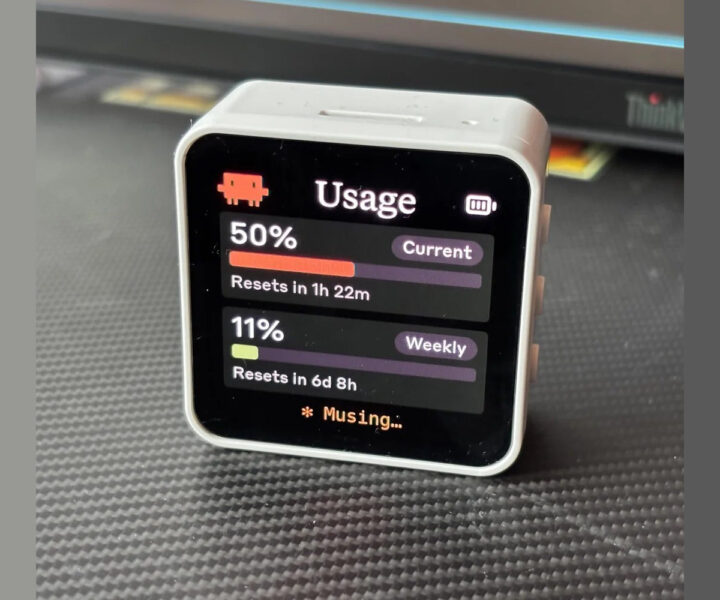
Clawdmeter – A DIY ESP32-S3 desk dashboard for Claude Code token usage monitoring
Clawdmeter is a DIY desk dashboard built around the ESP32-S3 microcontroller that monitors Claude Code token usage. It features a 2.16-inch AMOLED screen, providing real-time feedback on your token consumption. The project primarily involves firmware development and utilizes readily available components, specifically the Waveshare ESP32-S3-Touch-AMOLED-2.16, which combines a dual-core processor with Bluetooth and WiFi connectivity.
Hosting a website on an 8-bit microcontroller
Maurycy Zieminski has successfully hosted a website on an 8-bit microcontroller, demonstrating a unique and resourceful approach to web hosting. He utilized a Microchip PIC16F84A microcontroller, which is quite limited in terms of processing power and memory compared to modern hardware. The project involved creating a minimal web server that can serve simple HTML pages over a network, showcasing what can be done with such constrained resources.
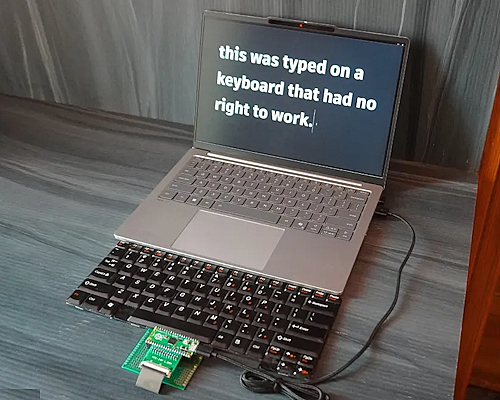
How to reverse-engineer almost any keyboard matrix with Raspberry Pi Pico
Thanishurs31 has developed a method to reverse-engineer keyboard matrices using a Raspberry Pi Pico running CircuitPython. This approach simplifies the traditional process of identifying key layouts, which usually involves tedious pin probing and drawing diagrams that can lead to frustration and inaccuracies. Instead, the Pico automates the scanning of the keyboard matrix, determining rows and columns, handling diode-protected N-key rollover boards as well as basic membrane designs. It even identifies shared power lines and outputs a clean JSON map.
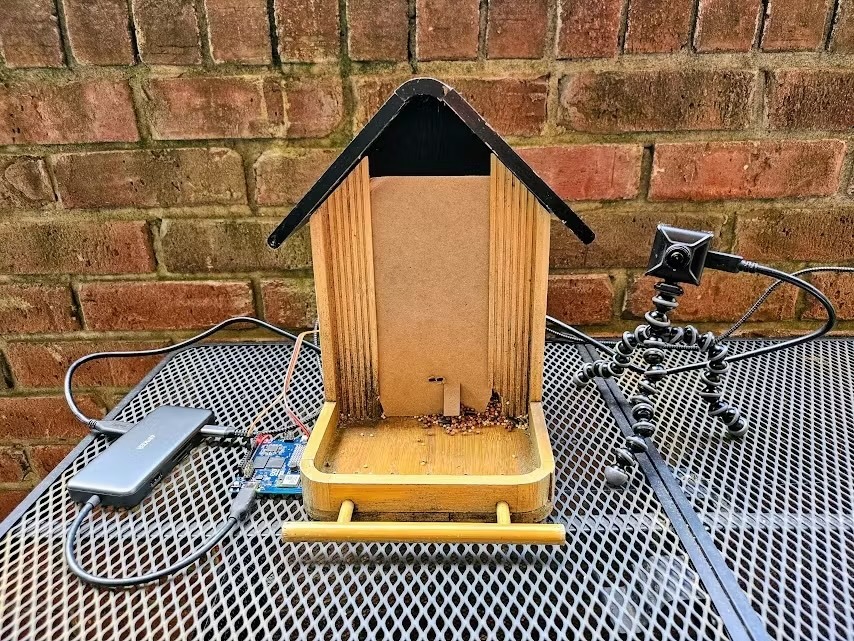
BirdFeedR is a bird-only feeder that keeps thieving squirrels away
BirdFeedR is an innovative bird feeder designed by David Groom that prevents squirrels from stealing bird seed. Utilizing an Arduino UNO Q and a USB webcam, this feeder only dispenses seeds when it recognizes a bird, ensuring that squirrels are kept at bay. If a non-bird object is detected, the feeder logs the event but doesn’t release any food.

Adafruit Capacitive Touch Sensor Breakouts
The Adafruit Capacitive Touch Sensor Breakouts are versatile boards designed to add touch sensing capabilities to your projects. They operate on a voltage range of 1.8 to 5.5V DC and can be triggered simply by touching the sensor pad. These boards are user-friendly and can interface with various projects, whether or not you have a microcontroller involved.
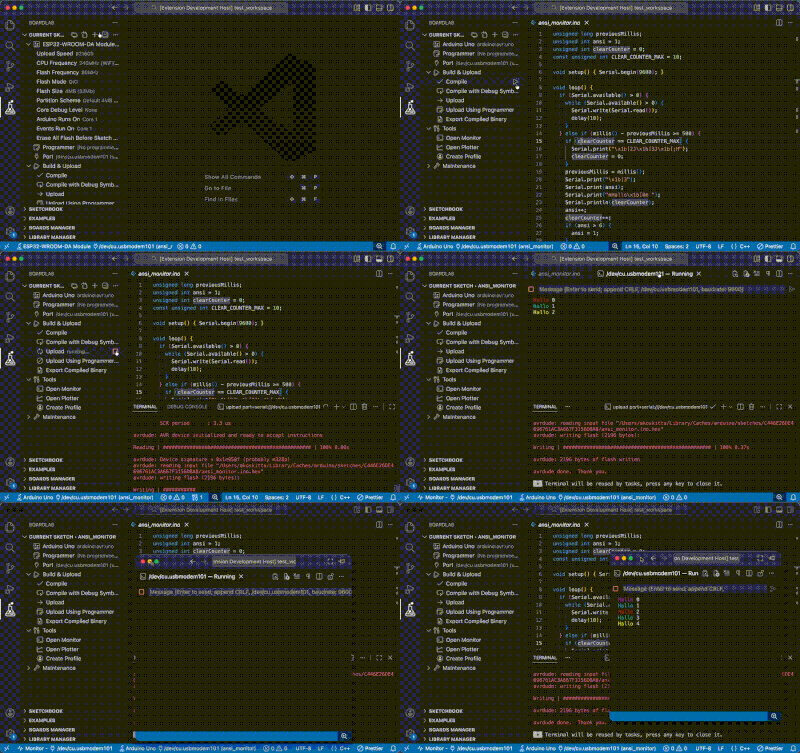
Vendor-independent board development for Visual Studio Code
BoardLab is a new development tool for Visual Studio Code that allows for vendor-independent board development using the Arduino command line interpreter (CLI). This project aims to replicate the features of the Arduino IDE 2.x while maintaining a fully open-source environment that integrates seamlessly with VS Code's user experience.
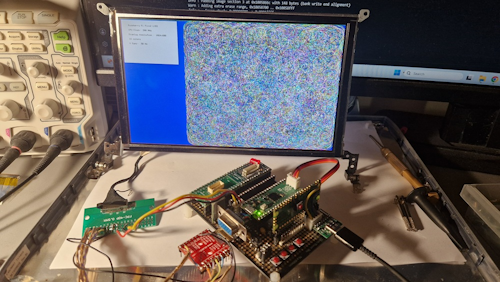
Using LVDS screens with a Raspberry Pi Pico 2
This article discusses a project by a user named ceteras who successfully drove an LVDS (Low-Voltage Differential Signaling) display using the Raspberry Pi Pico 2. They created a proof of concept that demonstrates how to connect and control LVDS screens from older netbooks, specifically the B089AW01-V.0 and HSD089IFW1-A00-V1.0 models. The project utilizes 270-ohm resistors, similar to those used in DVI (Digital Visual Interface), to generate compatible electric signals for the displays.
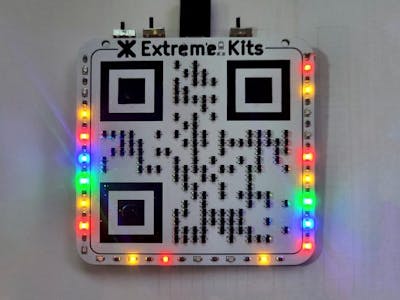
Derek Woodroffe's Extreme Kits Badge Packs 143 Transistors — As QR Code Blocks
Derek Woodroffe has created a unique badge that features a fully-functional scannable QR code, which is made up of 143 transistors. This badge serves a dual purpose: it functions as a promotional item for Extreme Kits and showcases a creative approach to integrating electronics in a visually interesting way. The QR code is not just an image but is constructed from MOSFET transistors that operate an 11-stage shift register to drive 24 colorful LEDs around the badge's edge.
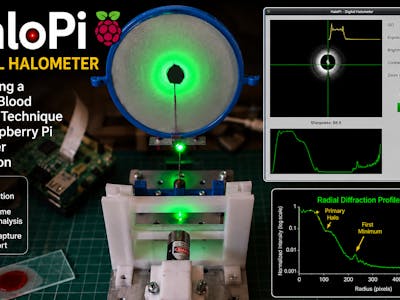
This DIY Instrument Can Affordably Measure the Size of Red Blood Cells
HaloPi is a DIY instrument designed by DaniloR29 that measures the size of red blood cells using an affordable light diffraction technique. This is particularly useful for detecting conditions related to abnormal red blood cell sizes, such as macrocytosis (large cells) and microcytosis (small cells). Traditional methods often rely on high-powered microscopes, which can be time-consuming and less accessible.
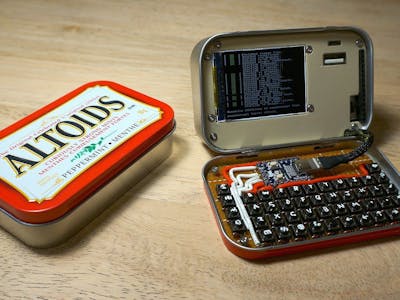
The Curiously Strong Portable Computer
YouTuber Exercising Ingenuity has created a fully functional portable computer that fits into an Altoids tin, using a Raspberry Pi Zero W as the main component. This tiny machine includes a 2-inch display and a custom miniature mechanical keyboard, making it a compact solution for on-the-go computing. The project demonstrates how you can combine various hardware components into a small package, perfect for quick hacks or development work.
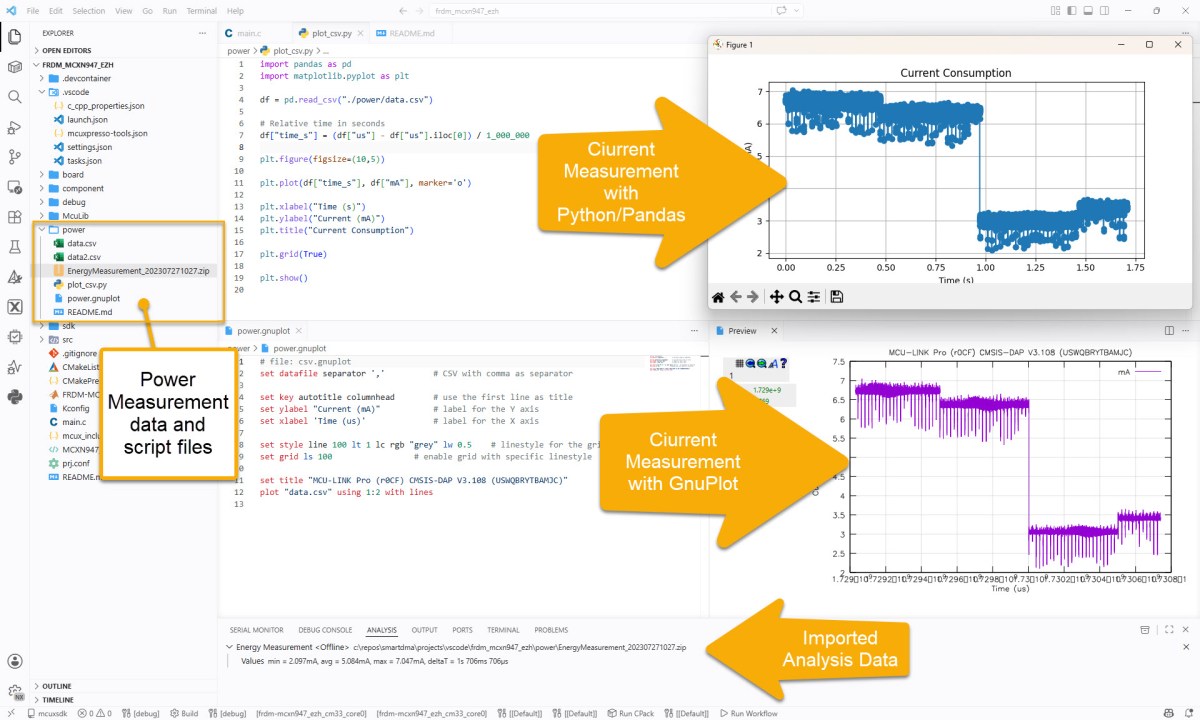
Visualize Embedded Power Data in VS Code
The article discusses a method for visualizing current and power data from the NXP MCU-Link Pro using Visual Studio Code (VS Code). It focuses on leveraging Python libraries, specifically Pandas for data manipulation and GnuPlot for graphing, to analyze energy consumption in embedded systems.
John Park’s CircuitPython Parsec: RGB LCD Character Display Shield Basics
John Park's article on the RGB LCD Character Display Shield dives into how to effectively use this hardware with CircuitPython, a version of Python designed for microcontrollers. The shield utilizes I2C (Inter-Integrated Circuit) communication, allowing you to easily interface with the display and handle inputs from buttons. The article breaks down the basics, showing how to read button presses, write text to the display, and even change the colors displayed on it.
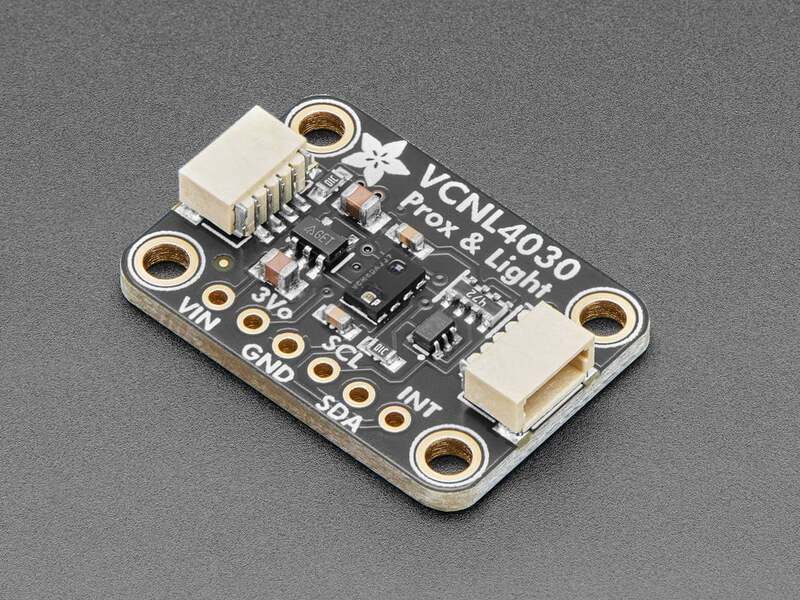
UPDATED LEARN GUIDE: Adafruit VCNL4030 Proximity and Lux Sensor
The Adafruit VCNL4030 is a versatile sensor that combines proximity and lux (light) sensing capabilities. It can detect distances from 0 to 300 mm (about 12 inches) and measure light levels ranging from 0.004 to 16,768 lux. This makes it useful for various applications, such as measuring how close an object is or determining ambient light levels for projects involving automatic lighting controls.

How FermiLabs builds championship-level robots with Arduino
FermiLabs, a robotics innovation hub at IIS “E. Fermi – R. Guttuso” in Giarre, Sicily, is making waves in the Arduino community with their championship-level robots. Their students participate in RoboCupJunior Europe, a highly competitive robotics event where teams design and build fully autonomous robots for rescue scenarios. For the 2026 season, two teams from FermiLabs are pushing the boundaries of what's possible using Arduino technology.

Building Transit Tracker
The article details a project called Transit Tracker, which is a device designed to provide real-time updates on public transportation schedules. This tracker uses a combination of GPS and cellular technology to monitor bus locations and relay that information to users through a web interface. The project highlights the integration of hardware and software components in creating a practical solution for commuters.

One board, two brains? Three ways a dual architecture board makes building simpler
The Arduino UNO Q is a dual-architecture board that integrates a microcontroller (MCU) and a microprocessor (MPU) on a single platform, designed to simplify embedded project development. This combination allows the MPU to handle high-level tasks, like networking and AI, while the MCU manages real-time I/O and time-sensitive operations. By separating these functions, the UNO Q leverages the strengths of both architectures, enabling them to communicate effectively through a dedicated bridge mechanism.
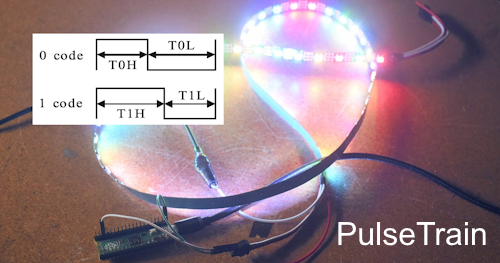
Creating specific pulse trains using an RP2040, PIO and CircuitPython
James Bowman has developed a CircuitPython program called PulseTrain for the Raspberry Pi RP2040 Pico, which simplifies generating precise sets of binary pulses. This is particularly useful for applications that require exact timing, like controlling WS2812B RGB LEDs (often referred to as NeoPixels). The program leverages the RP2040's Programmable Input/Output (PIO) subsystem to create tailored pulse trains, making it easier to implement various digital communication protocols.
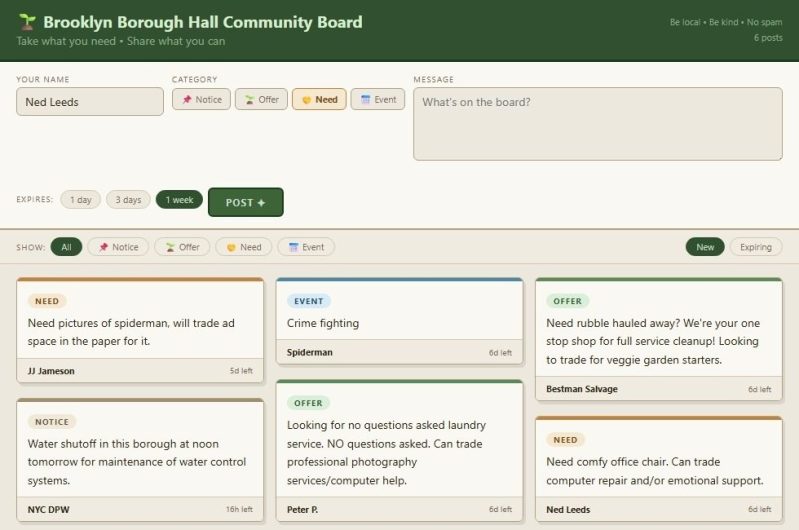
ESP32 Hosts SolarPunk Message Board
Victor Frost has created an ESP32-based device that serves as a local community message board, embodying the Solarpunk philosophy of renewable energy and community focus. While it resembles a lantern, it functions as a web server that users can access through its own wireless network. The setup uses a captive portal, similar to public Wi-Fi logins, to direct nearby users to the message board, making it a modern take on the community center corkboard.
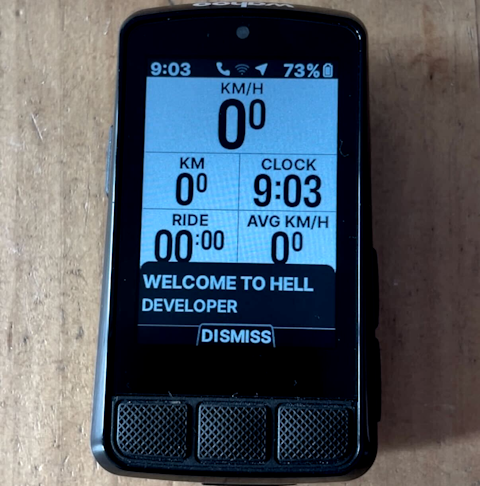
A broken bike sync led to reverse engineering Wahoo’s hidden debug mode
Noah Clements faced a frustrating issue when his Wahoo ELEMNT Bolt v3 cycling computer stopped syncing with its companion app. This prompted him to dive into reverse engineering, where he analyzed Bluetooth packets and decompiled the device's Android APK. His efforts led him to uncover a hidden developer menu, humorously titled “WELCOME TO HELL DEVELOPER,” which opened the door to a wealth of information about the device's functionality.
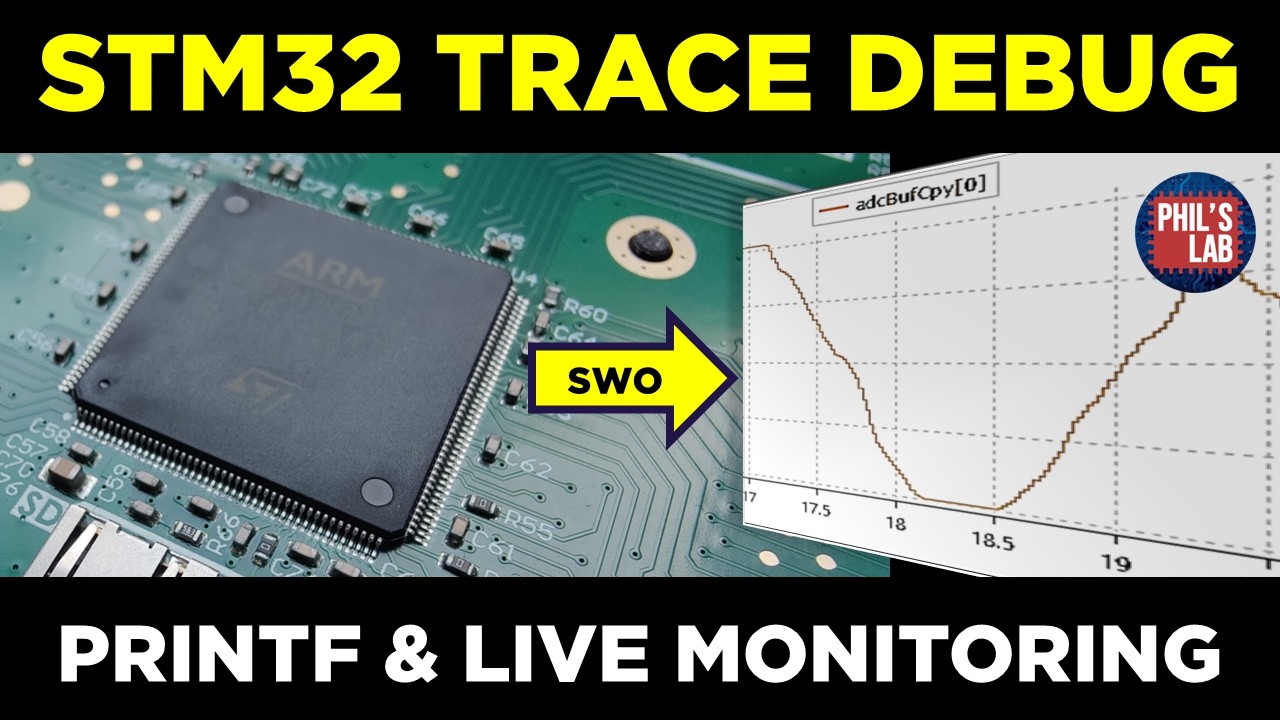
Debugging, Logging, and Monitoring via SWO Trace (STM32 ITM & DWT) - Phil's Lab #173
The article focuses on using Serial Wire Output (SWO) for debugging, logging, and monitoring in STM32 microcontroller projects, specifically through the Instrumentation Trace Macrocell (ITM) and Data Watchpoint and Trace (DWT) features. It provides a practical guide on setting up SWO with STM32CubeIDE and demonstrates how to send data, like variable values, using the ITM. The video walks through configuring the environment, enabling SWV (Serial Wire Viewer), and utilizing multiple ITM ports for effective debugging.
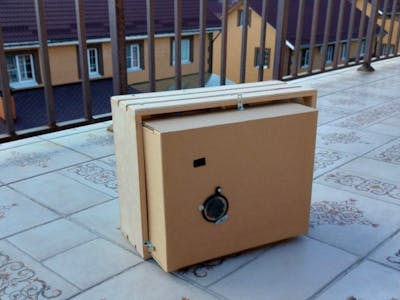
Boris Homiakov's One-Pixel Camera Takes Eight-Hour Exposures — "Developed" in a Spreadsheet
Boris Homiakov has created an ultra-simple digital camera that uses a single photoresistor as its image sensor. This camera captures images one pixel at a time by moving the photoresistor along two axes, effectively functioning like a primitive scanner. Instead of the complex sensor arrays found in modern cameras, Homiakov's design relies on the photoresistor's ability to vary resistance based on light exposure, recording brightness at each point to build a complete image.

This Ultra-Compact Raspberry Pi Project Squeezes an ePaper Cyberdeck Into an Altoids Mint Tin
A maker known as "Verde" has created an ultra-compact cyberdeck powered by a Raspberry Pi Zero W, housed inside an Altoids mint tin. The project features a three-color ePaper display, which is energy-efficient and easily readable in sunlight, though it has slower refresh rates compared to traditional screens. Verde chose the Altoids tin not only for its portability but also for the challenge it brings in terms of space and design, opting for an external antenna due to the metal casing.
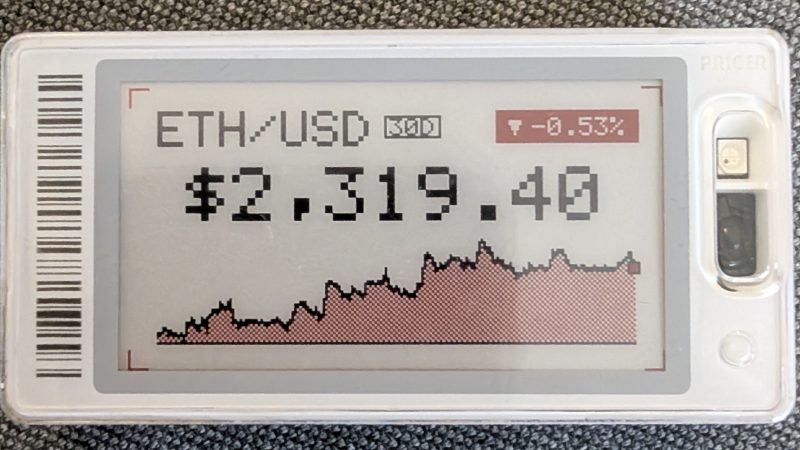
TagTinker Lets You Hack Electronic Shelf Labels
TagTinker is a new application designed for the Flipper Zero device that allows users to interact with electronic shelf labels (ESLs) via infrared communication. These ESLs are e-paper displays used in retail to show product prices and information, and they typically receive updates wirelessly. The app was developed by [i12bp8], building on prior research by [furrtek] that uncovered the protocols these devices use for communication.
TDR For Auto Diagnostics Done On The Cheap
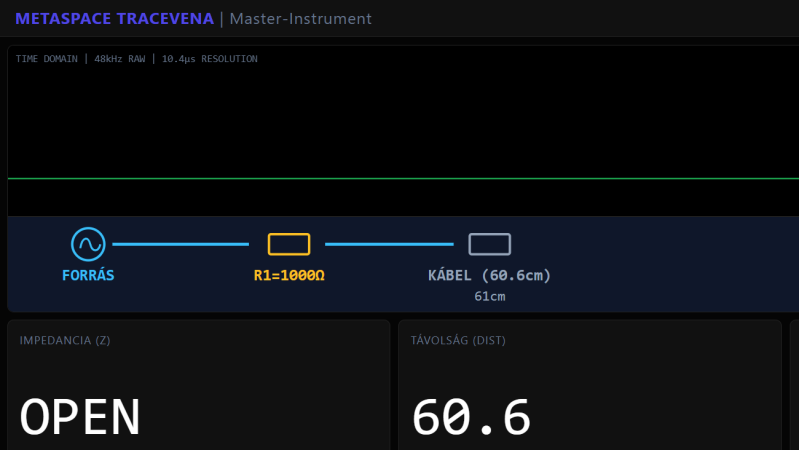
A time domain reflectometer (TDR) is a handy tool for diagnosing faults in wiring harnesses, but they can be prohibitively expensive for many DIY mechanics. László Szőke has developed an innovative, low-cost alternative using a C-Media USB audio device to send out sine waves instead of the traditional short electric pulses. This method allows users to measure the length of the wire and detect breaks by analyzing the phase shift of the reflections.

This $30 Project Puts You in the Driver’s Seat of an RC Car
This project showcases how to build a first-person view (FPV) remote-controlled (RC) car for under $30, allowing users to experience driving from the car's perspective. The setup uses the Seeed Studio XIAO ESP32-S3 Sense, which integrates processing power and a camera module on a single board. This compact design streams live video while controlling the car, eliminating the need for extra components.
From the Adafruit Learning System: EPCOT Spaceship Earth with WLED
This article from the Adafruit Learning System details a project that lets you create a cool IoT NeoPixel lamp inspired by EPCOT’s Spaceship Earth. The build utilizes a QT Py ESP32 PICO, which is a compact microcontroller, along with a NeoPixel BFF Driver to control the RGB LED strips. The project is powered by WLED, a tool that simplifies creating dynamic lighting effects.
Making a Split Flap Display
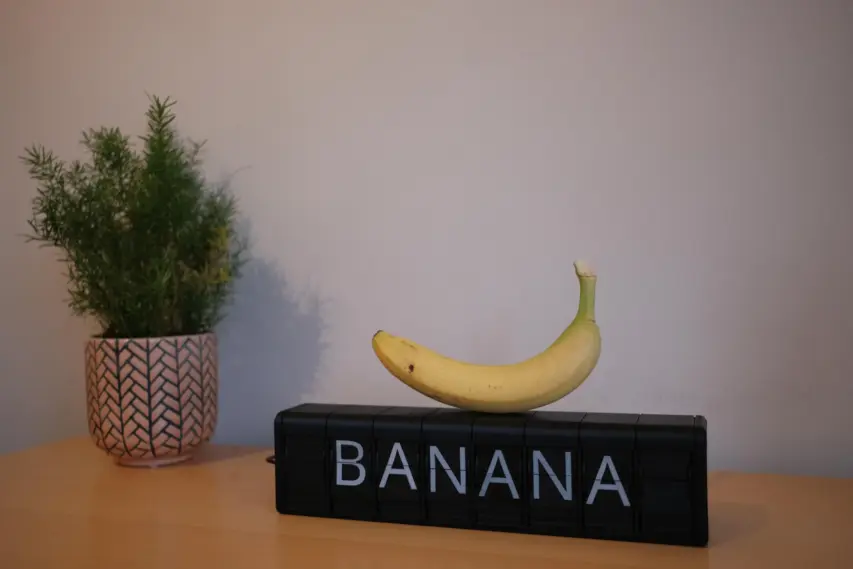
A split flap display is a nostalgic and visually appealing way to present information, often reminiscent of old train station signs. In a recent project, Adam G Makes shared his build process, which is based on a design by Instructables user MorganManly. The project utilizes modular 3D-printed components and programming from GitHub user scottbez1, who has provided code to control the display.
John Park’s CircuitPython Parsec: Smooth Noise Road
John Park's latest project showcases how to create smooth noise using the CircuitPython_Noise library. This library, developed by Todbot, allows users to generate various noise patterns which can be useful in audio projects or generative art. John provides a clear example in his article along with a link to a code snippet that demonstrates how to implement this in your own projects.
Arduino® App Lab 0.7: Custom Bricks are here!
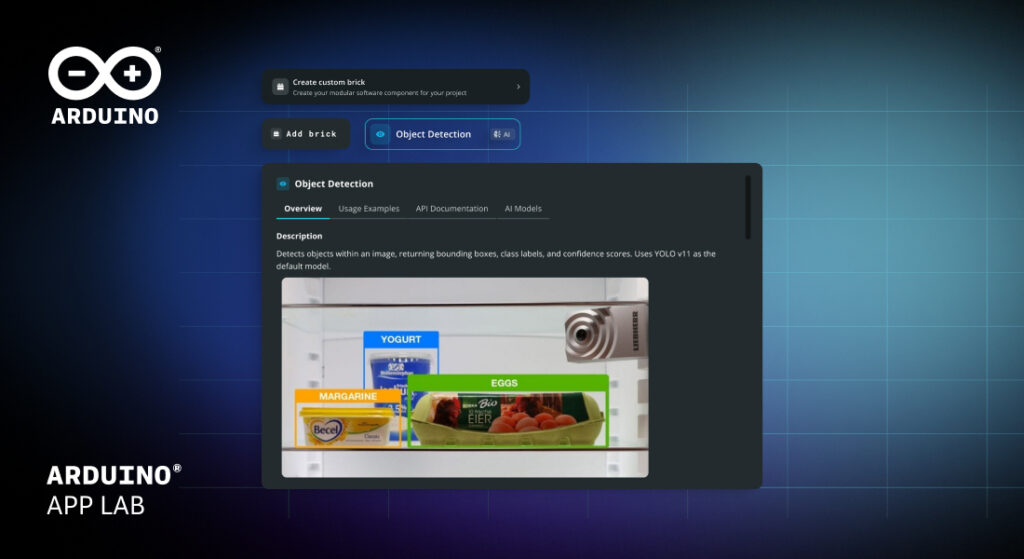
Arduino App Lab 0.7 has just rolled out a significant update, introducing Custom Bricks that allow users to create modular software components for their projects. This addition enhances the flexibility of the Arduino UNO Q by enabling the development of reusable features that simplify complex tasks. The update also comes with revamped documentation to help newcomers navigate the App Lab more intuitively.

MiciMike’s open-source drop-in PCB converts Google Home Mini into a local voice assistant (Crowdfunding)
The MiciMike Home Mini Drop-In PCB is an open-source mainboard upgrade designed specifically for the 1st Gen Google Home Mini. This replacement board transforms the smart speaker into a fully local voice assistant that operates without relying on cloud services. It’s built on the ESP32-S3 microcontroller and features the XMOS XU316 audio processor, enabling on-device wake word detection, echo cancellation, and noise suppression using two MEMS microphones.
NEW GUIDE: LED Matrix FIFA World Cup Scoreboard
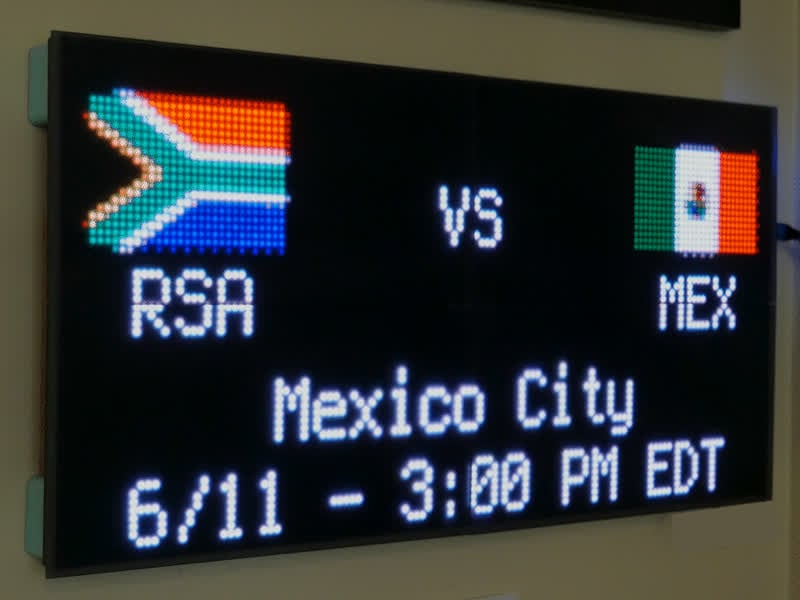
Adafruit has released a guide for building an LED matrix display scoreboard specifically for the FIFA World Cup. This project utilizes a Matrix Portal S3, which is a microcontroller designed for driving LED matrices and runs on CircuitPython. The display pulls data from the ESPN API to show real-time game information, including team names, flags, location, and match times.
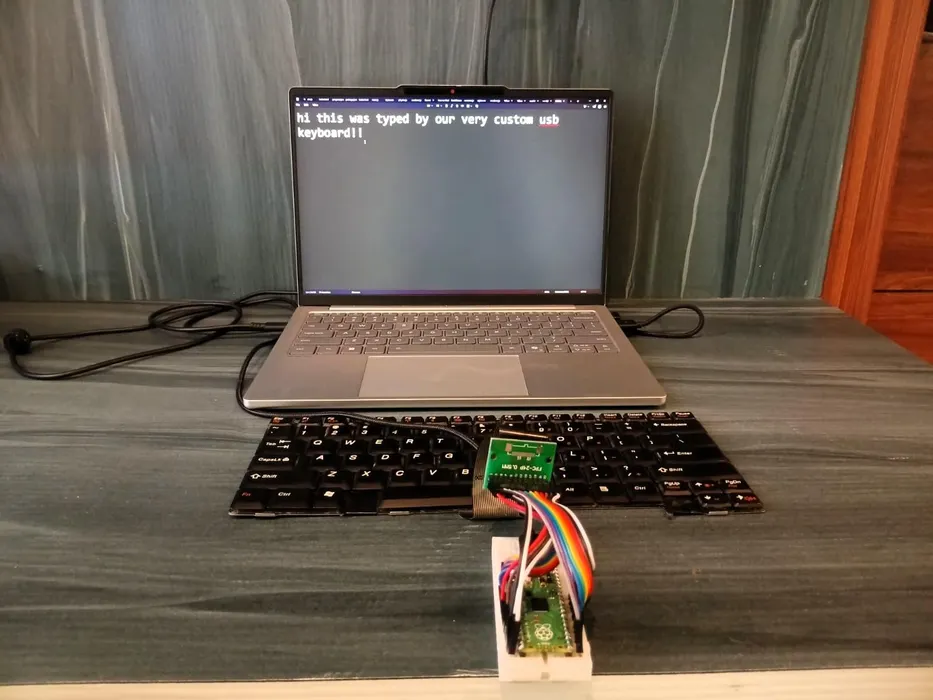
How to Reverse-Engineer Almost Any Keyboard Matrix With Raspberry Pi Pico
The article discusses a practical tutorial by a maker named thanishurs31, showing how to reverse-engineer keyboard matrices using a Raspberry Pi Pico with CircuitPython. This method allows users to scan the entire keyboard matrix, identifying which pins correspond to rows and columns, while also accommodating various board types like diode-protected N-key rollover boards and simple membrane keyboards. The process culminates in generating a clean JSON map that represents the keyboard’s structure.

The Hardware Hack That Makes 3D Modeling Intuitive
David Liu has created an innovative input device called Rotatrix, designed to enhance 3D modeling by making navigation more intuitive. Traditional input devices like keyboards and mice are not well-suited for 3D environments, often resulting in a cumbersome workflow that disrupts creativity. Liu's solution, inspired by existing devices like the SpaceMouse, is a modified trackball that simplifies the user experience.
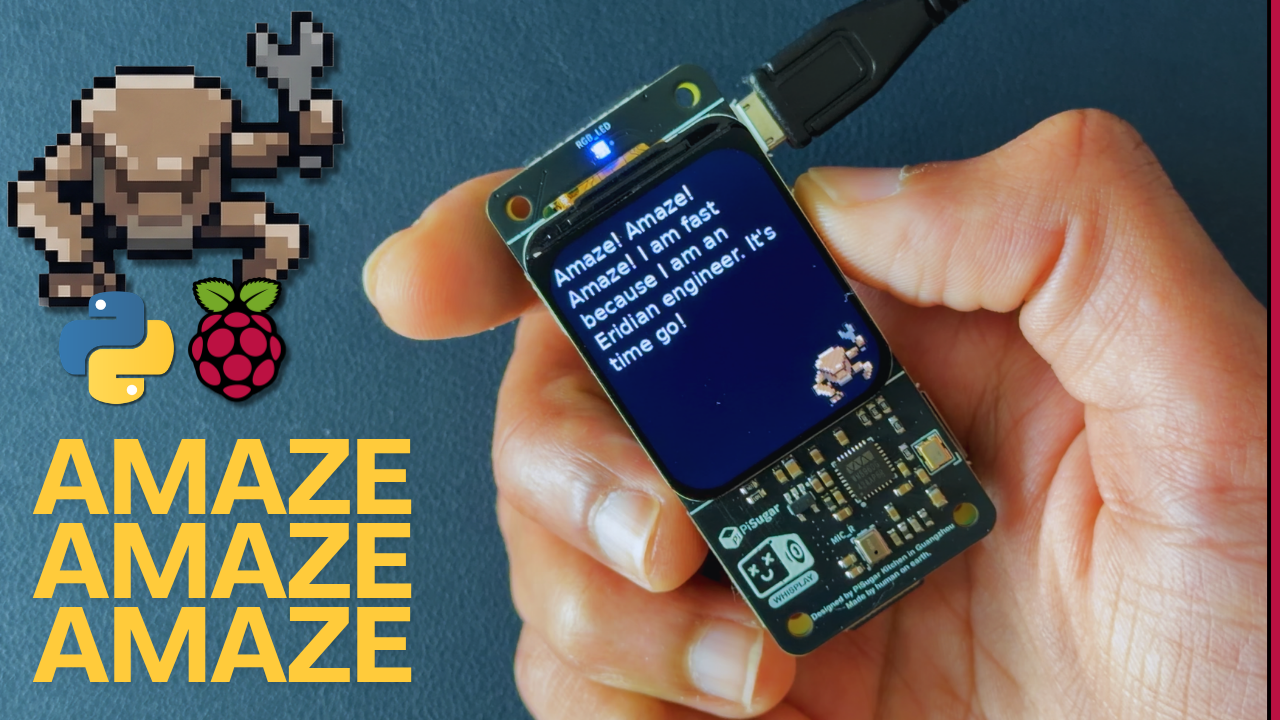
Amaze! Amaze! Speak with Rocky
A maker named Lahiru Maramba has created a physical version of Rocky, the alien engineer from Andy Weir's novel *Project Hail Mary*, using a Raspberry Pi Zero and a Whisplay hat. The project is powered by a local large language model (LLM) called Gemma 4, which runs on a MacBook Air. Maramba focused on getting Rocky's voice just right by programming a series of friendly tones in Python.
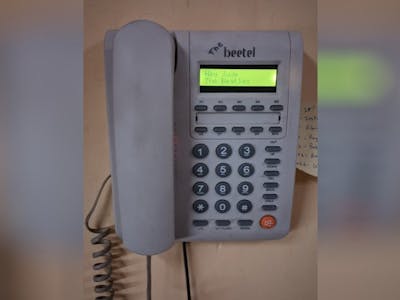
Natya Vidhan Biswas' Upcycled Beetel Phone Is Now a Slick Spotify Stream Selector
Natya Vidhan Biswas has transformed an old Beetel M59 landline phone into a modern music control device for Spotify. While cleaning, Biswas stumbled upon the neglected phone and decided to repurpose it rather than toss it. Using an Espressif ESP32 microcontroller, he interfaced the phone's keypad matrix to create a remote for music streaming.

Mehrdad Majzoobi's Raspberry Pi NFC Add-On Works Even When the Pi Is Powered Off
Mehrdad Majzoobi has developed an open-hardware near-field communication (NFC) add-on for Raspberry Pi that can function even when the board is powered off. This add-on, part of his Ubo Pod project, utilizes the NXP NT3H2211W0FT1 NFC chip, which offers both active and passive operation modes. In passive mode, it can harvest energy from a reader to communicate, making it useful for applications like tap-based payments without needing the Raspberry Pi to be on.
From Milliseconds to 26 Nanoseconds: How a $20 eBay SFP Module Beat My Entire NTP Setup
The article discusses how a $20 Small Form-factor Pluggable (SFP) module from eBay dramatically improved the author's Network Time Protocol (NTP) setup, achieving time synchronization accuracy of just 26 nanoseconds. The author compares this performance to traditional methods that typically provide time synchronization in milliseconds, highlighting the significant advantage of using this specific hardware.
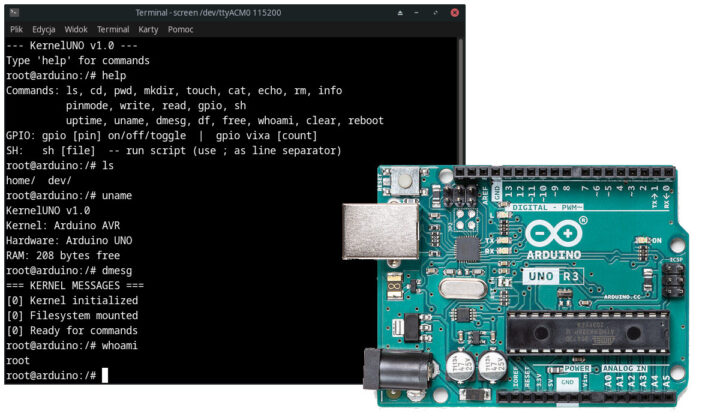
KernelUNO – A lightweight OS for Arduino UNO with a Linux-like shell
KernelUNO is a lightweight operating system designed specifically for the Arduino UNO, offering a Linux-like shell experience with 546 lines of code. It requires an Arduino UNO R3 or a compatible board with a Microchip ATmega328P microcontroller, along with a USB cable for programming. For those interested in testing the GPIO (General Purpose Input/Output) commands, a few LEDs and resistors can enhance the experience.
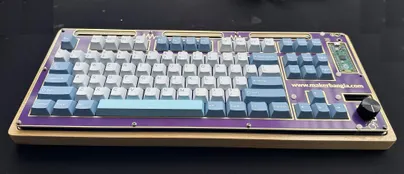
Raspberry Pi Pico Mechanical Keyboard
The article delves into a project by a maker named taifur, who created a custom mechanical keyboard called ClickPico using a Raspberry Pi Pico. This project showcases how enthusiasts can leverage this affordable microcontroller to design a fully functional keyboard tailored to their preferences.
I Built A Wireless Dactyl Manuform (2024)
The article details the creation of a wireless Dactyl Manuform keyboard, a popular ergonomic mechanical keyboard design known for its split layout and customizable key mapping. The author walks through the entire assembly process, from sourcing components to soldering the necessary parts, emphasizing the use of wireless technology for a cleaner workspace.
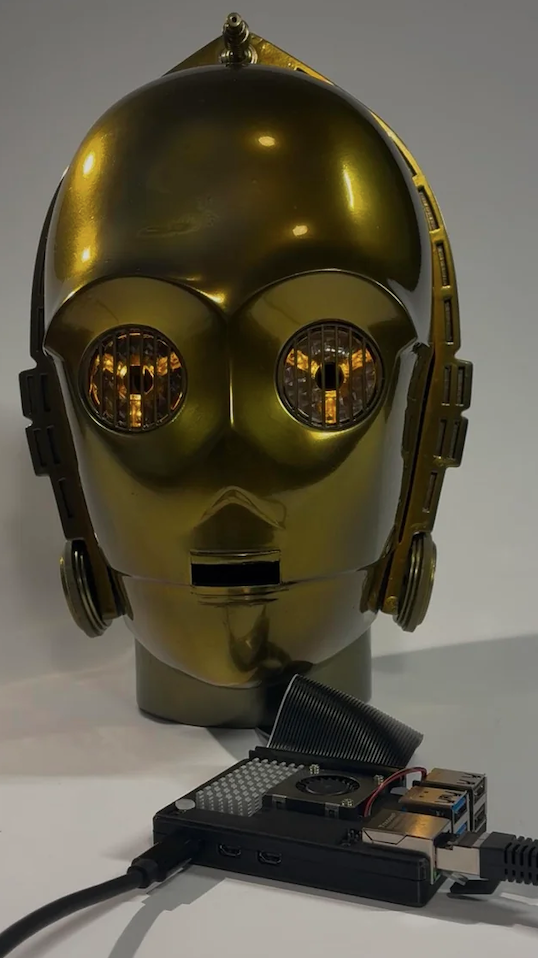
Raspberry Pi Powered C-3PO Head
Samuel Potozkin created an impressive interactive C-3PO head powered by a Raspberry Pi, allowing users to engage in real-time conversations with the droid. This project combines both hardware and meticulous prop-building techniques, including finishing 3D printed parts to achieve a realistic metallic appearance.
Tutorial: Creating Self-Contained MCUXpresso SDK Projects
The article explains how to create self-contained projects using the NXP MCUXpresso Software Development Kit (SDK) with the 'New Project Wizard' in Visual Studio Code. It emphasizes the importance of organizing your project to eliminate absolute paths and local dependencies, which helps make your project portable and easier to manage.
i found an old telephone and made it control spotify
The article discusses a project where the author repurposed an old telephone to control Spotify. Using a Beetel model landline phone, they integrated it with a Raspberry Pi, enabling the classic device to interact with modern streaming technology. The project involved wiring the phone to the Raspberry Pi’s GPIO (General-Purpose Input/Output) pins, allowing the phone's buttons to send signals to control playback functions like play, pause, and skip.