Rising Edge Digital • Hardware & Embedded Systems for Software Developers
Phyllotaxis: An audio-reactive LED display · CircuitPython Turbo Sushi Conveyor Belt · CircuitPython POV Bike Wheel
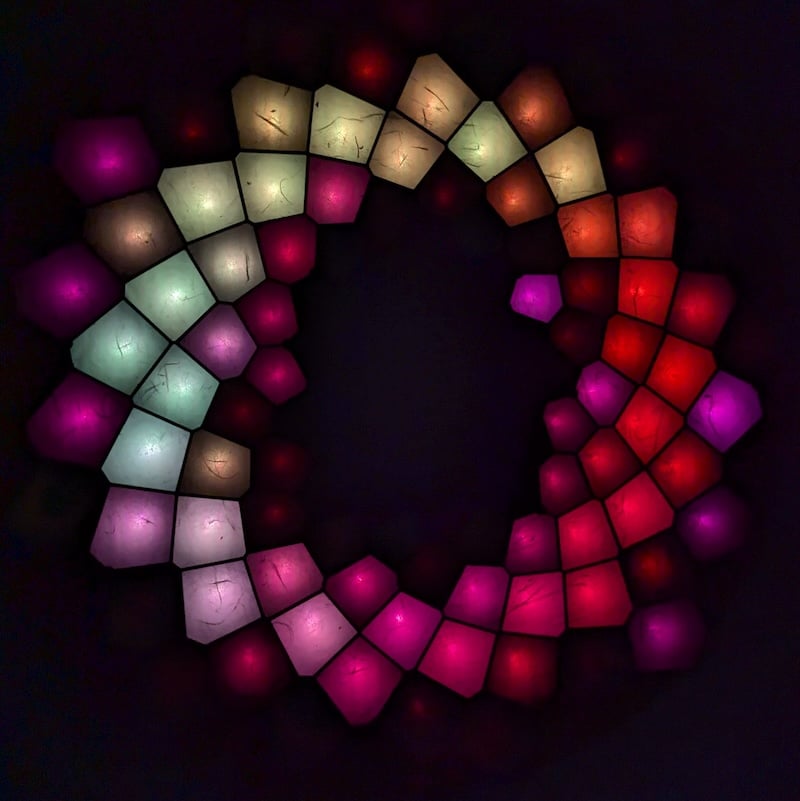
Phyllotaxis: An audio-reactive LED display
The article showcases a project by Jagi Natarajan that combines nature-inspired design with technology by creating an audio-reactive LED display based on the concept of phyllotaxis. This term refers to the arrangement of leaves on a plant, often resulting in beautiful spiraling patterns. Natarajan's display features 89 individual cells, each equipped with an addressable LED, and responds dynamically to audio inputs, creating a visually striking experience that evolves with sound.
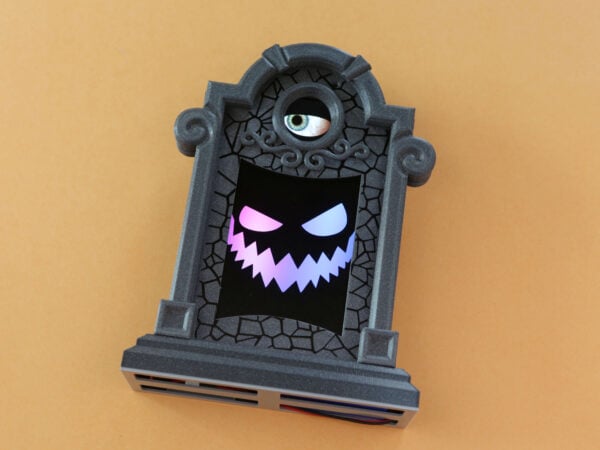
HalloWing M4 Tombstone
The HalloWing M4 Tombstone project involves creating a 3D printed, light-up tombstone that features an animated eye. This project uses the HalloWing M4 microcontroller and NeoPixel LED strips, allowing you to display a custom message or spooky face on your tombstone. It’s a fun and festive way to add some flair to your Halloween decorations.
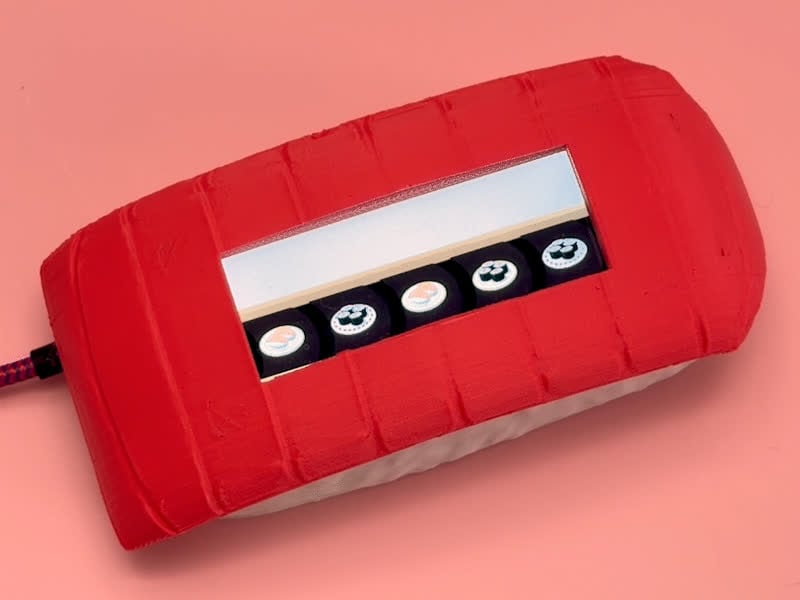
NEW GUIDE: CircuitPython Turbo Sushi Conveyor Belt
Adafruit has released a new guide for creating a CircuitPython-powered sushi conveyor belt animation using the Qualia S3 long bar display. Initially, the project was attempted using Arduino with PlatformIO due to performance issues in CircuitPython. However, the recent Turbo update in CircuitPython has significantly improved performance, allowing the sushi animation to run smoothly on the display.
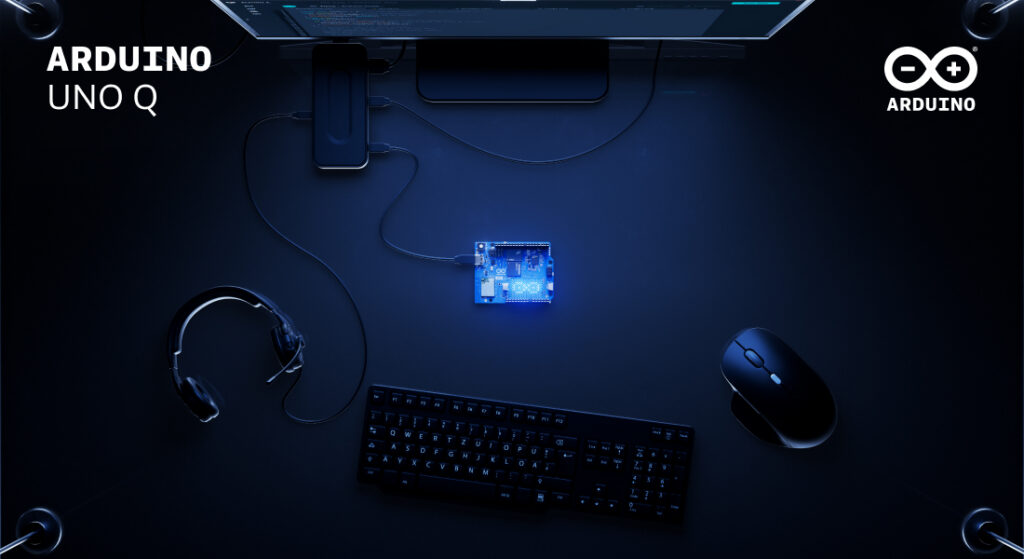
From Home Assistant to AI agents: what Linux unlocks on the Arduino® UNO™ Q board
The Arduino UNO Q board combines a powerful dual-brain architecture with a microcontroller for high-performance computing and real-time hardware control. It features a Linux environment on the microprocessor unit (MPU) side, allowing users to run familiar open-source software, while the STM32H5 microcontroller operates on Zephyr Real-Time Operating System (RTOS) to manage time-sensitive tasks. This setup opens up a range of possibilities for developers looking to create advanced projects.
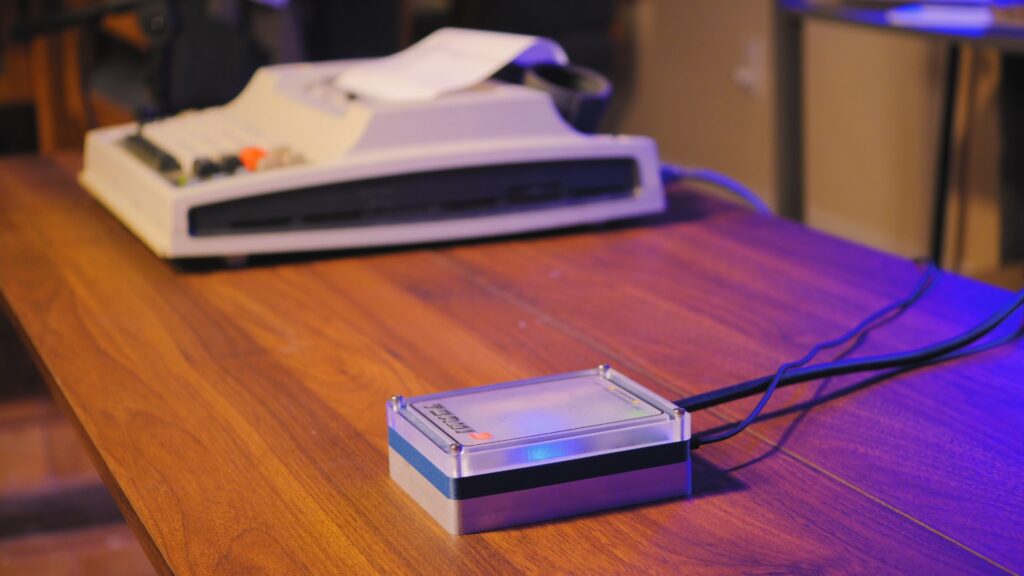
An Arduino® UNO™ Q lets this vintage terminal answer questions without internet access
Cameron Coward has created an interesting project where he connects an Arduino UNO Q to a vintage Texas Instruments Silent 700 terminal, allowing it to answer questions without needing an internet connection. This retro terminal, originally used in the 1970s for input/output tasks, now gets a modern twist with Coward's setup, named Termi3. Users can type their questions, and the terminal prints the responses.
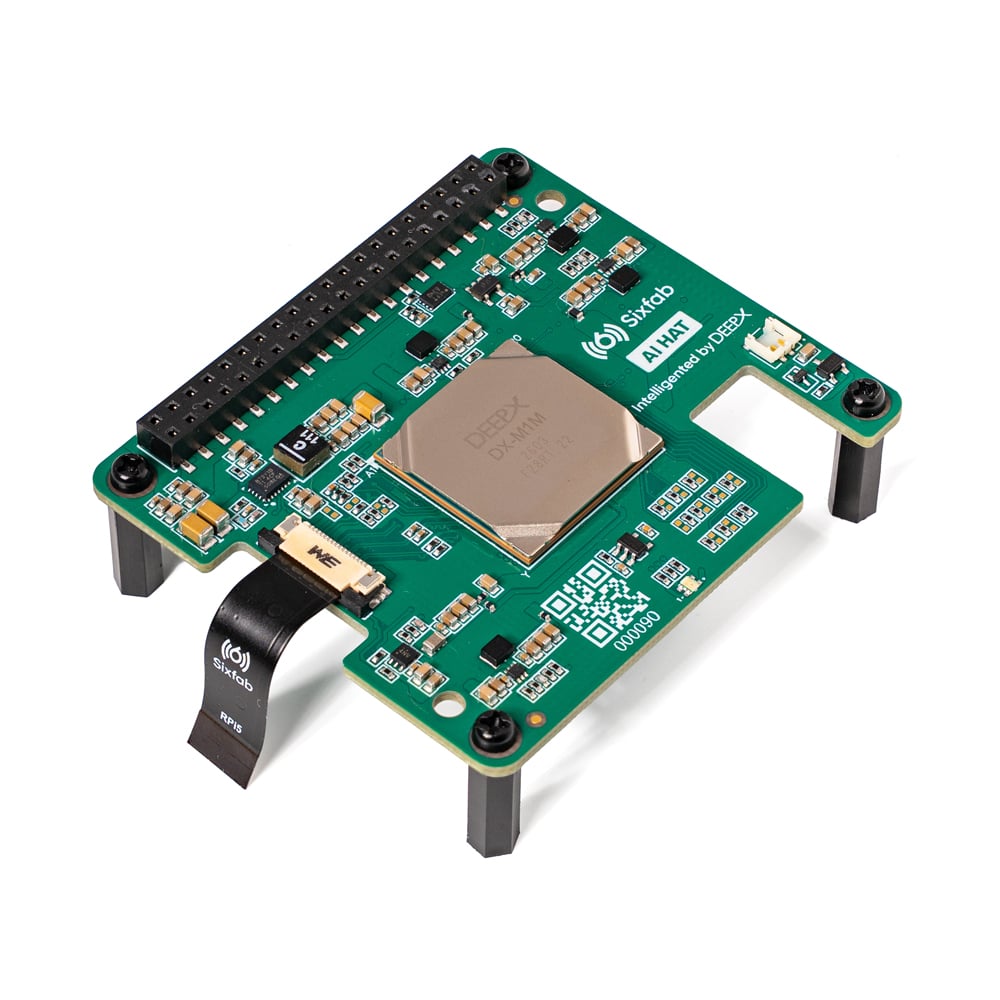
Seeing, understanding, and responding: low-power CNN, VLM and SLM workloads on Raspberry Pi 5
The article discusses the capabilities of the Raspberry Pi 5 when paired with the Sixfab AI HAT+, an AI accelerator that utilizes the DEEPX DX-M1M Neural Processing Unit (NPU). This combination enables efficient execution of low-power Artificial Intelligence (AI) tasks, including computer vision and language processing, all without relying on a constant cloud connection. The NPU delivers 25 trillion operations per second (TOPS) while maintaining a power consumption of around 3 watts, which is crucial for running AI at the edge in applications like smart cameras and robotics.
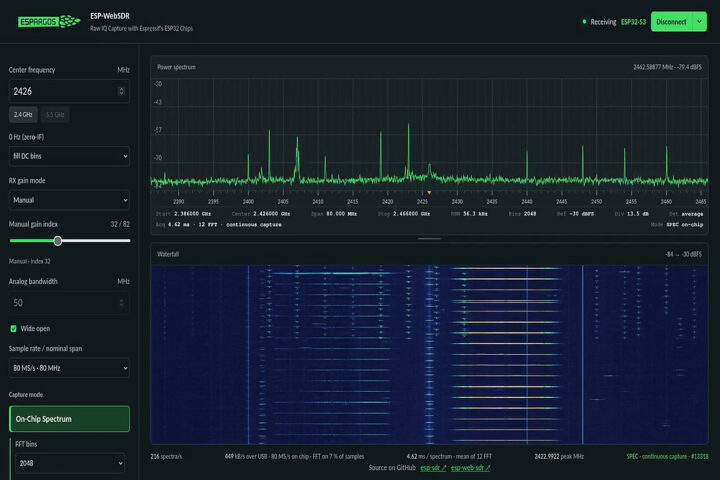
ESP-SDR firmware turns ESP32 into a 2.4/5 GHz Software-Defined Radio (SDR)
ESP-SDR firmware transforms the ESP32 microcontroller into a Software-Defined Radio (SDR) capable of receiving signals in the 2.4 GHz and 5 GHz frequency bands, all without needing extra hardware. This open-source firmware allows users to access the internal Analog-to-Digital Converter (ADC) of the ESP32 to capture raw In-phase and Quadrature (I/Q) samples, which can then be processed on a computer via USB or UART. It supports various ESP32 chips, including the ESP32-C3, ESP32-C5, and ESP32-S3, among others.
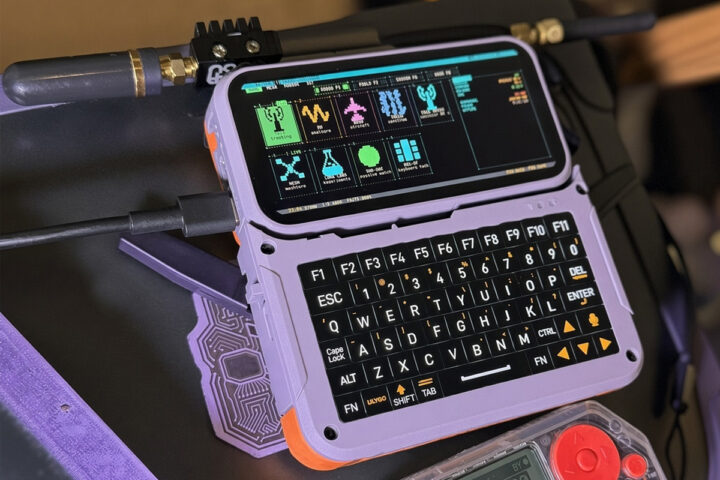
LakeShark firmware turns LilyGO T-Display P4 into a handheld ESP32-P4 SDR scanner
LakeShark is an open-source firmware developed by Samuel Reynolds (SAMS0N1TE) that transforms the LilyGO T-Display P4, powered by the ESP32-P4 chip, into a portable Software Defined Radio (SDR) scanner. By connecting it with an RTL-SDR Blog V3 or V4 dongle, users can decode various radio signals, including P25 Phase I trunking, analog FM/AM, POCSAG pager messages, and 1090 MHz ADS-B data without needing a separate computer or mobile device.

How to Design a Capacitive Sensor for Liquid Level Measurements
The article explains how to create a capacitive sensor for measuring liquid levels using fringing field capacitance, specifically leveraging the AnalogPAK integrated circuit (IC) for this purpose. The design focuses on a non-contact method, which means it can accurately measure liquid levels without physically touching the liquid, making it suitable for a variety of applications where contamination or wear is a concern.
An RS-485 Pressure Sensor Interface Board Compatible with Arduino
This article explains how to create an interface board for an RS-485 pressure sensor that works with Arduino. The board allows users to read pressure data from the sensor and transmit it over an RS-485 network, which is useful for long-distance communication in industrial settings.
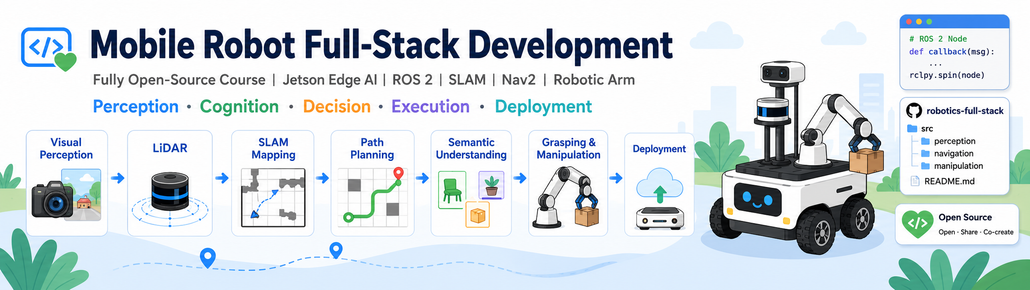
Mobile Robot Full-stack Development In Practice Ⅰ: Build the Robot Brain First — Jetson, ROS 2, and the Development Foundation
The article introduces the first part of a hands-on course called "Mobile Robot Full-stack Development in Practice," which focuses on building a mobile robot's core systems before diving into its algorithms. Instead of treating robotics as a series of disconnected tasks, the course emphasizes understanding how various components work together, starting from the computing platform and extending through perception, sensor fusion, and navigation.
New Learn Guide: PixelDust Digital Sand for CircuitPython
Adafruit has released a new guide for PixelDust Digital Sand, which allows users to create simulated sand particle effects using CircuitPython. This is a significant shift from previous demos that required platforms like Arduino or Raspberry Pi, making it easier for users to implement these visual effects on microcontrollers. Thanks to recent enhancements in CircuitPython, particularly with the introduction of Turbo modules and the Picogame library, you can now run these particle simulations more efficiently.

CircuitPython POV Bike Wheel
The article describes a project that transforms a bicycle wheel into a vibrant persistence-of-vision display using CircuitPython. Created by Erin St Blaine, this setup utilizes six high-speed LED strips mounted on three spokes, controlled by a Feather microcontroller. As the wheel spins, the microcontroller displays colorful patterns and images while a magnetic sensor adjusts the timing based on the wheel's speed.
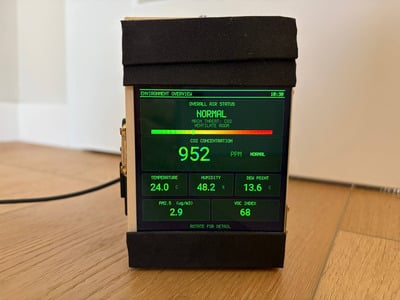
AIR PRO: a Pip-Boy style air quality monitor with Qualia S3 and SEN66
Edgar S has created the AIR PRO, a stylish air quality monitor reminiscent of the Pip-Boy from Fallout. This device features a Qualia S3 display driving a round screen and uses a Sensirion SEN66 sensor module to measure various air quality metrics. It tracks CO2 levels, particulate matter (PM1.0 to PM10), volatile organic compounds (VOCs), nitrogen oxides (NOx), temperature, and humidity, updating every two seconds.
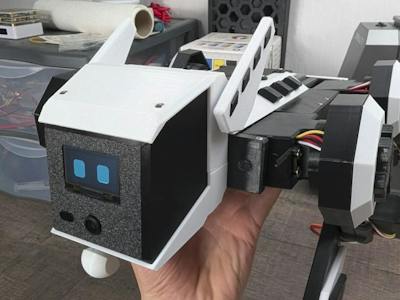
Paul Loisil's TNY-360 Is an Open-Hardware Espressif ESP32-S3-Powered Robot Dog for Everyone
Paul Loisil has introduced the TNY-360 v2, a second-generation open-hardware quadrupedal robot dog designed to make robotics more accessible. The TNY-360 is powered by an Espressif ESP32-S3 microcontroller, which utilizes its dual cores to manage both kinematic calculations and user interface functionalities while simplifying assembly and wiring. Loisil's aim was to create a robot that balances functionality with ease of use, addressing common frustrations faced by newcomers in robotics.