Rising Edge Digital • Hardware & Embedded Systems for Software Developers
Adafruit Capacitive Touch Sensor Breakouts · Using LVDS screens with a Raspberry Pi Pico 2 · How FermiLabs builds championship-level robots with Arduino

Adafruit Capacitive Touch Sensor Breakouts
The Adafruit Capacitive Touch Sensor Breakouts are versatile boards designed to add touch sensing capabilities to your projects. They operate on a voltage range of 1.8 to 5.5V DC and can be triggered simply by touching the sensor pad. These boards are user-friendly and can interface with various projects, whether or not you have a microcontroller involved.
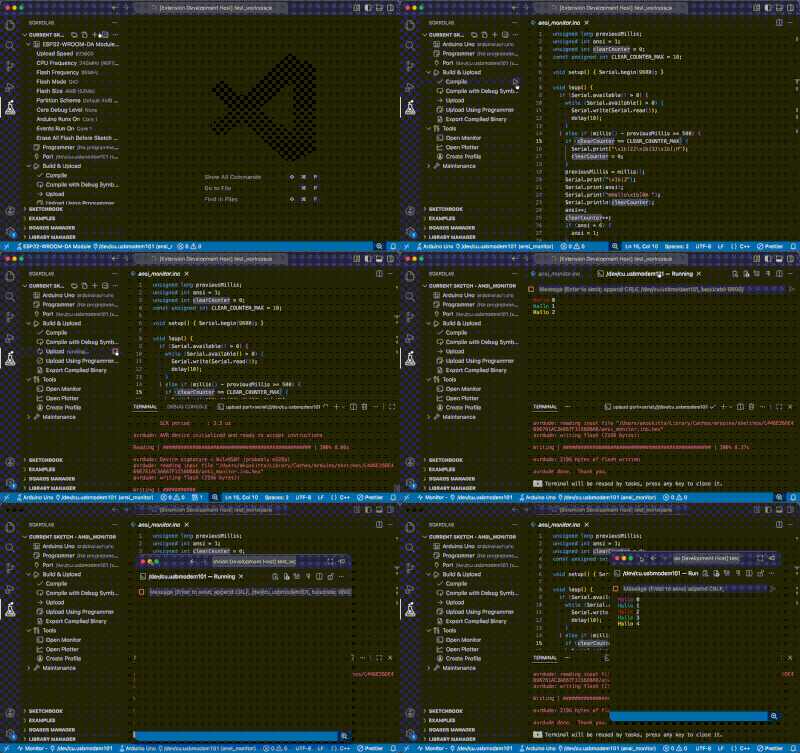
Vendor-independent board development for Visual Studio Code
BoardLab is a new development tool for Visual Studio Code that allows for vendor-independent board development using the Arduino command line interpreter (CLI). This project aims to replicate the features of the Arduino IDE 2.x while maintaining a fully open-source environment that integrates seamlessly with VS Code's user experience.
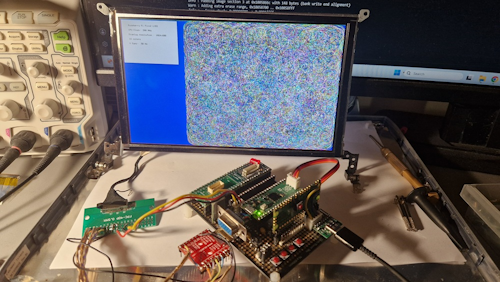
Using LVDS screens with a Raspberry Pi Pico 2
This article discusses a project by a user named ceteras who successfully drove an LVDS (Low-Voltage Differential Signaling) display using the Raspberry Pi Pico 2. They created a proof of concept that demonstrates how to connect and control LVDS screens from older netbooks, specifically the B089AW01-V.0 and HSD089IFW1-A00-V1.0 models. The project utilizes 270-ohm resistors, similar to those used in DVI (Digital Visual Interface), to generate compatible electric signals for the displays.

How FermiLabs builds championship-level robots with Arduino
FermiLabs, a robotics innovation hub at IIS “E. Fermi – R. Guttuso” in Giarre, Sicily, is making waves in the Arduino community with their championship-level robots. Their students participate in RoboCupJunior Europe, a highly competitive robotics event where teams design and build fully autonomous robots for rescue scenarios. For the 2026 season, two teams from FermiLabs are pushing the boundaries of what's possible using Arduino technology.

One board, two brains? Three ways a dual architecture board makes building simpler
The Arduino UNO Q is a dual-architecture board that integrates a microcontroller (MCU) and a microprocessor (MPU) on a single platform, designed to simplify embedded project development. This combination allows the MPU to handle high-level tasks, like networking and AI, while the MCU manages real-time I/O and time-sensitive operations. By separating these functions, the UNO Q leverages the strengths of both architectures, enabling them to communicate effectively through a dedicated bridge mechanism.

John Park’s CircuitPython Parsec: RGB LCD Character Display Shield Basics
John Park's article on the RGB LCD Character Display Shield dives into how to effectively use this hardware with CircuitPython, a version of Python designed for microcontrollers. The shield utilizes I2C (Inter-Integrated Circuit) communication, allowing you to easily interface with the display and handle inputs from buttons. The article breaks down the basics, showing how to read button presses, write text to the display, and even change the colors displayed on it.
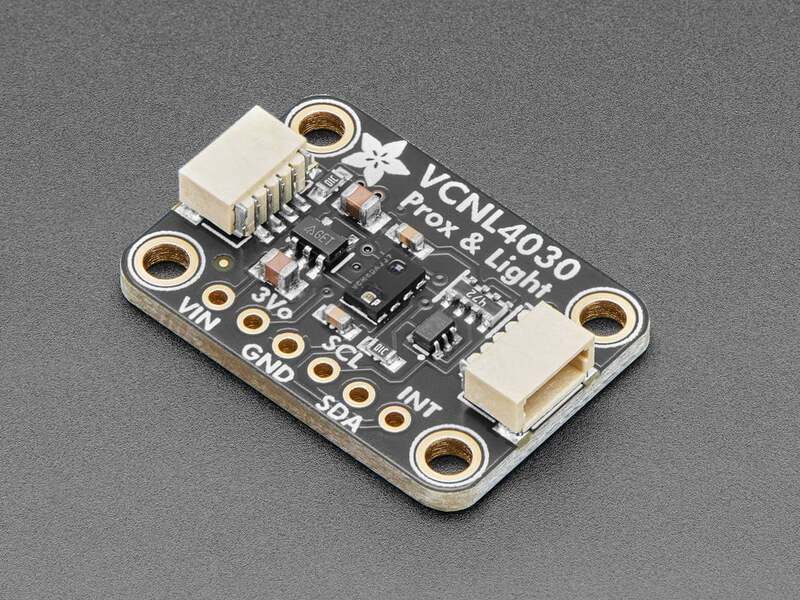
UPDATED LEARN GUIDE: Adafruit VCNL4030 Proximity and Lux Sensor
The Adafruit VCNL4030 is a versatile sensor that combines proximity and lux (light) sensing capabilities. It can detect distances from 0 to 300 mm (about 12 inches) and measure light levels ranging from 0.004 to 16,768 lux. This makes it useful for various applications, such as measuring how close an object is or determining ambient light levels for projects involving automatic lighting controls.
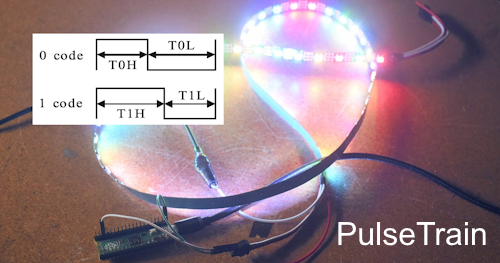
Creating specific pulse trains using an RP2040, PIO and CircuitPython
James Bowman has developed a CircuitPython program called PulseTrain for the Raspberry Pi RP2040 Pico, which simplifies generating precise sets of binary pulses. This is particularly useful for applications that require exact timing, like controlling WS2812B RGB LEDs (often referred to as NeoPixels). The program leverages the RP2040's Programmable Input/Output (PIO) subsystem to create tailored pulse trains, making it easier to implement various digital communication protocols.
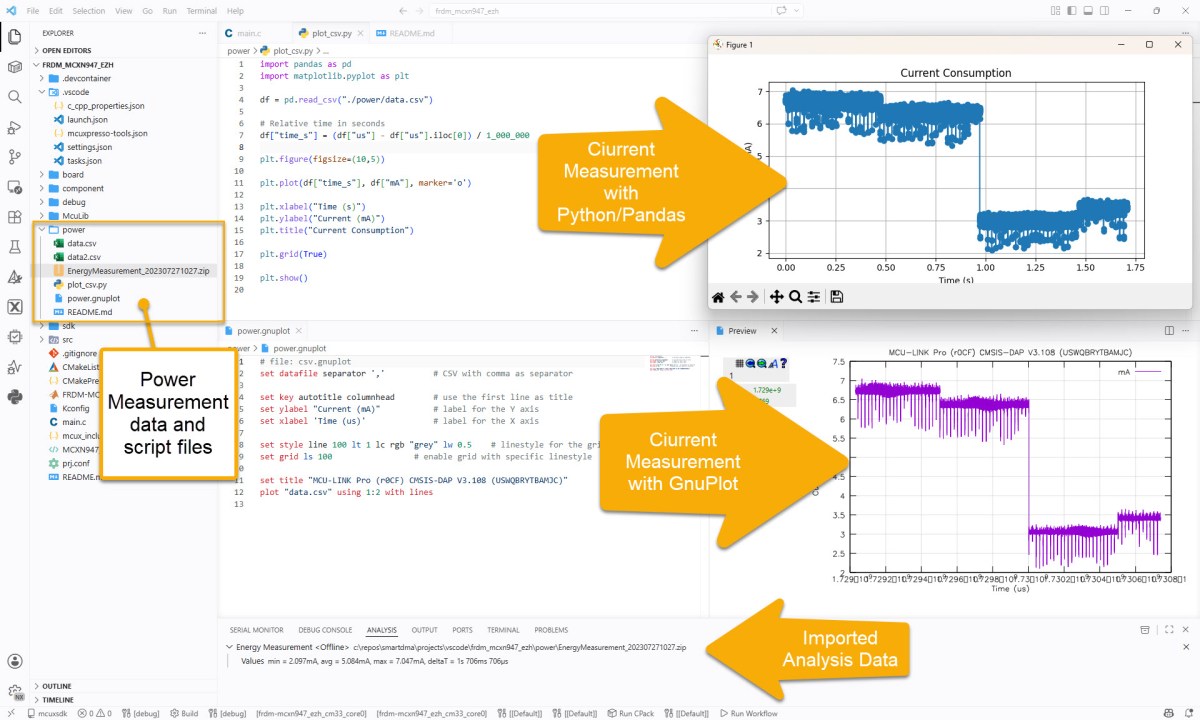
Visualize Embedded Power Data in VS Code
The article discusses a method for visualizing current and power data from the NXP MCU-Link Pro using Visual Studio Code (VS Code). It focuses on leveraging Python libraries, specifically Pandas for data manipulation and GnuPlot for graphing, to analyze energy consumption in embedded systems.
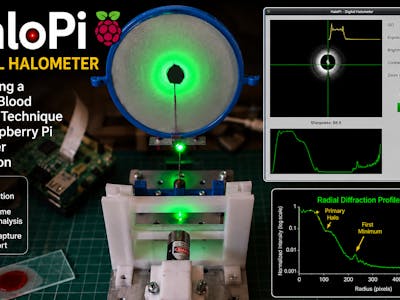
This DIY Instrument Can Affordably Measure the Size of Red Blood Cells
HaloPi is a DIY instrument designed by DaniloR29 that measures the size of red blood cells using an affordable light diffraction technique. This is particularly useful for detecting conditions related to abnormal red blood cell sizes, such as macrocytosis (large cells) and microcytosis (small cells). Traditional methods often rely on high-powered microscopes, which can be time-consuming and less accessible.
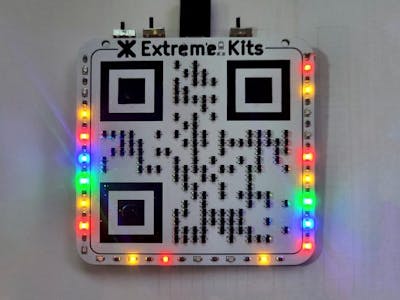
Derek Woodroffe's Extreme Kits Badge Packs 143 Transistors — As QR Code Blocks
Derek Woodroffe has created a unique badge that features a fully-functional scannable QR code, which is made up of 143 transistors. This badge serves a dual purpose: it functions as a promotional item for Extreme Kits and showcases a creative approach to integrating electronics in a visually interesting way. The QR code is not just an image but is constructed from MOSFET transistors that operate an 11-stage shift register to drive 24 colorful LEDs around the badge's edge.
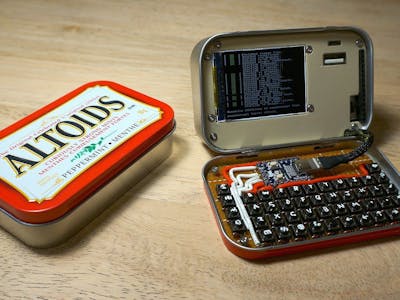
The Curiously Strong Portable Computer
YouTuber Exercising Ingenuity has created a fully functional portable computer that fits into an Altoids tin, using a Raspberry Pi Zero W as the main component. This tiny machine includes a 2-inch display and a custom miniature mechanical keyboard, making it a compact solution for on-the-go computing. The project demonstrates how you can combine various hardware components into a small package, perfect for quick hacks or development work.

Building Transit Tracker
The article details a project called Transit Tracker, which is a device designed to provide real-time updates on public transportation schedules. This tracker uses a combination of GPS and cellular technology to monitor bus locations and relay that information to users through a web interface. The project highlights the integration of hardware and software components in creating a practical solution for commuters.