Rising Edge Digital • Hardware & Embedded Systems for Software Developers
John Park’s CircuitPython Parsec · Raspberry Pi Retro Handheld · CircuitPython Chiptune Player

DIY Steam Controller Puck Offers Xbox, Switch, PlayStation Emulation Modes
Valve recently released a new version of the Steam Controller that includes a wired USB puck, which acts as both a charger and a low-latency wireless receiver. However, these pucks aren't available for standalone purchase, which is where the OpenPuck project by [safijari] comes in. This DIY project utilizes the Pro Micro NRF52840 board to replicate the puck's wireless receiver functionality, allowing users to connect their Steam Controllers just like they would with the official puck.
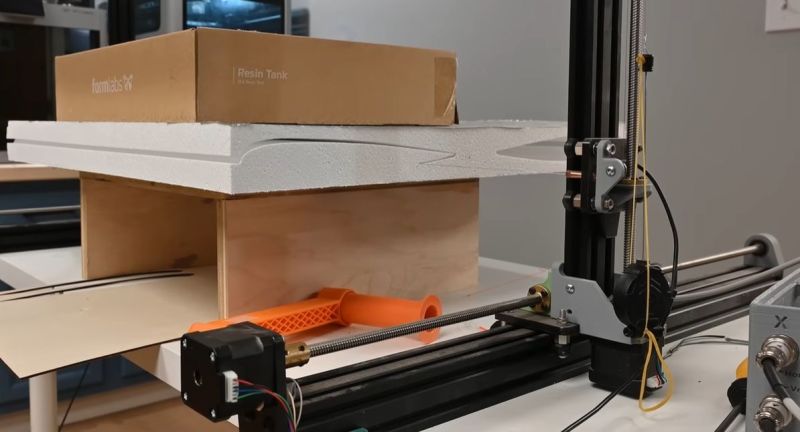
Building a Better CNC Hot Wire Foam Cutter
Michael Rechtin has developed a DIY CNC (Computer Numerical Control) hot wire foam cutter that enhances the precision and versatility of foam cutting, especially for detailed shapes like airfoils. This project has been shared in a video and on GitHub, where you can access the design files and instructions if you're interested in building your own.
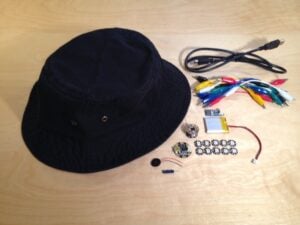
Close Encounters Hat
The Close Encounters Hat is a playful project inspired by the classic movie, designed to create an interactive experience with lights and sounds directly from the film. It features a photocell to detect light changes, triggering a GEMMA microcontroller to activate the show. The setup includes NeoPixels for colorful lighting effects and a piezo buzzer to produce sound effects, all cleverly concealed under the brim of the hat.

John Park’s CircuitPython Parsec: Nested Display Groups
John Park's article introduces the concept of nested display groups using displayio in CircuitPython, which is a version of Python designed for microcontrollers. This technique allows users to create complex graphical interfaces by organizing display elements into hierarchical groups. By doing this, you can manage multiple layers of graphics more efficiently, making it easier to build intricate user interfaces for projects.
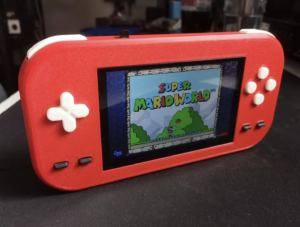
Raspberry Pi Retro Handheld – 5″ Elecrow Build
This article showcases a DIY project for building a handheld gaming console using a Raspberry Pi 2, featuring a 5-inch Elecrow screen and a built-in speaker. The project includes comprehensive assembly instructions and a Bill of Materials (BOM) for those interested in replicating it. Mark_McQ shared this creative design on Makerworld, highlighting its potential as an alternative to traditional gaming consoles.
A Four-Channel RS-422 Differential Line Receiver Module
The article outlines the construction and functionality of a four-channel differential line receiver module designed for balanced RS-422 and RS-485 data communication. This module is particularly useful in applications where long-distance data transmission is required, as it helps to minimize signal degradation and noise interference.
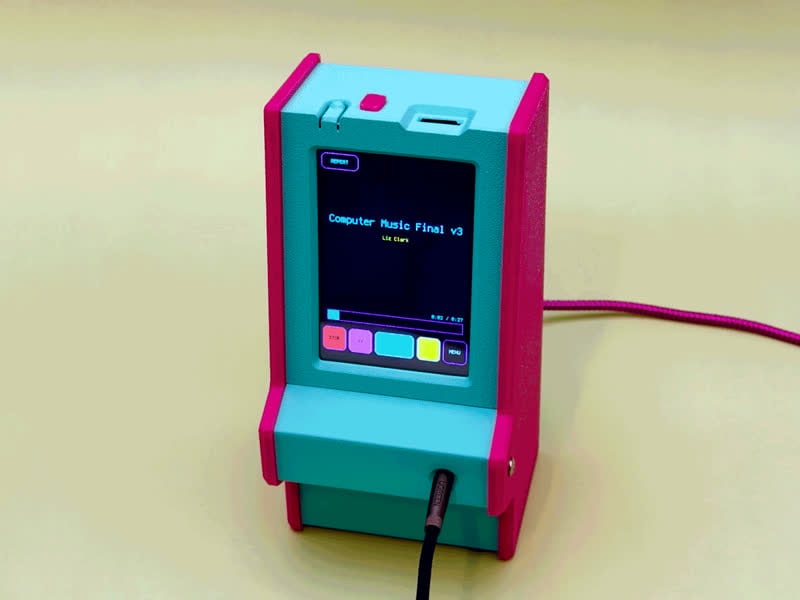
NEW GUIDE: CircuitPython Chiptune Player
The article introduces a new project that allows you to create a chiptune music player using CircuitPython. This project involves building a compact arcade cabinet that houses a Feather RP2040 microcontroller, an I2S Digital-to-Analog Converter (DAC), and a TFT FeatherWing display. The Feather runs CircuitPython code that leverages the synthio module to emulate the AY-3-8910 sound chip, which was widely used in vintage arcade games for generating music and sound effects.
NEW LEARN GUIDE: I2S Microphones with CircuitPython
CircuitPython now includes a new `audioi2sin` module starting with version 10.3.0-alpha.3, enabling users to work with I2S microphones like the ICS43434 and SPH0645LM4H on Raspberry Pi and Espressif devices. This addition is a game-changer for makers looking to incorporate audio functionality into their projects.
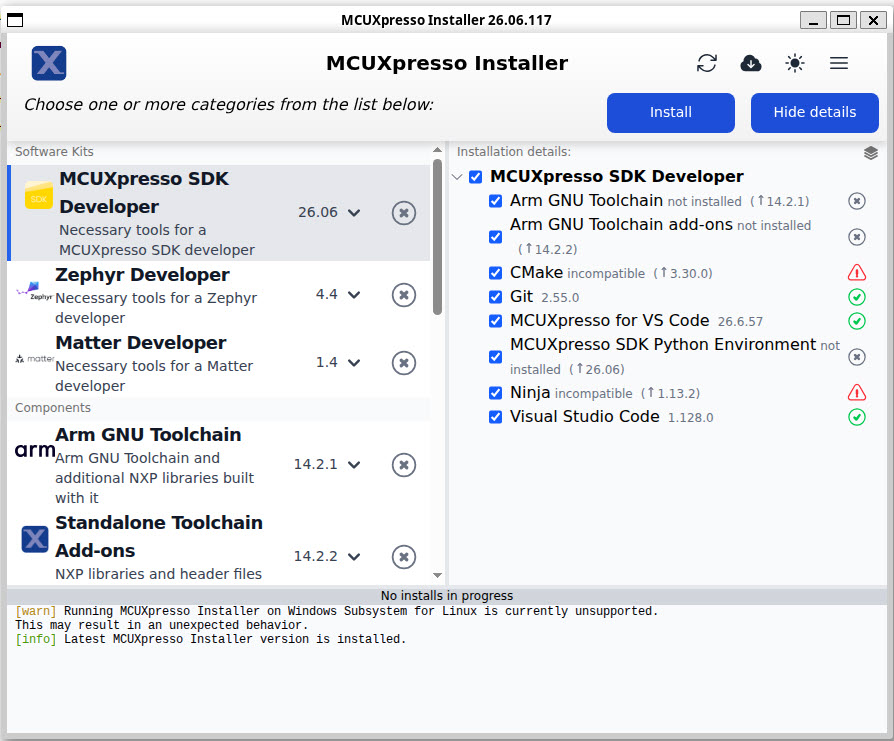
Installing MCUXpresso Installer in DevContainer
The article explains how to set up the NXP MCUXpresso Installer within a DevContainer using Docker, specifically for use in Visual Studio Code. This setup simplifies the installation and management of necessary development tools for microcontroller projects, ensuring that developers have a consistent and reliable environment.
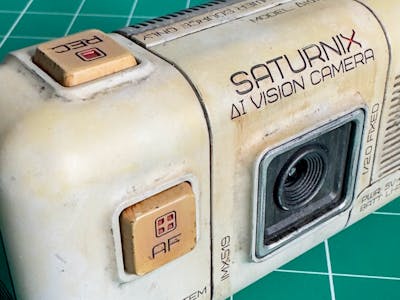
This DIY Digicam Looks Like It Belongs on the USCSS Nostromo
The SATURNIX is a DIY digicam that channels a distinctive “cassette futurism” aesthetic reminiscent of the '70s and '80s sci-fi, particularly the look of the film Alien. This camera, built around a Raspberry Pi Zero 2 W single-board computer, features a chunky design with a weathered plastic finish, looking like it stepped straight out of a retro sci-fi set. It has a simple user interface that complements its nostalgic vibe, complete with glitchy artifacts.
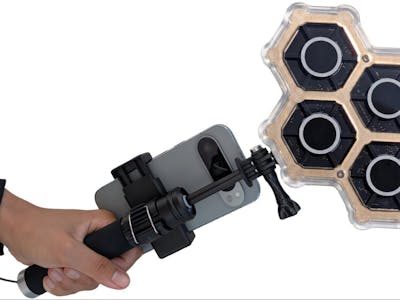
QuadRF: The Open Source RF Camera That Lets You See Wi-Fi Signals
QuadRF is an open source radio frequency (RF) camera that enables users to visualize Wi-Fi signals and other wireless transmissions in real-time. It combines a complete 4×4 multiple-input multiple-output (MIMO) software-defined radio system with a phased-array antenna and a Raspberry Pi 5, all running open source software. This setup allows hobbyists and educators to see the physical locations of wireless transmitters, such as Wi-Fi access points and drones, displayed as augmented reality overlays on smartphones or laptops.
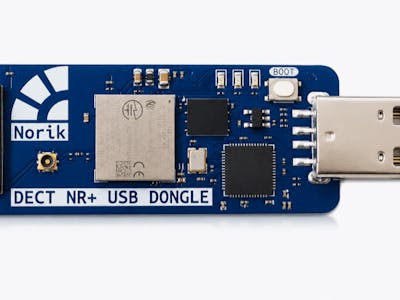
Non-Cellular 5G Networks Simplified
DECT NR+ is a non-cellular 5G wireless technology that offers low-power, long-range communication, ideal for applications requiring reliable, near-real-time connections, like robotics and smart buildings. Unlike traditional cellular networks, DECT NR+ operates in the 1.9 GHz band and supports various network topologies, allowing for millions of connected devices.
RISCBoy RISC-V homebrew portable game console
The RISCBoy is a homebrew portable game console built around the RISC-V architecture. This project, created by a developer named Wren6991, leverages the open-source nature of RISC-V to provide a customizable platform for gaming enthusiasts and makers. The console features a 3D-printed case, a color display, and various input controls, making it a unique device for retro gaming experiences.
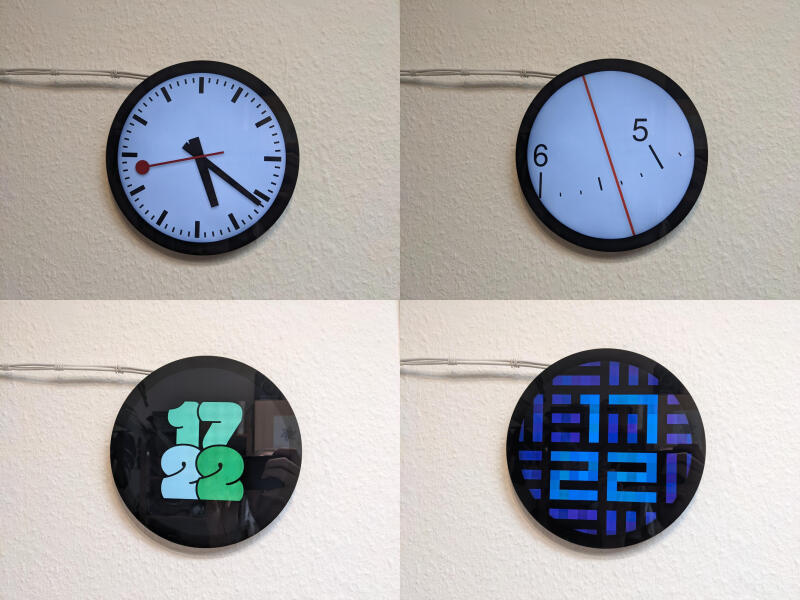
How to build a circular LCD clock
The article details a project for building a circular LCD clock that incorporates a unique design aesthetic with practical functionality. The creator outlines the process of using an LCD screen in a circular format, which not only tells time but also presents a visually appealing alternative to traditional clocks.
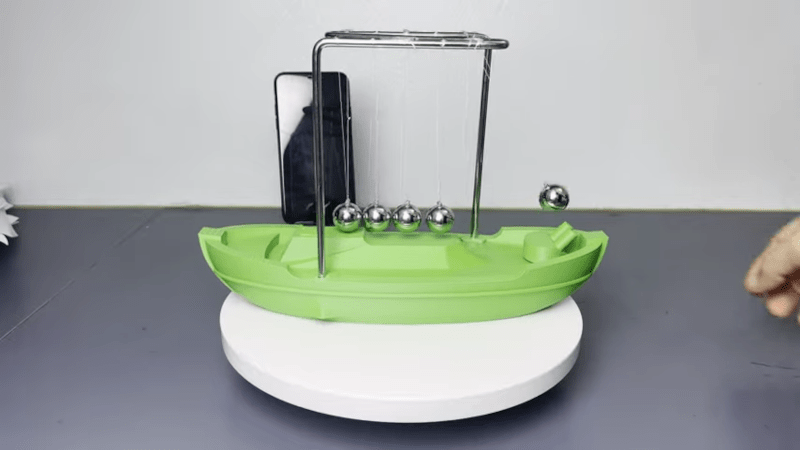
Newton’s Cradle Isn’t Really Perpetual
A recent Hackaday article discusses a version of Newton's Cradle that appears to operate indefinitely, thanks to some clever engineering. While it looks like a classic desk toy, it actually incorporates a battery and an electromagnetic system to keep the balls swinging. The setup uses an ESP32 microcontroller and a proximity sensor to detect the motion of the balls and injects a pulse of energy at just the right moment.