Rising Edge Digital • Hardware & Embedded Systems for Software Developers
A modern 6502 based laptop design · Object detection with Ultralytics YOLO26 on Raspberry Pi · A program to monitor serial ports in Windows
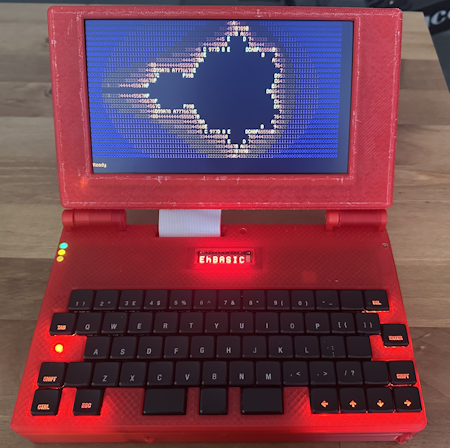
A modern 6502 based laptop design
Paula Maddox designed a fully custom laptop around the classic 6502 microprocessor, a chip that has a nostalgic place in computing history. With her project, known as LT6502, she set out to create a portable device that pays homage to retro computing while incorporating modern conveniences. This isn't just about building a laptop; it's about reimagining the computing experience of the past for today's world.

A program to monitor serial ports in Windows
Monitoring serial ports on Windows can feel like a frustrating scavenger hunt, especially for those of us coming from a software background. You plug in a device, like an Arduino board or a USB-to-serial adapter, and suddenly you're faced with the challenge of figuring out which COM (Communication) port it’s attached to. This is a common scenario that Lucadentella experienced, leading to the creation of a nifty little Python program called SerialPortMonitor.
Reverse engineering the Dash learning robot
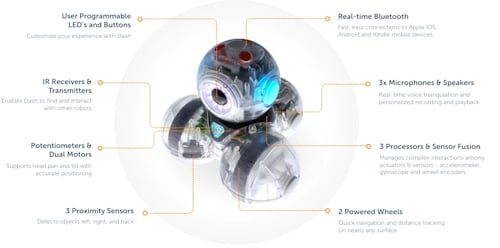
Jonathan Diamond recently took on the challenge of reverse engineering a Dash learning robot, which he stumbled upon at a thrift shop. His goal was to enhance the existing open-source interface for this quirky little robot, making it more accessible for developers like you. Using Ghidra, a powerful reverse engineering tool, he dove back into the original programming of the Dash, aiming to unlock its capabilities and make it easier to control.
From PDF to .LBR: Using Deep Think to Write Custom CAD Parts
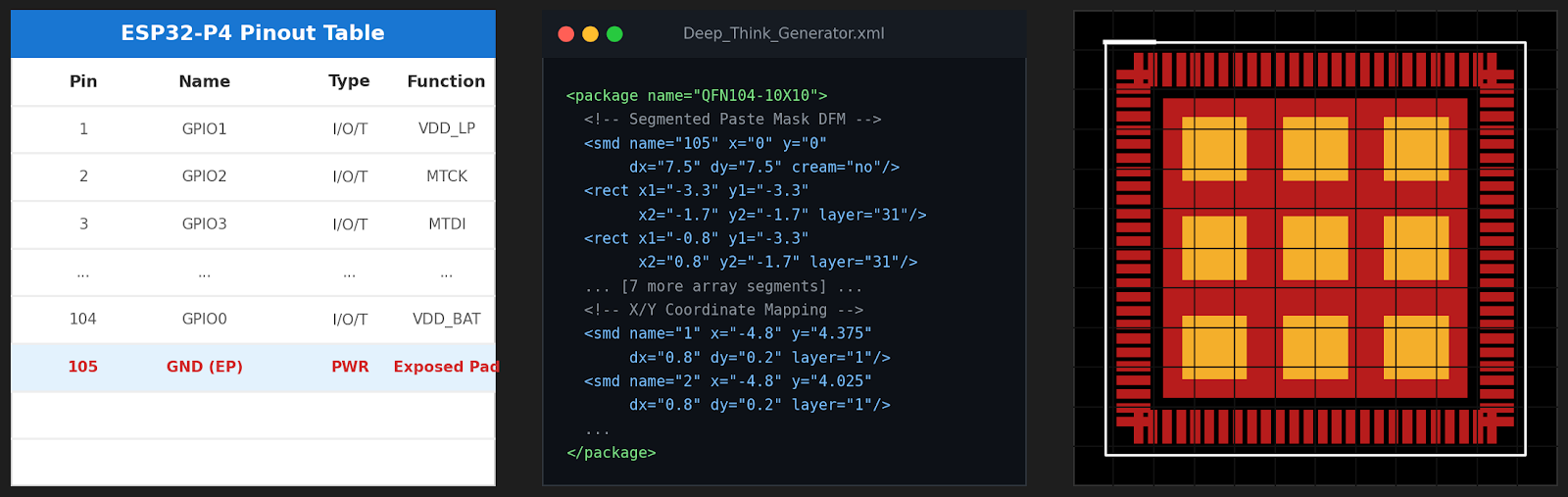
Creating custom component libraries for CAD (Computer-Aided Design) tools used in hardware design can often feel like a daunting task for software developers venturing into the world of embedded systems. The blog post dives into an innovative approach using Gemini Deep Think, an AI model from Google, to streamline this process. By simply feeding datasheets into this AI, developers can generate production-ready library files (specifically .lbr files for EAGLE, a popular PCB design software) without needing to interact with a graphical CAD interface. This can save a ton of time and eliminate the tedious manual work that typically comes with creating footprints and schematic symbols from scratch.
Building the ultimate turntable for 3D scanning
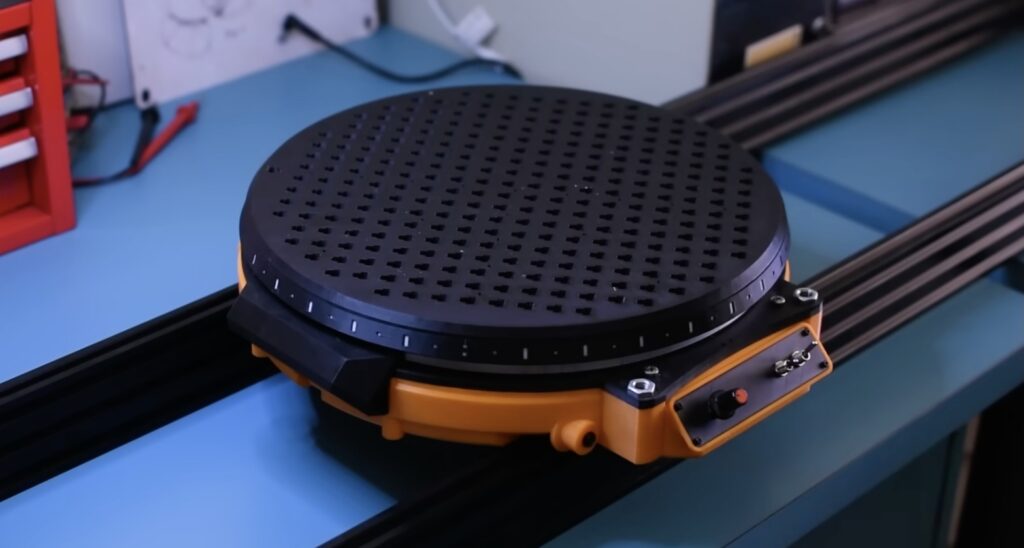
Chris Borge recently took on the challenge of building a robust turntable for 3D scanning, addressing a common issue that many 3D scanners face: their accompanying turntables are often flimsy and unstable. Borge, known for his innovative machine tools in the YouTube maker community, opted for a practical yet creative solution that blends 3D printing with concrete for added stability. The result is a turntable that not only enhances the scanning process but also serves as a versatile tool for videography.

The MicroBox is a handheld game console that runs on an Arduino UNO R4
Szymon Kubica has created an exciting project that merges software development with hardware design: the MicroBox, a handheld game console powered by the Arduino UNO R4. If you’re a software developer dipping your toes into the hardware world, this is a fascinating example of how you can leverage the capabilities of your Arduino board, which features a Renesas RA4M1 Cortex-M4 microcontroller. With this setup, you can run various games and explore the intersection of coding and electronics.

A weather station built specifically for model rocket launches
Markus Bindhammer created a portable weather station tailored for model rocket launches, demonstrating that weather can make or break a launch, just like it does for NASA or SpaceX. This innovative device measures six essential weather metrics: temperature, humidity, air pressure, altitude, wind speed, and wind direction, all in real time at the launch site. Instead of relying on external sources, Bindhammer's setup ensures he has the most accurate data right when he needs it.
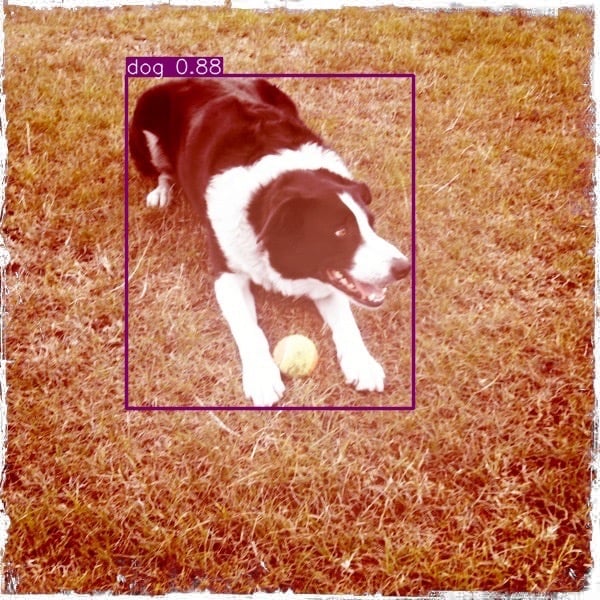
Object detection with Ultralytics YOLO26 on Raspberry Pi
Ultralytics YOLO26 is making waves in the world of object detection, particularly for makers using the Raspberry Pi. This exciting technology allows you to identify and classify objects in images and videos efficiently. With the release of YOLO26n, a variant designed for speed and accuracy, you can easily integrate this powerful model into your Raspberry Pi projects, creating systems that can react to their surroundings in real-time.
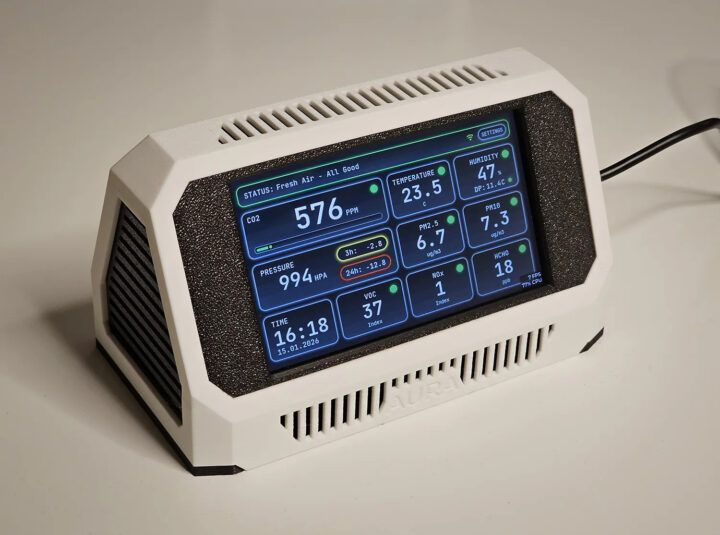
Project Aura – A neat, easy-to-assemble, DIY Air quality monitor compatible with Home Assistant
Project Aura is a fascinating DIY air quality monitor that leverages the capabilities of the ESP32-S3 microcontroller. This neat little project combines a touchscreen display with industrial-grade sensors to provide real-time data on air quality, all while being fully compatible with Home Assistant, an open-source platform for home automation. What makes this project stand out is its simplicity; you don’t need to be a soldering whiz or have advanced electronics skills to get it up and running. Instead of assembling a custom circuit board, you’ll be connecting off-the-shelf components via cables, making it accessible for software developers dipping their toes into hardware.

John Park’s CircuitPython Parsec: Trellis Line Fill
John Park has created an intriguing project using CircuitPython, which is a version of Python specifically designed to run on microcontroller boards. His latest adventure involves filling a line of NeoPixels—those colorful addressable LEDs—between two points on NeoTrellis driver boards, which are designed for interactive projects. If you're new to hardware, think of NeoTrellis as a grid of buttons or pads that can light up in various colors and respond to touch, making it a fun interface for DIY electronics.
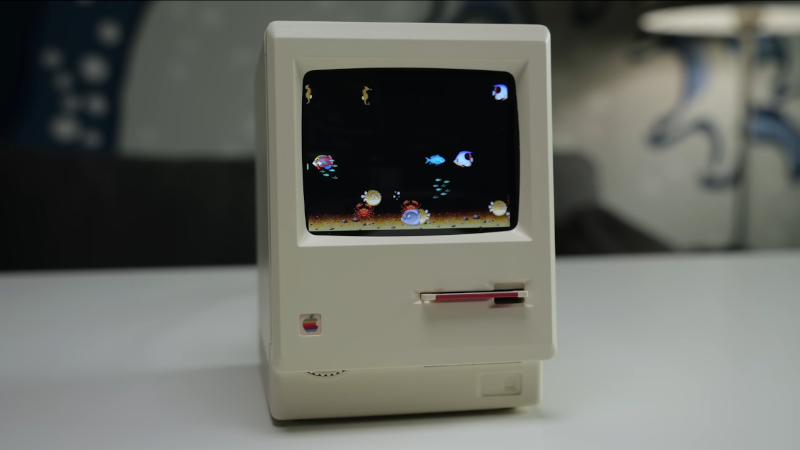
A Novelty Clock Makes The Best Tiny Mac Yet
In 2026, the world of single-board computers has made it possible to emulate classic machines from the 1990s, including the iconic Apple Macintosh. A particularly clever project by [This Does Not Compute] showcases how a novelty alarm clock, modeled after an early Mac, has been transformed into a functional Mac emulator. This project taps into the nostalgia of the 68000 era, which many software developers may recognize as a pivotal moment in computing history.
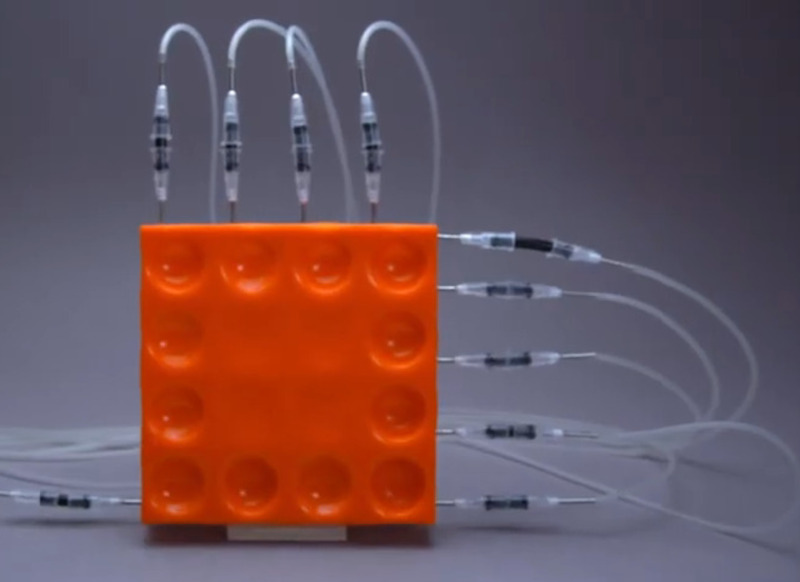
Microfluidic Display Teaches The Basics
Soiboi has created an intriguing project that dives into the world of microfluidics by designing a multiplexed dot matrix display using silicone and a vacuum. Instead of relying on traditional electronic components, this display uses air to control the flow of liquid, demonstrating how you can design systems that operate on fluidic logic. It’s a fascinating shift from the usual bits and bytes, and it showcases a creative way to visualize data without conventional electronics.
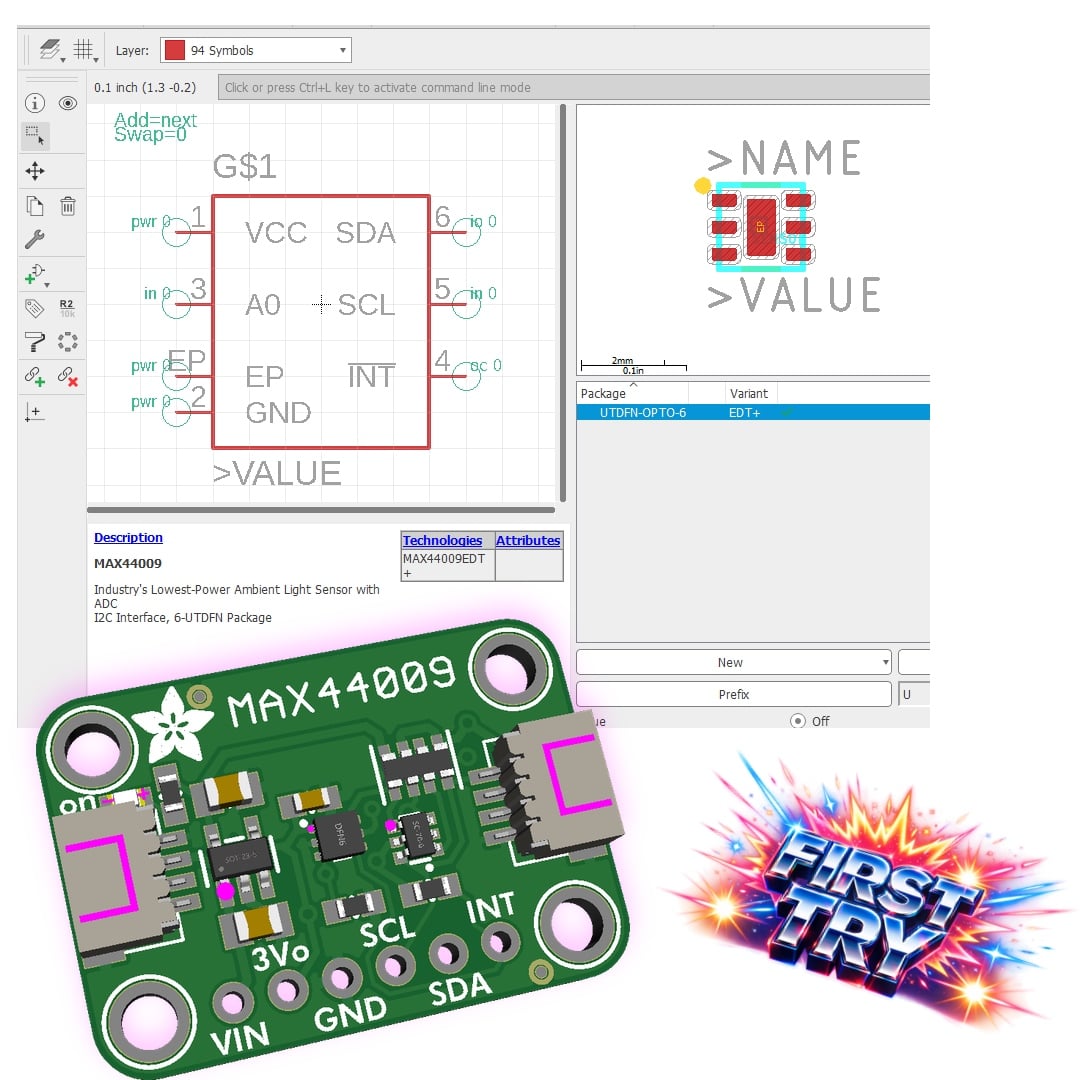
Here’s Our First Gemini Deep Think LLM-Assisted Hardware Design
Adafruit has taken a leap into the world of hardware design by utilizing a language model (LLM) to assist in creating a library for the MAX44009 lux sensor. This breakthrough showcases how AI can streamline the hardware design process, particularly for software developers venturing into embedded systems. Instead of manually creating a component in CAD software, the team fed the sensor's datasheet into the Gemini Deep Think model. The result? A perfectly formatted EagleCAD library file generated in about ten minutes, complete with pin assignments, dimensions, and features like the all-important pin 1 dot. This kind of automation could save engineers countless hours in their design workflows.

Adafruit Weekly Editorial Round-Up: Full-circle Test-driven Firmware Development with OpenClaw, Hacking Yoto Music Players, & More
Adafruit's latest editorial round-up dives into some exciting projects that bridge the gap between software and hardware, perfect for developers looking to expand their skill set into the world of embedded systems. One highlight is the exploration of full-circle test-driven firmware development with OpenClaw, a framework that helps streamline the creation of reliable firmware. It emphasizes the importance of testing at each stage of development, creating a robust process that mirrors the practices software developers are already familiar with.
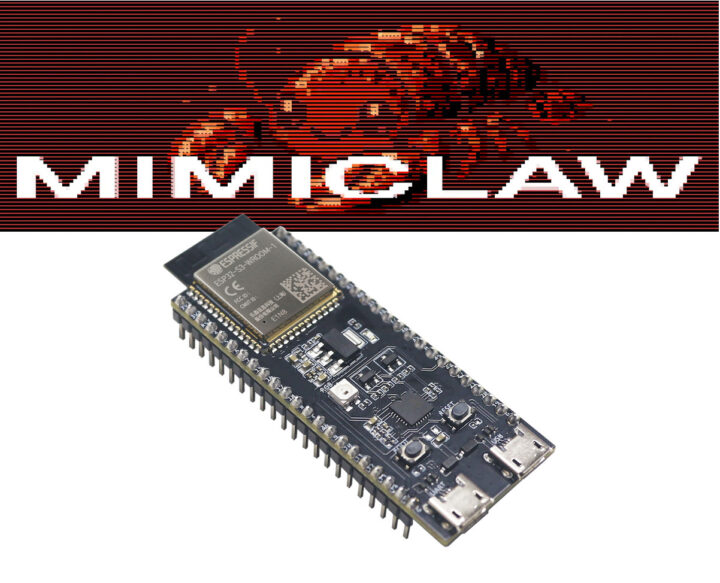
Mimiclaw is an OpenClaw-like AI assistant for ESP32-S3 boards
MimiClaw is an innovative AI assistant designed specifically for ESP32-S3 boards, providing a unique way to control hardware through simple text messages. Inspired by the earlier OpenClaw project, MimiClaw acts as a bridge between the Telegram messaging application and the Claude online large language model (LLM), allowing you to interact with your hardware just by chatting. This project is part of a trend where lightweight AI solutions are being adapted for microcontrollers, making advanced capabilities accessible even on smaller devices.
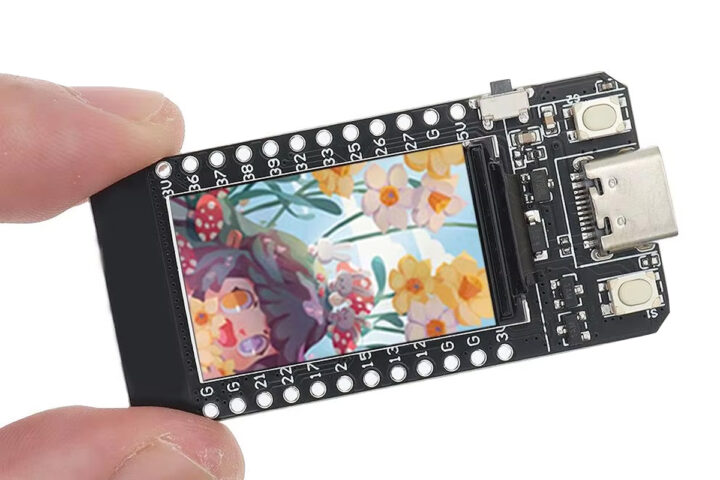
Add a tiny desktop monitor to your PC with the ESP32 Desktop Monitor project
The TENSTAR T-Display ESP32-D0WD is a compact board that packs a punch, offering a 1.14-inch IPS (In-Plane Switching) color LCD and 16MB of QSPI (Quad Serial Peripheral Interface) flash memory. This little device is gaining popularity among makers and developers looking to add a tiny secondary monitor to their PCs. With features like a USB-to-TTL (Universal Serial Bus to Transistor-Transistor Logic) converter, a battery charging circuit, and programmable buttons, it’s versatile enough for various projects, from home automation dashboards to gaming controllers. Interestingly, despite its simple hardware specifications, over 10,000 units have been sold, primarily due to the ESP32 Desktop Monitor project that transforms this board into a functional mini monitor.
8 Track MIDI Sequencer on Adafruit PyGamer
Paul Cunningham has created an impressive 8-track MIDI (Musical Instrument Digital Interface) sequencer using the Adafruit PyGamer, a fun handheld gaming device. This project stands out not just for its creativity but also for how it pushes the boundaries of what you can do with the PyGamer's hardware. Paul dove into this project while snowed in, and it’s a great showcase of how CircuitPython, a version of Python designed for small microcontroller boards, can be utilized to bring musical ideas to life.

CircuitPython 10.1.0 Released!
CircuitPython, a version of Python tailored for tiny microcontroller boards, has just rolled out its latest stable release, version 10.1.0. This release isn’t a huge leap forward but combines previous beta versions into a polished package. For those of you diving into embedded systems, CircuitPython makes it much easier to interface with hardware using Python syntax, so if you're comfortable with Python, you’re in for a treat when working with microcontrollers!
Building a Desk Sized Kodak Photo Kiosk
Snappiness has built a mini Kodak Picture Maker that fits right on their desk, and it's a pretty cool project that showcases the blend of hardware and software. This compact photo kiosk not only prints photos but also serves as a neat conversation starter for anyone venturing into the world of embedded systems and hardware tinkering. If you’re a software developer looking to dip your toes into hardware, this project is a fantastic example of how electronics and programming can come together seamlessly.